

Listen to mother: Parenting content creators get influential
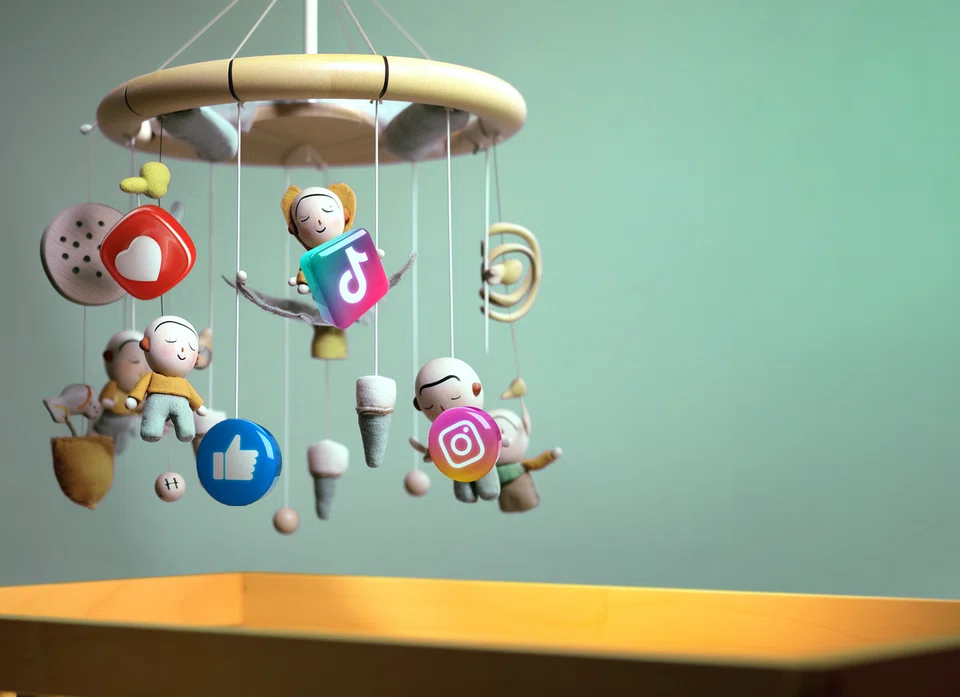
Pandemic lockdowns have fuelled an explosion of parenting content on social media, driving up the business of these creators

Janice Lim
WHEN Siti Khairunisa Zulkifle started baking her own lactation cookies and brownies in 2020 to increase her own breastmilk supply, she was simply looking to overcome her personal struggle with lactation issues.
But she picked up the courage to monetise her interest, and started MilkforBubs in the thick of the Covid-19 pandemic in 2020. Since the beginning, she has leaned on social media to sell her wares, often posting about breastfeeding tips and advice.
Three years later, the mother of one, with another along the way, runs a brisk business that sells breastfeeding-related products to help other mothers who face similar challenges.
Khairunisa is among a growing group of millennial mothers who have started producing social media content on parenting, in a bid to reach out to parents on their core products and services. These “mumfluencers” have become a formidable force in the world of marketing, melding wholesome vibes with a consumer segment that is passionate and willing to spend.
The pandemic effect
Social media companies approached by The Business Times did not provide numbers on how much parenting content has grown on their platforms, or whether the number of such content creators has increased.
However, data provided by influencer marketing agencies on related metrics might indicate some degree of expansion.
Citing data from Google Trends, Oddie Randa, managing director of Asia-Pacific for Gushcloud International, noted that web searches for children and family-related content doubled on average in the past five years, especially between 2021 and 2023.
And social media platforms would then push more of such content to users. For example, when TikTok pushes out content that may be novel for users, there has been an increase in those focusing on relationship and parenting, he noted.
Sky Lim, regional chief executive officer of X10 media, told BT that about 30 per cent of their clients are looking to work with parenting content creators to promote their brands, an increase from between 10 per cent and 15 per cent prior to the pandemic.
Besides brands that make baby products, which are obvious partners with parenting content creators, other brands that are looking to work with these mumfluencers tend to come from home and lifestyle-related industries, Lim said.
That growth got its spark from people having to stay home during the pandemic.
“A lot of brands that performed well during the pandemic and could invest their marketing budgets were the home and lifestyle brands... When people are at home, consumers would naturally be spending more money on home-related products,” Lim said.
Movement restrictions during the pandemic also forced many personal and wellness coaches to make the online pivot, said Crystal Abidin, professor of Internet studies at Curtin University.
While restricted access to parenting coaching – with parents having to book and pay for such services in advance to secure a spot in a physical session – was what made them desirable before Covid-19, these parenting coaches had to move from a scarcity strategy to one of accessibility, once the pandemic hit.
“Because of the pandemic, the mass enforced digitalisation has also seen this explosion of content on social media,” Abidin said.
Driving sales through parenting content
Making that social media pivot in the middle of the pandemic has turned out well in the financial sense for some of the parenting content creators BT spoke to.
Zoe Chu, who provides sleep training consultation for parents and their children, had always had a presence on Facebook, and later Instagram, when she first started Sleep Supernanny in 2013. But it was only after she joined TikTok in end-2019, that she saw a significant increase in her revenue.
Her revenue almost doubled one year after her first TikTok video, a growth she attributed to both the social media platform as well as Covid-19.
“During Covid, my business was doing very well, because parents were stuck at home with their kids, right? So these mothers, they just want to learn (to sleep-train) because of being stuck at home with their baby who is not sleeping. It’s very tough,” Chu said.
While that revenue growth has tapered off to about 5 per cent between 2021 and 2022, Chu said the overall increase over the last few years has enabled her to move from being a solo entrepreneur to building up a team of seven sleep-training consultants.
Kelly Tay provides an online coaching subscription service to help parents practise respectful parenting in an Asian context.
Tay started Juicy Parenting in December 2021, and was profitable in the first month. After one and a half years, her cumulative revenue recently crossed S$100,000, while net profit doubled year on year over the past three months. Her business is also on track to surpass S$100,000 in net profit sometime this year.
Her use of social media – mainly by posting about various situations through which parents can practise respectful parenting – has been crucial, as most of her leads are from parents who got to know her through her business’ Instagram account.
As for Khairunisa, the increasing popularity of her lactation treats has led to more orders and the need to move out from baking at home, to leasing a centralised kitchen in 2021 as well as hiring part-timers. On top of selling lactation treats, she has also started offering other breastfeeding-related products, such as nursing covers.
Her food offerings still form the bulk of her revenue, which has been multiplying. In the span of one year, her sales in November 2021 had grown to more than nine times what they were in November 2020. The next year, revenue doubled.
Using Instagram as a means to build a following was a key factor in helping Aminah Abdul Latif eventually set up a business that conducts nature-based outdoor education for children and pre-teens – or what is known in the industry as a forest school – in January 2023.
Before that, she was steadily gaining followers when she started offering parenting workshops based on the Reggio Emilia approach in 2019. These twice-a-year workshops, coupled with some personalised coaching courses for parents, were side hustles on top of her full-time job as a pre-school educator. But the community she built on her personal Instagram page through these workshops and coaching sessions over the years gave her the confidence to quit her full-time job, which was at another forest school then, to start Hundred Paths.
“When (my business partner and I) wanted to run a forest school, we were wondering how we can get people. I told my business partner that I already have a community of people who are interested in this approach. So maybe we can get sign-ups,” Aminah said.
Within six months of Hundred Paths’ launch, enrolment doubled between the first and second school terms.
However, Aminah told BT that her take-home income is now slightly lower than what she earned as a full-time educator at the previous forest school, although it is still more than her salary as a pre-school teacher.
For the content creators, however, financial success has been a secondary benefit compared to the flexibility they get in balancing work and the duties of being a mother.
“I quit my job to spend time with my kids, right? It was not an option to now spend less time with my kids, and not make money... But I will tell you that I have never worked so hard in my life,” Tay said.
Boundaries blurred
It turns out that the fame of a mumfluencer extends beyond the world of parenting.
Once a niche area for bloggers with an expertise in a particular aspect of parenting, some content creators today already had sizable followings as influencers or celebrities before they became mothers, but adapted their personal branding to be parenting-related as a natural progression of them growing up and having kids, noted Abidin.
Marissa Nasution, who was a television personality before she became a mother, started her journey into parenting content creation when she started posting about the difficulties she faced while pregnant with her first child. This led her to gradually work more with parenting-related brands. She declined to disclose the rates she charges brands for each social media post.
Nasution also provides non-parenting coaching services to her Instagram followers who directly message her. In fact, despite being described as a mumfluencer, most of the coaching-related requests she has received were not related to parenting, but for self-development.
Business partners Agnes Low and Esther Rachel Lai, who already have a strong following on their individual Instagram accounts as a vocalist and a designer, respectively, crossed over into the parenting space after Low got pregnant with her first child and realised she had tons of questions on parenting that she could not find answers to.
Since September 2021, both mothers have been livestreaming once a week on TikTok on various parenting-related topics, ranging from children’s dental health to the feasibility of having sex during pregnancy, under the account That Mom Chat.
While they have not monetised their parenting content on That Mom Chat so far, both Low and Lai said that they are taking things as they come. Any monetisation would be a bonus, since they did not start this endeavour with the sole focus of making money.
Parents or not, influencers get the same rates, said X10 media’s Lim. Content creators with at least 10,000 followers would get paid between S$150 and S$300 for each post, depending on whether it is a still photo or a video. That rate increases to between S$1,500 and S$2,500 when a content creator has about 70,000 followers.
Across South-east Asia, the benchmark rate for content creators with more than 75,000 followers varies between US$300 and US$3,000, depending on how influential they are and the country they reside in, said Gushcloud’s Oddie.
Content proliferation, but to what end?
There is unanimous consensus among observers that parenting content on social media is on a long and upward path.
Part of it could be attributed to some level of awakening among Asian millennials, said Abidin.
Some creators have said that they are seeing a lot of demand among millennial parents seeking knowledge of other parenting styles that are different from what they have been familiar with through their own upbringing. Asian parenting styles have typically been associated with authoritative and hierarchical characteristics.
At a branding level, Lim has observed that there tend to be more engagements on sponsored posts by parenting content creators, compared to non-parenting ones, with more parents leaving comments on these postings.
There is also a perception that parenting content is more wholesome and relatable, he added.
With the influencer market becoming increasingly saturated, leading to a dilution in marketing messaging, Abidin said that brands would likely seek out micro or even nano-influencers, to produce more grassroots content where postings are couched as peer-learning rather than influencing.
“I would say the biggest shift is that the face and reputation of the person is becoming less important. And they might be vetted more on the quality of their content if people make the effort, simply because the market is so saturated,” she added.
There may be early indications of this already happening. While Chu came into content creation first as an expert on sleep training, she has also started collaborating with some brands, such as baby wet wipes from South Korea, in her TikTok posts.
Chu said this is an area of revenue generation she has just started exploring and has been approached by several brands to do product reviews, though she has not agreed to work with all of them and prefers brands that are aligned with wellness and positivity.
In contrast to generic reviews commonplace in influencer marketing these days, Chu said that brands who approached her, do so for her sleep training expertise.
While the proliferation of parenting content may be meeting the needs of brands and parents who want to pick up parenting techniques, there is growing recognition, even among content creators themselves, that it has caused undue and unnecessary pressure for the everyday parent just trying to do his or her best.
Kristen Kiong, a 34-year-old illustrator and mother of two who follows some mumfluencers, feels that stress.
“The pitfall of having so many avenues of information on certain ways of doing things is, when you fall short of the standard, you feel like a failure,” she said.
TRENDING NOW

Government to bring forward raising of retirement age, give employers more financial support to create flexi-load jobs

If Europe goes to war, the fallout will be felt in East Asia
Former minister Maliki Osman, Revolut chairman join Asia Gulf Holdings advisory board

Small nuclear reactors could boost the Asean Power Grid: GE Vernova executive

