

Outlier economist
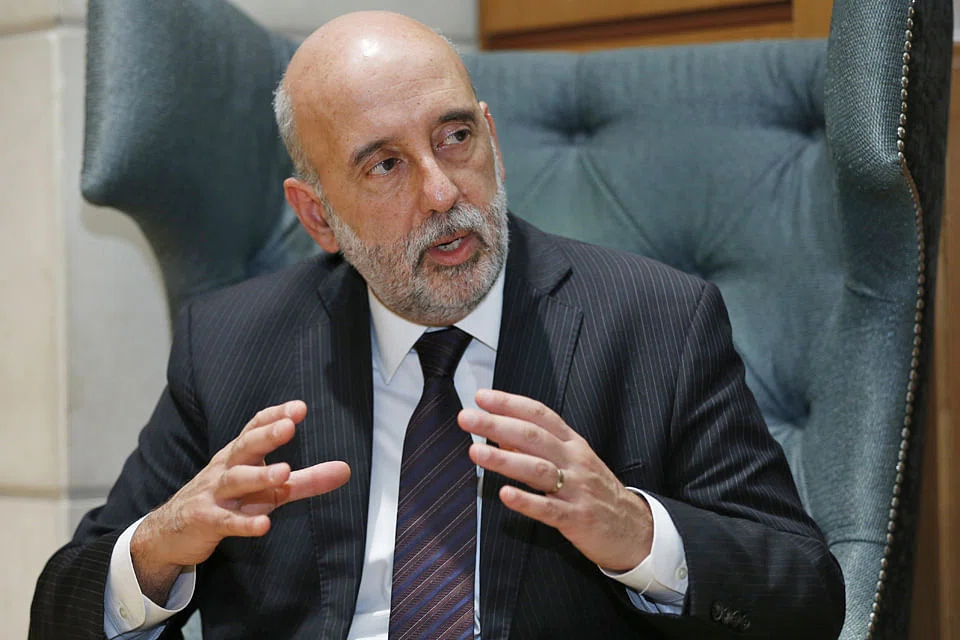
Managing the pace of change, keeping markets open and improving living standards are key to economic stability, according to chief executive of the New Zealand Treasury, Gabriel Makhlouf.
ECONOMIC orthodoxy has it that globalisation is good - and technology improves productivity and efficiency. So why is there so much global unhappiness over the free flow of goods, services, talent and capital, as well as the growth of computing and artificial intelligence in everyday lives?
Where did the theory go wrong?
Gabriel Makhlouf, chief executive of the New Zealand Treasury, reckons the theory is still sound, but is incomplete. Economists are right when they say globalisation and technology bring prosperity to those who embrace them, he says. What the theory has failed to account for, however, is what happens when change comes quickly.
"It's still the case that in Econ 101, it all stacks up right," Mr Makhlouf says. "I definitely think we didn't focus on the right things, or we missed some things. Why did we do that? It might be because we thought the market would correct."
Perhaps we have been too simplistic, thinking it would work, he says. "What we probably haven't factored in, in Econ 101, is the pace of change. I suspect the pace is the thing that has probably surprised us a bit more and the fact that it has concentrated impact."
Mr Makhlouf knows something about change. Born in Egypt to a Cypriot-British father who worked for the United Nations' development programme and a Greek-Armenian mother, Mr Makhlouf spent his childhood living in various developing countries.
From Egypt, his family moved to the Congo, where his brother was born and where Mr Makhlouf studied in a French-speaking school. It was only when his family moved to East Pakistan, as Bangladesh was then called, that Mr Makhlouf went to his first English-speaking school.
After his family moved on to Samoa, Mr Makhlouf was sent to boarding school in England for his secondary education. During that period, his parents moved on to Manila in the Philippines, then to Fiji, Ethiopia and Bangkok.
"Memories are of meeting different people, different experiences in different countries," he says. "When I went to boarding school, every holiday, long flights. We used to fly as unaccompanied minors. When we went to East Pakistan, poverty. I'd moved from the Congo, not exactly a developed economy, but I still remember being shocked by the poverty in East Pakistan."
It was great fun for a boy.
"I think it helped me to get an appreciation of the world that you wouldn't otherwise. So I see it as luck," he says. "It was great fun. My mother didn't enjoy it, partly because we had to go to boarding school, so she found that pretty tough. And then because my dad was in the development programme - we didn't always live in (but) she would have loved to have lived in Singapore - we lived in small countries that were still in development."
Mr Makhlouf remained in the UK for his university education, and eventually joined the civil service, where he ascended the ranks in Internal Revenue, Revenue and Customs and the Treasury. In 2010, the New Zealand Treasury came knocking.
"I got a phone call from a headhunter telling me there's a job in New Zealand, not the one I'm doing now, another job, and we just decided, you know, why not? Let's do something different," he recalls.
Mr Makhlouf, who took over the reins of the Treasury about a year after he joined and is now a naturalised Kiwi, has been an unabashed advocate of enlarging New Zealand's ties to other parts of the world. It was under his watch that the Trans-Pacific Partnership almost became a historic international trade pact, only to be derailed when the United States pulled out following the election of President Donald Trump.
There is no doubt in Mr Makhlouf's mind that free trade remains important to growth.
"I've said to people, globalisation's been going on for hundreds of years. The Phoenicians in 1,500 BC travelled from the Middle East through the Mediterranean to trade and expand the size of their market. The Romans did it. So for us, it's essentially about prosperity, improving our living standards, helping our partners and communities around the world to also improve their living standards," he says.
"I'm a very strong believer that at the end of the day, globalisation is the way to prosperity, and the opposite, protectionism. Protectionism is essentially about perpetuating poverty. I would put it as brutally as that."
Small countries such as New Zealand also have little choice but to reach out to the world and hope that the world reciprocates. "For New Zealand, we're a small country, far away from our markets, and being closely connected to those markets will improve our prosperity and the living standards of our community. So that's why it's important to us," he says. Mr Makhlouf says the smaller a country is, the more important it is to be plugged into the world markets. "Very big countries could, in the short term, decide they're going to close their borders. And they may be able to cope with that in the short term. In the long term, I think they'd lose out. But for small countries that would have a much bigger impact."
He does not see himself as the loner on the issue either - and he offers his observations of Asia to make the point.
"There have been many stories saying that globalisation is on its way down. But actually, is that right? The last 12 months have been quite interesting, because in terms of rhetoric, it's only really the United States that's been talking about protectionism," Mr Makhlouf says.
"Xi Jinping in Davos talked the opposite. My observation of what's happening in Asia is people want to trade. People want to connect. So I think in the Asia Pacific, we want to do globalisation. And I don't know that a lot of people want to go into reverse. I may be fooling myself here, but you know, it doesn't appear that that's the case."
Yet the truth is that change brought about by globalisation has not been good for everybody.
In Mr Makhlouf's assessment, a lot of the pain it brought was the result of people and business not being able to cope with the fast pace of change. Take that hypothesis to its logical conclusion and it should have been possible for policymakers to avoid or manage that change, if only they had recognised that quick changes are equivalent to shocks.
Mr Makhlouf raised the example of the textile industry in the south-eastern United States, where jobs and factories were displaced as cheaper options emerged elsewhere. "Now, the textile industry's probably gone through all sorts of change over the last few hundred years," he says. "And it's managed it. The communities, et cetera, have managed it. But I suspect what's happened is the pace of change has been so great that we haven't been ready for it."
Preparing for change is therefore high on Mr Makhlouf's list of priorities, especially with the kind of disruption that is happening as a result of technological changes. "When I look forward, I say to myself, well, let's make sure we don't repeat this, because I can see change coming. And this is the point," he says.
For Mr Makhlouf, the substantive issue is "less international connectedness, it's less globalisation, it's more economic shocks and how do you manage them?"
He said we ought to give more thought to how communities will transition in a world of artificial intelligence, digitalisation and electric vehicles - and not assume that the market can manage it at a pace that may need to be managed.
Raising living standards
Perhaps the way to deal with change is to start by changing common wisdom. One of the major steps Mr Makhlouf has taken is to reframe what economic policy is about. It is rare for an economist to declare, as he has done, that economic growth is not the point of economic policy. Rather, he argues, raising living standards is the end goal.
"People want more than economic growth. People's living standards are related to the sustainability of the economy, of their environment, and they are related to the degree of social cohesion. They are related to issues of equity," he says.
"Again, if you go back to Econ 101, there are limited resources in the world and unlimited wants, and economics is about: 'How do we allocate those resources most efficiently?' And you've got to take, in my view, a much broader set of factors into account." Mr Makhlouf's Treasury has adopted a comprehensive view of what constitutes capital, looking beyond the typical definitions of buildings and money to incorporate concepts such as natural capital, human capital and social capital.
In 2018, the Treasury will publish, for the first time, an accounting of the country's natural capital, he says, adding: "Ultimately, our long-term ambition is to be able to produce what we call a comprehensive balance sheet, that looks at New Zealand's assets and liabilities in the round."
Mr Makhlouf notes : "Robert Kennedy gave a speech in 1968 where he talked about how GDP measured everything except what people valued. So next year will be 50 years since he made that statement, and I'm hoping to give a speech where I explain how we might be able to move a bit further from where he was in 1968."
Thinking about living standards can also inform policy on immigration, a touchy topic in New Zealand where the influx of foreigners has increased over the past few years as the country's economy has improved.
For Mr Makhlouf, New Zealand must learn to be comfortable with immigration. Not only does an influx of people from different parts of the world and different backgrounds bring a diversity of viewpoints and talents to enrich society, more often, they also bring skills that are crucial for the economy to remain competitive. But immigration must be managed to ensure that society does not come under too much strain.
"Social cohesion matters," he says. "Singapore is probably one of the countries in the world that thinks about this stuff quite carefully and may actually have lessons to teach the rest of us. In a rapidly changing world, because of technology, I think it's inevitable that the skills needed by businesses to grow are going to be spread around the world. There's going to be a demand for skills, and, increasingly, there's going to be a choice of: 'Are we going to grow these businesses to create jobs and improve our living standards?' "
The answer, according to him, is normally yes. "In which case, we're going to have to get skills in some way. Because your choice otherwise is we're not going to grow," says Mr Makhlouf.
But simply relying on immigration to meet business needs is also foolish. The longer-term solution is to invest in quality education, and that has been a matter of emphasis under Mr Makhlouf's term. "If you make sure that your secondary education system, your tertiary system and then post-tertiary education, is geared up to giving people the sort of skills they're going to need, then that's quite an important way of planning for this," Mr Makhlouf says.
Stakeholders must also make a concerted effort to reach out to the communities to help people to understand the issues.
"This should not be left to become a political issue. It's as much a business issue and, businesspeople, they're as much a part of society as the rest of us and they need to be telling the stories as to why they need skills, why they create jobs," he says.
Challenging the norm
Referring to the "lump of labour fallacy" taught in basic economics, Mr Makhlouf says: "There's a limited number of jobs and, for people who are against immigration, that's actually quite an easy story to tell. But it's complete rubbish, because countries that grow in population create more jobs. They do. So the idea that there's a limited number of jobs is rubbish, and I suspect we don't do enough to challenge it."
Mr Makhlouf thinks that the world is coming around to his "outlier" point of view. "I would like to think that it won't be that long that everybody's talking the same way. And if you look around the world, in the last few years, there's been a shift in interest in well-being economics. The OECD's been doing quite a lot of work on that. It's developed its Better Life Index. There are various think tanks around the world that have been doing something similar," he says.
All these sound very exciting to him. "I wish I were an economics student today, as opposed to one a long time ago. I think that this is absolutely the right time to do economics."
Mr Makhlour recalls a speech he gave three years ago: "I said that I felt economics had lost its way a little bit, and that we had pushed it far too much into a mathematical subject and we've sort of neglected the fact that it's a human science."
That trend is sort of shifting a bit, he thinks. "Maybe helped by the Global Financial Crisis, I have no idea. But if you look around the world, increasingly people are saying, yeah, there's something missing from the old way of thinking about this."
GABRIEL MAKHLOUF
CEO, Treasury, New Zealand
1960 Born in Cairo, Egypt
1997-98 Principal Private Secretary to the Chancellor of the Exchequer, HM Treasury
1998-2003 Director, International, Inland Revenue, UK
2000-04 Chair, Committee on Fiscal Affairs, OECD
2003-05 Director, Capital and Savings, Inland Revenue, UK
2005-08 Director, Debt Management and Banking, HM Revenue and Customs, UK
2008-10 Director, Government Banking Service, UK
2010-11 Deputy Secretary, The Treasury, New Zealand
Since 2011 Secretary to the Treasury and Chief Executive, New Zealand






