The pink dollar: How LGBTQ+ inclusion is shaping the future of business in Singapore
Acceptance of the LGBTQ+ community is growing in the city-state. Businesses are paying closer attention to this demographic in the battle for consumers and employees
Russell Marino Soh

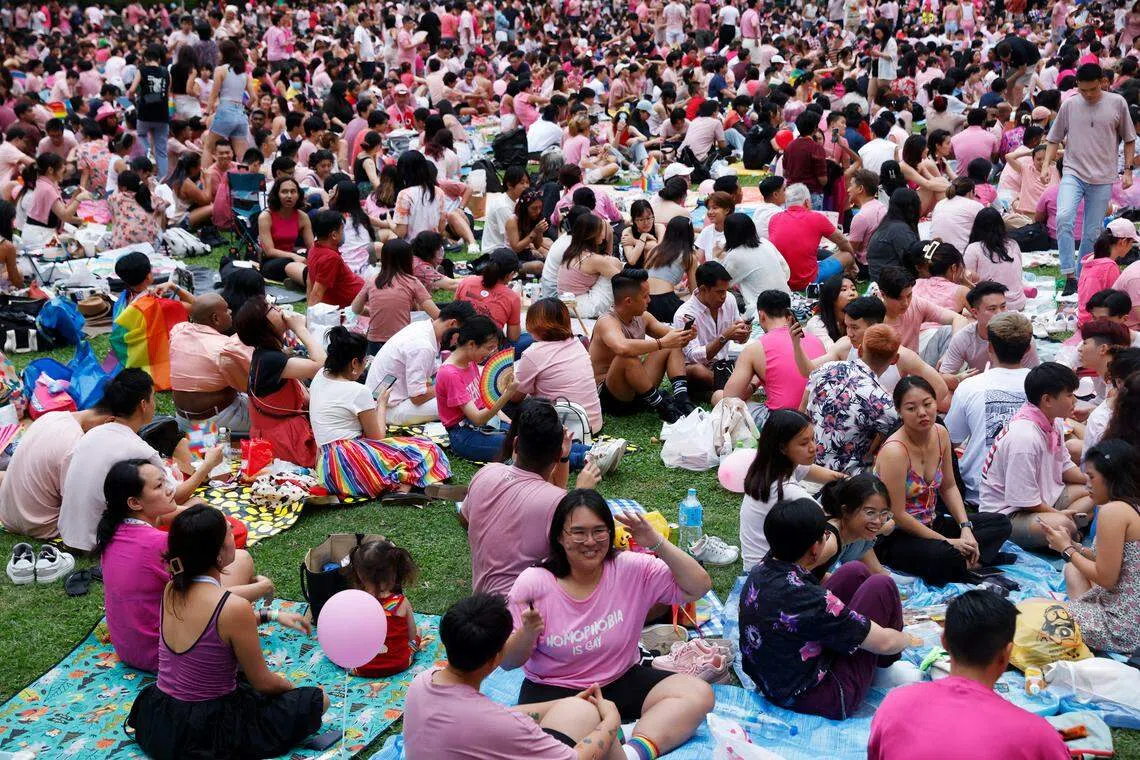
NIGHT falls on the Speakers’ Corner in Hong Lim Park. On a makeshift stage, advocates from the local lesbian, gay, bisexual, transgender and queer (LGBTQ+) community share with the crowd their hopes for Singapore’s future.
Then a countdown begins. The crowd huddles together, flashlights in hand. Some link arms; others embrace. One by one, transparent umbrellas unfurl and light up to form the word “family” in rainbow-hued letters.
“Three, two, one.”
A wave of pink emerges from the darkness. The 15th Pink Dot is formed.
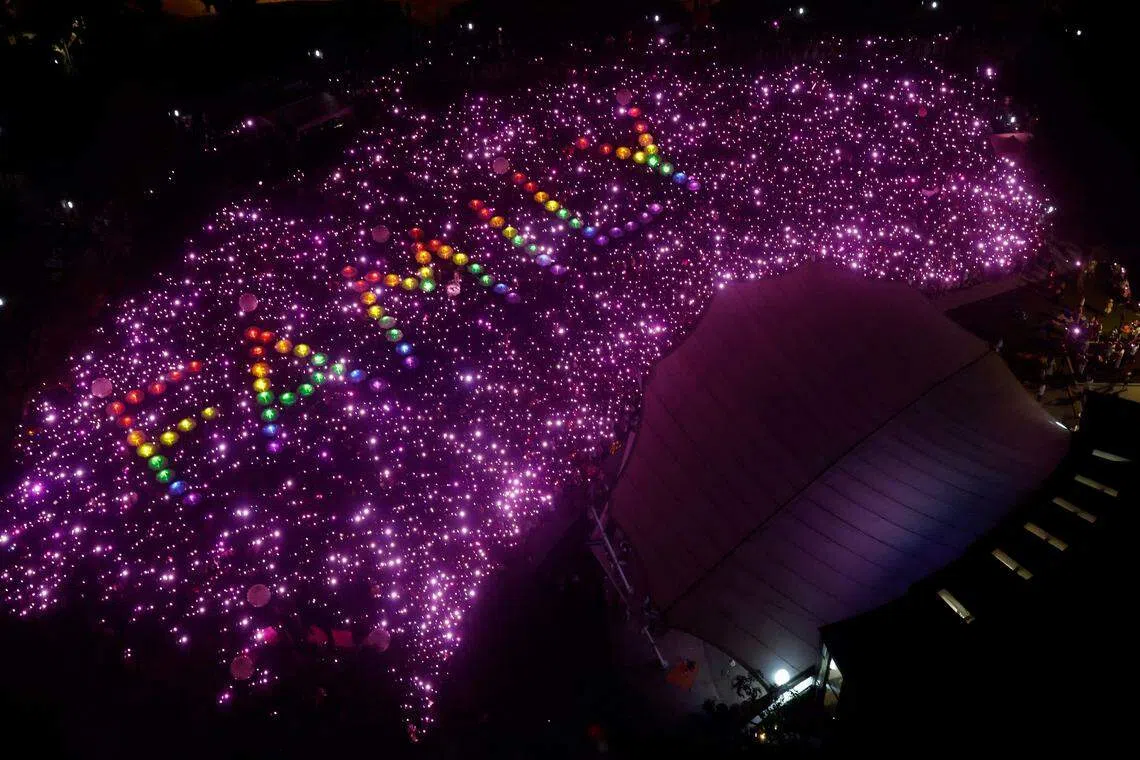
Held on Jun 24, this year’s Pink Dot – an annual event in support of LGBTQ+ rights in Singapore – was backed by 91 corporate sponsors. The previous edition in 2022, the first in-person iteration after the Covid-19 pandemic, garnered 77.
This increase in corporate endorsement – all from local companies, as foreign entities are prohibited from sponsoring events held at the Speakers’ Corner – suggests a growing acceptance of gender and sexual diversity in Singapore.
Indeed, Singaporeans are increasingly adopting an inclusive stance towards LGBTQ+ persons and relationships.
Ipsos in June published the results of its Pride 2023 global survey, which showed 32 per cent of Singaporeans support same-sex marriage. This was up from 27 per cent a year earlier.
Changing perceptions make the corporate stance on LGBTQ+ matters a potentially high-stakes test. Companies must thus consider the potential business impact of championing such a cause, with both rewards and risks in mind.
Size doesn’t matter
What is LGBTQ+ inclusion, and what are the ways in which a company can express its support?
“Many people think that they need to spend a lot of money or effort to be an inclusive company, but it really doesn’t have to take a lot,” Smol founder Charmaine Low tells The Business Times.
The food-and-beverage company participated in Pride Month for the first time in 2020. Low says her team cobbled together a small event and campaign, despite having limited resources at the time as a fledgling business.
Commemorated in June every year, Pride Month is designated to honour the ongoing push for LGBTQ+ rights and inclusion in society.
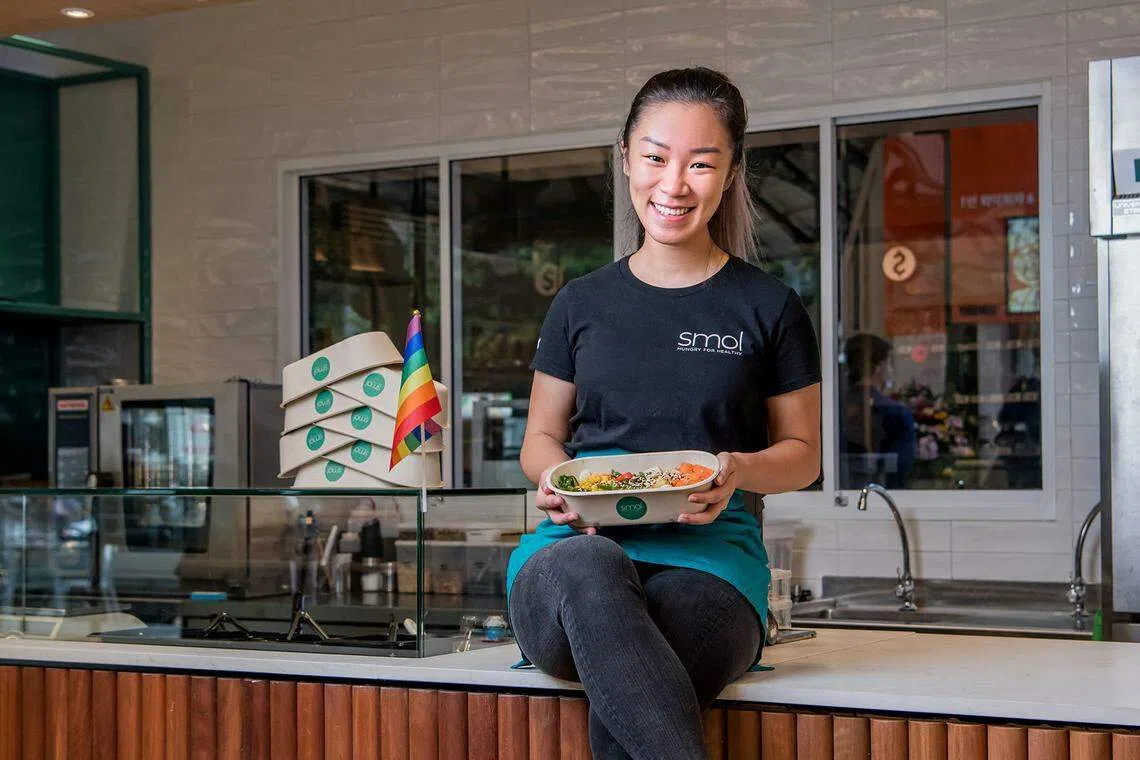
Smol has since built on that initial experience. Earlier this year, it participated in Nomura’s annual Love-A-Fair – a charity event by the financial services company for LGBTQ+ affirming businesses.
Part of the proceeds raised by Smol at the February event went towards Oogachaga, a professional group that provides counselling and training services to LGBTQ+ individuals.
Leow Yangfa, its executive director, says inclusivity is a matter of commitment, effort and planning.
Companies that wish to show their support should do so beyond the confines of Pride Month, he adds. “They need to recognise that their LGBTQ+ staff, consumers, suppliers and stakeholders are still queer the rest of the year, from Jul 1 to May 31.”
Leow says more corporates are reaching out to Oogachaga, to explore collaborations and donations, as well as to request talks about workplace awareness and allyship – the process of building supportive relationships with LGBTQ+ individuals. The group held 23 such talks in June this year.
One approach companies can take is to “look inward” and integrate inclusivity into everyday operations, to create an environment where LGBTQ+ employees want to work, Leow says.
Steps to take could include having “clear policies and practices about equality, non-discrimination and accepting diversity of talent, (as well as) having compensation and benefits that take into account the welfare and life-stage needs of LGBTQ+ employees”.
Doing so might appear intimidating at first glance, but Kathy Teo, founder and chief executive officer of digital marketing consultancy Xpointo Media, points out that many companies already have in place policies for non-discrimination on the basis of age, gender, race, religion and physical ability, among others.
Teo adds that “simple expressions of inclusion… can go a long way”. Companies can take small steps such as encouraging the proper use of pronouns, and having “lunch-and-learn” sessions where LGBTQ+ employees can share their experiences with other staff.
“Inclusivity does not have to be an expensive project.”
First-mover advantage
For companies that choose to do so, there are benefits to be reaped from taking an LGBTQ+ inclusive stance.
Market perception is one of them, says Teo, who is also co-founder of Q Chamber, Singapore’s first chamber of commerce for the LGBTQ+ community and its allies. This is particularly so among younger demographics, she notes.
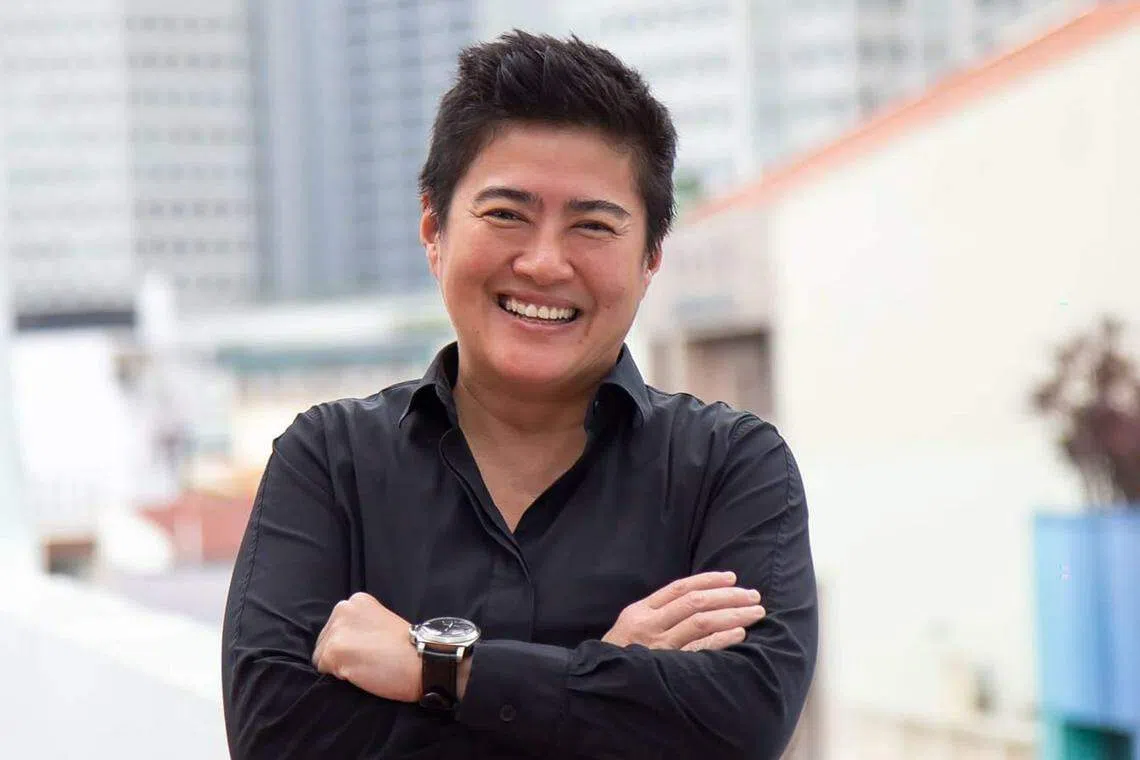
Oogachaga’s Leow adds: “Being LGBTQ+ inclusive can be good for business, in terms of attracting more customers who are LGBTQ+ themselves, as well as their family members, friends and allies.”
There is also potential for businesses to build a brand for themselves around inclusivity on a wider level, extending beyond the LGBTQ+ community, he says.
“Eventually, the business can become a brand that is seen as being authentically interested in meeting the needs of their consumers, and consumers will eventually reward them in return with their loyalty and spending.”
This has certainly been the case for Smol, says Low, adding that support for the LGBTQ+ community has “taken us to a place where other businesses may not be… It has definitely helped get our name out there”.
She adds that small businesses should seize the opportunity to be a first mover.
Although the pool of LGBTQ+ inclusive businesses here is growing, it is still relatively small. Companies have an opportunity to be pioneers of inclusion in Singapore, she says.
Companies that do not move now will have to do so eventually, says Carmen Wee, founder of human resources (HR) consultancy Carmen Wee & Associates.
New workplace anti-discrimination legislation in the works will require companies in Singapore to move towards being more aware, diverse and inclusive.
“Within the HR community, there’s been a lot of discussion around helping companies understand what the upcoming legislation is about,” says Wee. “It’s good practice for companies to get prepared… (and) to have these guardrails in place before the announcement is made.”
Think talent
A workplace that can claim to be LGBTQ+ inclusive may also attract more talent.
LGBTQ+ persons make up about 7 per cent of the adult population in Singapore, according to Ipsos’ survey. Many are likely to prefer joining a company that is openly supportive.
Both Xpointo and Smol have received several job applications from individuals who specifically sought them out for their inclusive stances.
While there is limited research available here on workers’ attitudes towards LGBTQ+ inclusive workplaces, a survey by the School of Journalism and Communication at the Chinese University of Hong Kong showed around 80 per cent of LGBTQ+ people would prefer to work in an inclusive company.
Beyond recruitment, inclusivity can also have a positive impact on a company’s operations. In 2022, Credit Suisse found that a basket of 500 LGBTQ+ inclusive businesses had outperformed the MSCI All Country World Index by an average of 238 basis points every year since 2010.
Xpointo’s Teo says an inclusive workplace can “foster a greater spirit of innovation, higher levels of entrepreneurialism… and a more engaged workforce, resulting in better financial performance”.
She adds: “When LGBTQ+ employees can thrive in the workplace and contribute at their highest levels, businesses that create that healthy work environment for them will prosper.”
Pinkwashing
Still, there is a flip side that a company must take into account when considering going public with an LGBTQ+ inclusive stance. One key risk, especially for companies that have not fully thought out their approach to the matter, is being seen as disingenuous, performative or inauthentic.
South Korean consumer brand Samsung released an advertisement in 2022 featuring a Muslim mother with her son, a drag queen. It was pulled after a number of online commenters expressed outrage, accusing the company of attempting to “mainstream homosexuality and transgenderism”.
In taking the video down, Samsung said it had “fallen short in this instance”, adding that it acknowledged the video “may be perceived as insensitive and offensive to some members of our local community”.
This “left a sour taste” in the mouths of those in the LGBTQ+ community, says Oogachaga’s Leow.
Many felt betrayed, and wondered why Samsung did not have the courage to stand by what it had first claimed to believe in – especially since it initially had the courage to conceive, produce and release the video.
Samsung isn’t the only company that has faced backlash for not fully committing to LGBTQ+ inclusivity. Without any real action or commitment behind their stances, some have been called out for what is now known as “pinkwashing” – the practice of using LGBTQ+ inclusion in marketing without any intention of making real change or impact.
“This can sometimes happen even with the best of intentions, and most often is the result of poor planning, execution, or both, and a lack of effort in sufficiently consulting community stakeholders,” says Leow.
“Being performative usually means that the focus is placed on the product or service being marketed or on the celebrity and the marketing campaign itself, instead of focusing on the community, social cause or action it is supposed to support.”
To avoid a reputation of pinkwashing, Xpointo’s Teo says companies’ stances must be “authentically, intentionally and carefully expressed”.
Leow cites as a positive example the furniture chain Ikea, which in April 2022 released rainbow-coloured bags in Singapore to signal its support of the LGBTQ+ community.
On its own, the initiative would have been not so different from the wave of rainbow-banded logos that companies plaster on their social media pages every June.
Ikea’s commitment to LGBTQ+ inclusion, however, has become part of its brand globally. It has also contributed to the local community – most recently, in June, it donated 100 per cent of the proceeds from sales of its iconic blue Frakta 36L bags to Oogachaga.
Pushbacks
Companies must also consider, however, that a substantial proportion of Singapore’s population is still opposed to the LGBTQ+ cause.
In January 2021, a man accosted Smol’s staff over a rainbow flag displayed in their stall at Lau Pa Sat, and proceeded to throw the flag at them.
Rainbow flags are still present at both of Smol’s outlets, says Low. She had put one up at the company’s first outlet in PLQ Mall as a small symbol of support for the LGBTQ+ community, and carried this practice to the second outlet.
Low says that while Smol has seen a positive response from its support for the LGBTQ+ community, the company has also received negative feedback – both in person and virtually, with some more aggressive than others.
“The (number) of people who are telling you to go to hell, or that this is just the worst possible thing that you could be doing… it can have an impact on even the strongest person,” she says.
Still, she believes this is something she must continue doing. “If there’s no Smol tomorrow, I don’t know who else there’ll be.”
While the issue of LGBTQ+ inclusion is still potentially “taboo” among some segments of Singapore society, HR practitioner Wee says companies will need to, at the very least, focus on awareness in the workplace amid an evolving social and regulatory environment.
“The last thing you’d want is for employees to jump ship to another company – or worse, for them to go to the authorities to lodge a complaint about discrimination because you don’t know how to handle (issues of diversity and inclusion).”
Ultimately, for Low, LGBTQ+ inclusion will always be an essential tenet of her business: “As long as I’m around and as long as I have a business, we will always support the community, in whatever way that we can.”