Point Of Contact
Voice and PABX are passe. Avaya's CEO, Jim Chirico, sees enterprise communication being fully disrupted and digitalised. But there will still be human agents at call centres, he says.
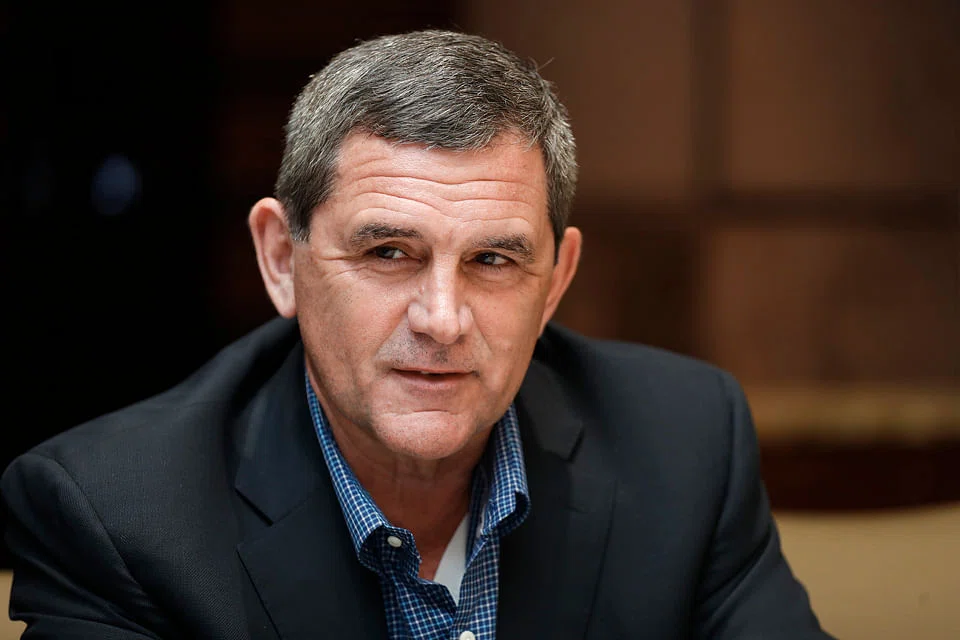
RIGHT after college, Jim Chirico, Avaya's president and CEO, wanted to join the Federal Bureau of Investigation and he came pretty close to bagging his dream job. However, in one of those paradoxical twists that shape careers and lives, just as the sleuth's job seemed to be within grasp, the then US President, Jimmy Carter, took a decision to freeze government hiring. A bit crestfallen, Mr Chirico went and joined IBM. What appeared to be a second choice, however, provided the New York native his epiphany. A few days into the job, he realised that the technology industry was ideally suited for his character and abilities.
That feeling of gratification of having inadvertently walked into the right career choice hasn't changed for the Avaya CEO all these years. Nearly four decades into his career, he is still grateful for the blessing in disguise that landed him in the tech sector.
"I grew up in a small town in New York and I had a twin brother, and we were very competitive. When I went to school and college, I took part in athletics.
"If you have a competitive spirit like me, this (technology) is the right industry. If you like and enjoy people and enjoy team sports versus individual sports, then working for a large multinational company is also a right fit. So I don't think I ever really knew it but the characteristics and attributes were aligned and got me through the day (at IBM)."
After working in IBM for nearly 20 years, Mr Chirico moved on to disk drive maker Seagate Technology. During his time there, he spent eight years in Singapore in a global role as executive vice-president.
Mr Chirico then joined Avaya in 2008 as chief operating officer and global sales leader. Over the course of his 10 years in the company, Avaya has gone through a turbulent period.
A little less well known than his previous companies, Avaya is, nevertheless, a market leader in its industry. The company specialises in helping organisations with their business communications needs, including unified communications, contact centre and other services. Unified communication refers to the integration of a company's communication requirements and tools, such as instant messaging, voice and mobile, into one integrated package.
Avaya has its origins in 1995 when Lucent Technologies was spun off from AT&T. It became a public company in 2000 and in 2007, a year before Mr Chirico joined, it was purchased by two private equity firms. Things didn't go too well for the company and in early 2017, Avaya filed for bankruptcy protection under Chapter 11 in the US. Mr Chirico took over as CEO in October 2017, helped steer the company out of Chapter 11 and then listed it on the New York Stock Exchange early this year.
In December 2017 when Avaya completed its financial restructuring, Mr Chirico pronounced it "the beginning of an important new chapter for Avaya".
In less than a year since the commencement of its Chapter 11 restructuring, Avaya emerged as a publicly traded company with a significantly strengthened balance sheet. Overall, the company reduced its prior debt load by about US$3 billion, and exited Chapter 11 with more than US$300 million in cash on its balance sheet. Avaya generates around US$400 million from the Asia-Pacific, which is its fastest growing market. The region accounts for about 20 per cent of its workforce.
Upbeat about the future
Mr Chirico is very upbeat about the future but at the same time realistic that a lot still needs to be done. "It will take a fair bit of investment. With our balance sheet being where we wanted it to be, we are now investing quite a bit more than we had in the past and really rounding out not only our contact centre activities but also our cloud, mobility applications and unified communications as well.
"We support more than 90 per cent of Fortune 100 companies. Each day, they are running critical applications using Avaya technology. We are a proven technology provider and we continue to build off our installed base. We are No 1 in the contact centre business and No 2 in the unified communications sector; we have a strong foothold in the industry from a market communications perspective."
This is just the beginning, he adds. Mr Chirico is convinced that technologies such as artificial intelligence (AI), blockchain and IoT (Internet of Things) will completely transform the business communications industry over the next few years.
"The sector has (already) changed quite a bit. It was an industry that was primarily focused on voice and the PABX (private automatic branch exchange). Avaya was a hardware-oriented company, providing hardware solutions to help productivity and performance.
"Over the last five years it has shifted to a more software and services business model," Mr Chirico adds.
According to him, managed services, professional services and general maintenance have become a pretty significant part of the industry.
"Couple that with the migration of technologies, the industry has moved from hardware to software. In Avaya, for example, 82 per cent of our revenue today comes from software-related sales," he lets on.
He adds that the business communications industry is going through yet another transformation by becoming digital with the use of cloud, IoT and blockchain technologies.
"This is a real interesting transition and can be quite expensive so you need to have financial strength to carry through with it. The cost of entry and the cost of maintaining a presence are two important factors. And the cost to lead is yet another very important aspect.
"Fortunately, from a financial perspective, Avaya is well-positioned to guide and lead the industry. You need expertise and execution and you need to be a technology innovator to take the next step in digital transformation," he observes.
Mr Chirico notes that today, around 12 per cent of Avaya's revenue comes from the cloud. By the end of this year, this figure will go up to 15 per cent. "We have over three million subscription seats in the marketplace today and that continues to grow quarter-on-quarter. So it's an interesting transition."
The other interesting piece of the puzzle, according to Mr Chirico, is the increasing use of AI. "If you look at it from the customer service perspective in a contact centre, AI brings a lot of value and is a game changer as it empowers customer service agents."
AI provides quality and consistency, it supplies the service agent with the knowledge and expertise required to do the job, thus improving the speed at which calls are answered and resolved, he adds.
"It also provides a capability not only from a TCO (total cost of ownership) perspective but also (by) focusing on the customer experience and the customer journey. That's the real next frontier in which we are investing significantly."
Avaya has partnered with an AI company, Afiniti, on an open platform. "This partnership is important in the marketplace because we can do behaviour patterning and seamless interaction. So when a customer calls, you can have an IVR (interactive voice response) answering and, using AI analytics, the call will be automatically routed to the agent who can best address the particular issue that the customer has. We also do real time quality analysis; the analytics that are built into AI is phenomenal," he adds.
Will AI completely replace a human agent at a call centre? Mr Chirico reckons that is unlikely as there will always be a need for a human agent but the nature of the agent's job will change.
The agent will be selling additional services rather than just answering questions that a customer may have, he says.
Taking Avaya's own example, Mr Chirico notes that the company has its own bot which is proficient in 34 languages and counting. "About 30 per cent of all calls are answered by virtual agents. To a degree more data comes in because AI provides this capability and data scientists continue to build on that.
"I think you will see that continue to expand; it will never become 100 per cent, more likely around 70 per cent IVR (interactive voice response). Virtual agents are certainly becoming very pronounced in the business today," he adds.
The industry, he says, will witness a digital transformation over the next three to five years as it moves from hardware and software services to a cloud subscription base. This will result, according to Mr Chirico, in greater adoption in the low-end business segment - SME (small and medium-size enterprises) and the mid-market. "The enterprise space (bigger corporations) is more managed services hybrid but I think you are going to see it pick up too, they are a little slower to adopt but they will get there."
Today around 10 per cent of the industry has moved to the cloud but growth is doubling year-on-year, he notes, adding : "So I think you will see it start to pick up over the next couple of years."
The business communications industry will become more annuity and subscription-based, rather than being based on capital expenditure, and this is going to change the dynamics of the sector, he observes.
To an observation that his career in some respects mirrors the way the technology industry has transformed over the years, Mr Chirico smiles. "When I started in IBM, I worked in manufacturing and the company was vertically integrated, had sister factories in different regions of the world building components or hardware. And that industry went through a lot of transformation. Eventually competition from companies like Microsoft, Cisco and others changed the landscape.
"One thing that it proved is that having a vertically integrated company is not a very good strategy. As you continue to build up, everyone has a separate profit centre and at the end of the day, the company (IBM) did not have the right balance from a profitability perspective."
He adds: "I was at IBM at the time it went through its major transformation, which was to move away from being a hardware company to becoming a professional services and consultative services and software-centric company. That was an interesting transformation."
When Mr Chirico joined Seagate he found that it was also a vertically integrated company "but more as a tactic and not as a strategy".
He explains: "We also procured from outside even though we were vertically integrated. This was done to ensure we had the best price and Seagate actually did have just one P&L (profit and loss) centre.
"It had a very quick R&D cycle and it was extremely cost-oriented because the price of drives came down every year by around 15 per cent. So if you didn't get efficiencies in execution and operation, you wouldn't make it in the industry. I actually think both of those learnings (from IBM and Seagate) have really positioned me from an Avaya leadership perspective," he adds.
Fruitful retirement
In Seagate, Mr Chirico was based in Singapore from 1998 to 2006. Since then, he's been back a couple of times to the Republic, and observes that a lot has changed here over the years. "I worked on one of the government's economic committee boards looking into manufacturing around 2004. That was the time when manufacturing was key for Singapore, and it was shifting to lower-cost destinations like Vietnam, Thailand and China," he recalls.
"So I've seen Singapore change. When I was here, Seagate had over 20,000 people. Today, there are probably 3,000 to 4,000 employees. And Seagate is just one of many such manufacturing companies.
"It is amazing to see the way Singapore has been able to expand and build out to new industries - it is a credit and you don't see it anywhere else in the world."
Outside work, the Avaya CEO keeps busy by playing golf. He's also an avid runner - and he owns a waterfront restaurant, the Fishy Fishy Cafe, in Southport, North Carolina. "My daughter runs it but it keeps us busy when we have some downtime," he says. Indeed, Mr Chirico can often be seen greeting guests at the restaurant.
But he's far from prepping up for retirement. "I enjoy work and I don't find it to be draining. I've been the CEO for less than a year but I've been with the company for 10 years so I know the people and I know the company.
"Being CEO is a bit different but I do get excited to go and visit and see the folks in the regions. I get excited about what we are doing and how we are helping our customers and our employee base."
For someone who wanted to become an FBI agent, Mr Chirico has found his calling as a technology leader - and now has no intention of letting up on the intensity.
JAMES M CHIRICO JR
President and CEO, Avaya
1958 Born in New York
1980 BSc in Marketing from Providence College, Providence, Rhode Island
1980-1998 Worked in IBM at various roles
1998-2007 Seagate Technology, Executive VP, Global Operations, Development and Manufacturing
2008-2017 Chief Operating Officer and Global Sales Leader, Avaya
Since October 2017 - President and CEO, Avaya