

Power trip: Mapping the transition to Singapore's clean-energy future
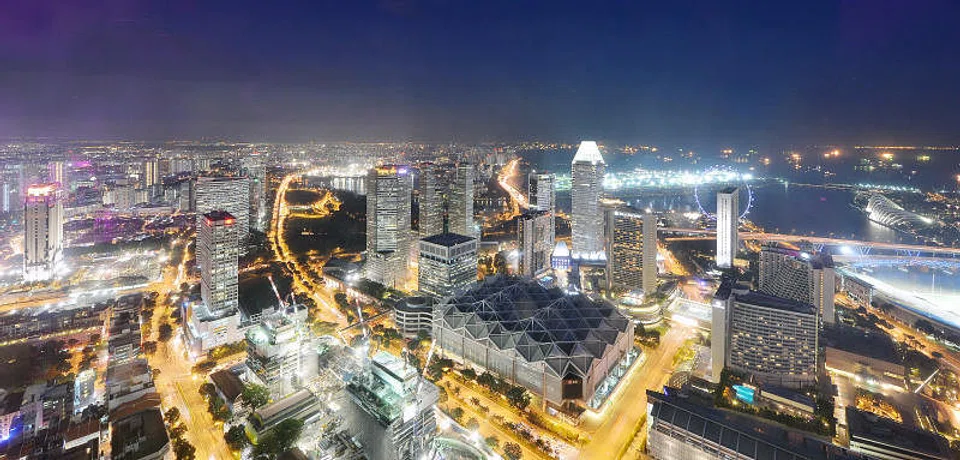
IF Singapore needed any reminders that clean energy ought to be front and centre of its evolving energy policy, that jolt manifested recently in erratic weather events from intense rainfall to punishing hot spells, triggered by climate change globally.
And for a city moving decisively towards a low-carbon future, the fact that 40 per cent of Singapore's total emissions still originate from power generation is a statistic that needs improving.
Another recent anomaly that pointed to trouble ahead for the nation's energy sector were the volatile electricity spot prices that surged to multi-year highs last month, coinciding with a planned gas curtailment exercise. Market players were befuddled.
In July, the average Uniform Singapore Energy Price (USEP), which varies half-hourly depending on prevailing conditions in Singapore's wholesale market, shot up to a six-year high of S$167.04 per MWh (megawatt-hour), more than double that of January's, and nearly 70 per cent higher than that in June, based on data from the Energy Market Company (EMC).
As Andrew Koscharsky, chief commercial officer of iSwitch Energy, the largest independent electricity retailer in Singapore, said: "The high USEP spikes of July and August showed how quickly prices can become volatile. This caused great uncertainty in the market."
Industry players cited incumbent market power and rising costs for the jump, which is being investigated by the industry regulator.
These jarring episodes underscore the resource-scarce city-state's energy trilemma of climate emergency, rising costs and energy security. Singapore-based KPMG's head of infrastructure advisory Sharad Somani said: "Security of supply and optimising energy costs would be critical for Singapore's economy."
First milestones
The reforming of Singapore's energy landscape began with its first cross-border import of piped natural gas from Indonesian state oil company Pertamina two decades ago. That long-term gas purchase deal by Sembcorp Gas in 2001 also marked the first cross-border gas export pipeline of the largest economy in South-east Asia.
By 2010, natural gas accounted for 77 per cent of the city's energy fuel mix; last year, it had grown to 96 per cent. Meanwhile, petroleum products as a fuel source shrank from 20.2 per cent to 0.2 per cent over the period.
In 2013, a liquefied natural gas (LNG) terminal opened, with sufficient capacity to supply the country's total natural gas demand. Energy Market Authority chief executive Ngiam Shih Chun said: "This has allowed us to diversify our natural gas sources beyond Malaysia and Indonesia. Today, we import natural gas from more than 10 countries around the world."
But that has also thrown up some challenges. For one, with most of the country's energy being generated from LNG, rising energy cost could be a "constant problem" in Singapore, said Martin Lim, chief executive of Electrify, a Singapore-based startup and first retail marketplace for energy and peer-to-peer energy trading.
One way to mitigate this problem is for those with access to their own rooftops to deploy a solar photovoltaic (PV) system to offset the energy they consume. The energy generated will bear a fixed price because no external fuel is needed for electricity production, he suggested.
Solar power is the most viable source of renewable energy for Singapore and is at the centrepiece of its push towards a low-carbon future. It is one of "four switches" in Singapore's energy roadmap, the others being natural gas, regional power grids and low-carbon alternatives such as hydrogen and carbon capture, and utilisation and storage, which are now being studied for commercial viability.
For now, natural gas, the cleanest fossil fuel, is a stable and secure source of energy, powering up a bulk of the country's electricity generation.
Mr Ngiam said: "Even as we scale up the use of clean-energy sources, we will likely need to rely significantly on natural gas to provide reliable and cost-competitive electricity over the next two decades."
Open sesame
Without a doubt, the biggest defining change has been the sector's carefully measured liberalisation. Singapore was ahead of the deregulation curve in the world with the corporatisation of the electricity functions of the Public Utilities Board (PUB) in the mid 90s. As a result, Singapore Power (SP), the country's national utility, was born.
The two generation companies (gencos) that it owned, PowerSenoko and Power Seraya, were sold to Temasek Holdings in 2001, which then also owned a large power station in Tuas.
In 2008, after dusting its hands off the task to ensure an orderly transition to a stable and competitive power-generation market, the state investment firm sold all three major assets for nearly S$12 billion. Today, there are about 16 gencos in the country.
Singapore's steady and measured campaign to open up its electricity market began in 2001 with large industrial and commercial consumers. Two years ago, the net widened to all households, which were free to pick any one of 12 electricity retailers over the incumbent and default option, SP. One in two households made the switch, drawn by electricity bills that could be 20-30 per cent cheaper.
Toh Seong Wah, chief executive of EMC, operator of Singapore's wholesale electricity market, said: "With market competition, the sector has been able to attract new investments. Generation technology has shifted towards the more efficient combined-cycle gas turbines over the last 18 years. Consumers in Singapore have also benefited from the efficiency gains in the wholesale market, with access to a highly reliable supply of electricity and a wide choice of electricity retailers and packages."
SP continues to hold the natural monopoly of electricity and gas transmission and distribution in the country and has invested significant capital to ensure grid reliability. Its group CEO Stanley Huang said that, in the last financial year, Singapore "enjoyed an all-time best" of 0.15 minute of electricity interruption. In other words, customers experienced an average of just nine seconds of supply interruption in 2020.
With the entry of more electricity retailers under the OEM, trading volumes have sizzled in the Singapore Exchange's electricity futures contract, which in 2015 was the first of such contracts in Asia; it marked a milestone as players turned to the futures market to manage price risks.
iSwitch's Mr Koscharsky said: "The establishment of the SGX Electricity Futures Market has provided a new level of transparency. Ensuring a high level of liquidity and market transparency on the futures market will allow various market participants to manage risk and avoid market stress."
The juggle
Last year, with the Covid-19 pandemic's hard brake on activities, demand is projected to have fallen 2-4 per cent. But demand has since rebounded, and the growth trajectory appears uninterrupted. Over the next 10 years to 2031, Singapore's electricity demand is expected to grow at a compound annual growth rate (CAGR) of 2.5-3.1 per cent, owing to changes in population, temperature and projected economic growth, said EMA's Singapore Energy Market Outlook 2020 report. This is in line with a 2.6 per cent CAGR in demand in the past decade to 2019.
Energy guzzlers such as new and emerging electricity-intensive sectors from data centres (DCs) and electric vehicles to agri-tech will spur this demand. "We will continue to monitor these sectors to better understand their requirements and ensure that we cater sufficient generation capacity in the system to support this demand growth", said EMA's Mr Ngiam.
The city state has become a DC sweet spot; operators are clamouring to set up shop here, wowed by the stable politics and solid infrastructure. Data centres accounted for 7 per cent of Singapore's electricity consumption last year. And these operators cannot seem to get enough; Singapore has temporarily paused the release of state land for new DCs since 2019.
The government has said its review on the development of new DCs will be done soon and that the plans will be revealed "later this year".
Switching it up
Solar energy and regional grids could provide the key to that conundrum. The question is how soon. Installed solar capacity here has grown over seven-fold in the past six years, from slightly under 60MWp (megawatts peak) in 2015 to about 444 MWp as of Q1 2021. This makes Singapore one of the most solar-dense cities in the world - and this is despite its having limited land to harvest solar power and only intermittent sunlight because of high cloud cover and rain.
Out-of-the box projects such as the 60MWp floating solar farm on Tengeh Reservoir and the 5MWp offshore floating solar farm in the Straits of Johor have helped things along. And industrial landlord JTC Corp and Shell are looking into using a sanitary landfill in Semakau Island for solar-power generation. The solar farm, the size of 112 football fields, could potentially be one of Singapore's largest.
Mr Ngiam said: "We plan to do much more. Our goal is to quadruple solar deployment to 1.5GWp (gigawatts peak) by 2025 - enough to power about 260,000 households for a year."
Yet, in the race towards energy transition, the drive to reduce emissions could bring a new shock to the system. Singapore has undertaken a massive electrification drive to build 60,000 electric vehicle charging points by 2030.
"With 400 EV charging points (as at end-August) across commercial, residential, industrial, hospitality, petrol service stations and other places across the island, (SP's) collaboration with landlords, commercial fleet operators and other ecosystem partners will drive EV adoption in Singapore by ensuring accessible and affordable charging solutions for the nation," says SP's Mr Huang.
As Electrify's Mr Lim said: "Our policy makers seem to be on board the transition. And our small size makes deployment and action after policy fast and efficient."
However, he adds: "As much as we want more renewable energy on our grid, we'll need to face the reality that we're pretty much going to hit that brick wall in the very near future."
Power thy neighbour
Regional power grids, which allow Singapore to access clean-energy sources from neighbours including Malaysia, could fill that gap.
Singapore is working on a trial to import 100MW of electricity from Malaysia. "This is similar to how it currently imports natural gas for power generation. This trial will build the know-how to scale up imports from other parts of the region," said Mr Ngiam.
Australia's outback is another source to tap. Sun Cable, which is building the world's largest solar farm in Australia's Northern Territory, plans to export power from the farm to Singapore via an undersea cable. EMA is also partnering its Asean counterparts to facilitate cross-border power trade of up to 100MW through the Lao PDR-Thailand-Malaysia-Singapore Power Integration Project (LTMS-PIP), bringing it a step closer towards an Asean Power Grid.
But the regional power grid may be some time away, said Mr Somani. There are three reasons for this: the difference in market structures (with Singapore's being a fully liberalised competitive electricity market, for one); different power demand-supply characteristics; and lack of a robust transmission grid connecting infrastructure between the different countries.
"We believe regional power trade will grow in the coming years, as we see more and more renewable energy generation being added to the system. This requires complicated grid-management solutions including battery storage and peaking powers," he said.
Mr Lim described a shared grid as a "monumental geopolitical undertaking".
"Several parties in the region have expressed interest in this initiative. And for the next few years, it will be a political tug-of-war. Once past the politics, there will have to be a consolidated backbone formed by a consortia of different government-linked parties.
"And beyond the infrastructure, there will have to be a pan-South-east Asian trading market. This will be the most challenging, as Singapore is the only country with any kind of a wholesale market operation in place. And once a trading market is in place, we swing back to the politics of energy. Who can buy? This is a massive minefield that will take years to tip-toe through," he added.
Mr Koscharsky offers a glass-half-full perspective: "I don't see any major issues, as long as there is transparency and reliable high-quality cross-border partnerships. Inter-regional models exist all over the world with great success."
A new energy paradigm is in the making in Singapore, supported also by the introduction of energy conservation legislation and a carbon tax for businesses.
The energy transition, said Mr Somani, could be a chance for the city state to lead the drive towards shaping a secure energy future - perhaps even become a global hub for sustainable finance by leveraging the ecosystem of energy players.
TRENDING NOW

Once staunchly pro-China, Malaysian Chinese businesses are now distancing themselves from Beijing

Inside Singapore’s government team that kills its own products
Johor’s investment boom is real, but actual contribution from JS-SEZ unclear
Inside F1: How ‘reactive’ DHL acted quickly to fit Malaysia race just before Singapore’s

