

Purpose in a pandemic: Francis Van Parys, Asia-Pacific VP at Cytiva
The Covid-19 outbreak has brought challenges to the biopharma industry. Francis Van Parys, Asia-Pacific vice-president at Cytiva, is focused on ensuring that the company stays ahead of clients' quickly-evolving needs.

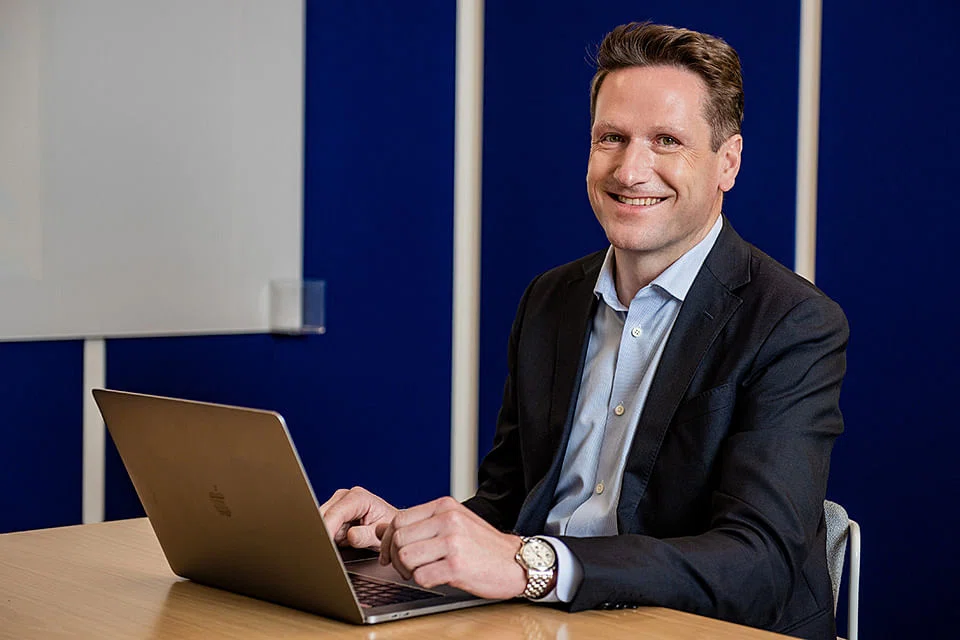
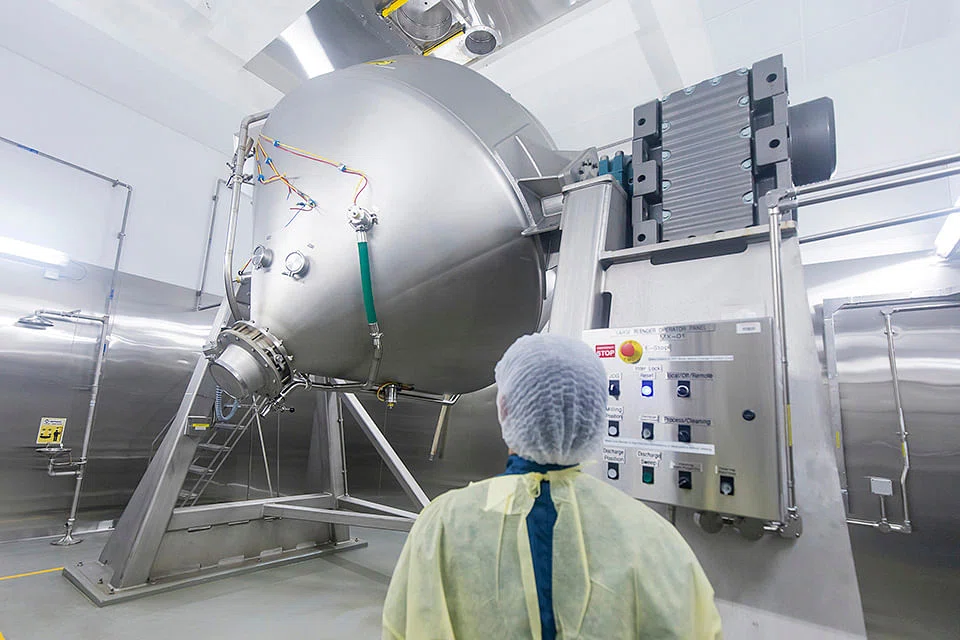
THE biopharma supply chain is facing an unprecedented test, as countries around the world continue to battle the Covid-19 pandemic. This has stepped up the impetus for global life sciences player Cytiva, part of US-listed Danaher Corp, to invest in more infrastructure, expand its headcount and strike more partnerships, including in Asia-Pacific.
Cytiva - which has close to 8,000 employees across 40 countries - is a key provider of instruments, consumables, software and services that accelerate the development of therapeutics. Last year, it inked a deal with the US government to step up the manufacture of products to make Covid-19 vaccines.
The company was previously part of conglomerate General Electric, as GE Healthcare Life Sciences. In 2019, Danaher announced that it would acquire the business from GE for US$21.4 billion; the deal was completed in end-March 2020, with a rebranding to Cytiva.
But as the move to Danaher was being wrapped up last year, the spread of Covid-19 was escalating globally. This meant that executives like Francis Van Parys, Cytiva's Asia-Pacific vice-president, had to react quickly.
"In the middle of the pandemic, we saw an extreme surge in demand for our products to support the vaccination processes and programmes across the globe. So as a result, we invested in capacity expansion," he tells The Business Times.
Since April last year, Cytiva has hired more than 1,500 employees. The company has also ramped up infrastructure, investing in new sites and production lines.
"We've been looking at where to add shifts, double production lines, get new plans in place, regionalise and localise manufacturing, to essentially also look at this from a geopolitical standpoint, and distribute manufacturing sites around the world to reduce dependency on 1 or 2 particular sites," he says.
With the supply chain under pressure, Cytiva has also proposed alternative products to customers, allowing more flexibility for them to adapt their own processes. Van Parys, who was previously president of GE Healthcare Korea, reckons that Cytiva was well prepared for the rapid changes. While waiting for regulators to approve the transaction between Danaher and GE, the team used the time to get everything in order for life as a new entity.
"We thought our focus was really going to be on becoming a Danaher company, developing our brands and ensuring employees and customers are aware of that transition. Quite quickly, our attention got diverted very much into how to support the pandemic. I'm very grateful that we took the time to prepare well for that transition," he says.
This prevented disruptions for customers, he adds. Meanwhile, the company also kept a close watch on how to keep employees engaged and well amid the pandemic.
"It's been a roller coaster year in which our focus has been around keeping our employees safe, our patients getting access to critical therapies, as well as the vaccines. It's been an incredibly busy year for us. But we have a great purpose, that's why we are in this industry, and we take it very seriously," he says.
Fostering resilience
With the outbreak of Covid-19, "the whole supply chain has been under pressure", says Van Parys. Cytiva is on the frontlines of ensuring that access to raw materials and equipment stays robust. As a core tech provider, the company is involved in many key segments of the sprawling biopharma industry.
On the vaccine front, Cytiva helps manufacturers with developing and scaling up processes, through delivering raw materials and equipment such as single-use bioreactors.
In Asia itself, Cytiva in May struck a partnership with Prestige Biopharma, to provide products and services for the latter's vaccine manufacturing and biopharma development centre in South Korea. This is expected to be recognised as one of the world's largest production facilities.
When it comes to the vaccine industry, the biggest challenge for Cytiva has been the extent of the surge in demand. "It's been exponential. Nobody really saw that coming," says Van Parys.
"As usual, as part of our business continuity planning, we did have expansion plans in the drawer, to cover for additional needs projected by our customers. But this has really been an expansional change... It came very fast and very steep. And so we've had to adjust very, very quickly."
The risk of concentration in the supply chain is another challenge, Van Parys notes. "The suppliers that we are working with are obviously not only serving ourselves, but (also) other players in the industry. There is the risk of sole supply where too many companies become dependent on one particular supplier, therefore creating a bottleneck in the system," he says. As a result, the "weakest link" can spell consequences far down the line.
Cytiva's way of responding was to deploy its expansion plans as soon as it could. "It's been a complex, very intense activity, but also satisfying in the way that we've been able to get the support needed to activate those plans," he says.
Bold ambition
Notwithstanding the pandemic, Cytiva has big goals for its internal growth. In September last year, the company announced an initial expansion programme, in which it committed to investing US$500 million over the course of 5 years.
Cytiva is also pumping more into research and development. In July, Cytiva and Pall Corp, another Danaher company, announced that they are investing US$1.5 billion over 2 years to meet rising demand for biotech solutions.
"Danaher has been extremely committed to supporting our patients... We could not be more satisfied that so soon after the transition, there has been confidence in the leadership team of Cytiva. And the confidence has been reflected in support and allocating working capital," says Van Parys.
The Asia-Pacific market is key for Cytiva, and it is stepping up its footprint here. The company has been working with academics, established pharmaceutical companies and even smaller biotechs in this region, says Van Parys. Working with startups means that Cytiva has to be flexible, to adapt to their evolving priorities and needs.
Shanghai, South Korea, Singapore and India are among the key markets for Cytiva, and Asia is "arguably the biggest engine for growth in the next decade or so".
Cytiva is especially aiming to expand its capacity to manufacture single-use products in this region. This is because single-use technologies dominate pre-commercial and clinical manufacturing lines, and regulatory approvals are set to push up demand.
The company's single-use capacity in AsiaPacific is set to triple through a partnership announced last year with Wego, a major healthcare technology supplier in China, as part of an "Asia for Asia" strategy of localising capabilities.
Here in Singapore, Cytiva opened an experience and learning lab in June, as part of efforts to strengthen the local biotech industry. The lab is fitted with advanced process development devices, research tools and digital technologies that can provide hands-on training for researchers and biomanufacturers. Cytiva aims to run 70 training programmes there by the end of this year.
The city-state also operates as Cytiva's Asia-Pacific hub, given the presence of its commercial, manufacturing, and fulfilment sites here.
Cytiva is likewise stepping up partnerships with other regional cities. In August, it entered a partnership with Mycenax Biotech, a biopharma contract manufacturer, to launch Taiwan's first continuous bioprocessing lab.
"The growth in Asia, as we've gone through the last 5 years or so, nobody really could imagine the pace of development that we are seeing. It's a slightly different story in India, as it is in Korea, Singapore (or) China. But what they all have in common is that the industry growth has been largely underestimated throughout that time," he says.
A lot of biotech activity has previously centred around the United States and European markets, partly because companies seek regulatory approval in those markets. But there is some change, and Van Parys is seeing more companies localise their research in Asia-Pacific.
"I think the mindset is shifting, particularly in China, where we see a huge amount of biotech activity focused more and more on the Chinese market. We are supporting them, bringing that community together with venture capital firms, ensuring they get access to talent and funding; we're supporting their growth in that manner," he says.
"Some of those companies want to globalise, but not all of them. The patient population in our markets here in Asia is so important and access to biological drugs and therapies is getting easier from a cost standpoint. So that regulatory hurdle is going to become a lot less."
Cytiva also hopes to track the bigger picture and draw learnings on biopharma resilience.
Earlier this year, it released the Global Biopharma Resilience Index, based on a survey of more than 1,000 senior biopharma executives, developed with Financial Times company Longitude. The index tracks the sturdiness of the biopharma ecosystem in 20 countries, including Singapore.
While Singapore fared well in most areas, there is more to be done in encouraging greater collaboration between the academic sector and pharmaceutical players. Some 25 per cent of respondents in the survey said that forming such partnerships is a "substantial challenge" in Singapore, as opposed to 13 per cent in the United Kingdom or the US.
Van Parys looks forward to working with countries like Singapore to step up the ecosystem. This feeds back into Cytiva's long-term priority of localised capabilities.
"We are developing a lot of functionality, peace of mind in terms of security of supply, which I think will in the mind of our customers, reinforce the idea that we can... support them through their growth and that in the unlikely event of a pandemic happening again, we will be prepared and can support their needs."
He adds: "Obviously, the job will never be finished."
FRANCIS VAN PARYS
Vice-president, Asia-Pacific, Cytiva
May 1975: Born in Belgium
EDUCATION
1999: Masters in Material Science and Engineering, University of Ghent, Belgium
1999: Master of Science in Polymer Technology, University of Manchester Institute of Science and Technology, UK
CAREER HIGHLIGHTS
2001: Joined General Electric in a sales leadership programme
2009: Joined GE Healthcare as general manager for commercial operations in EMEA
2016: Appointed global commercial general manager for cell culture at GE Healthcare
2017: Appointed president of GE Healthcare Korea
2019: Appointed vice-president of Asia-Pacific for Cytiva
OTHER POSITIONS
Member of Board of Trustees, Dulwich College Seoul
Member of Board of Governors, American Chamber of Commerce in Korea (AMCHAM Korea)
TRENDING NOW

Indonesia’s coal tycoon Low Tuck Kwong replaced as Bayan Resources president-director

OCBC names Ang Eng Siong as global corporate banking head in rejig of wholesale banking business

Consider lowering homeownership barriers for some non-resident foreigners

DBS opens flagship investment strategy to retail investors with new fund

