

Segmented & bespoke
John Kidd, who runs one of the world's biggest hotel groups, talks about the consumer trends behind Radisson's strategic decisions, including its pivot to China.

Annabeth Leow
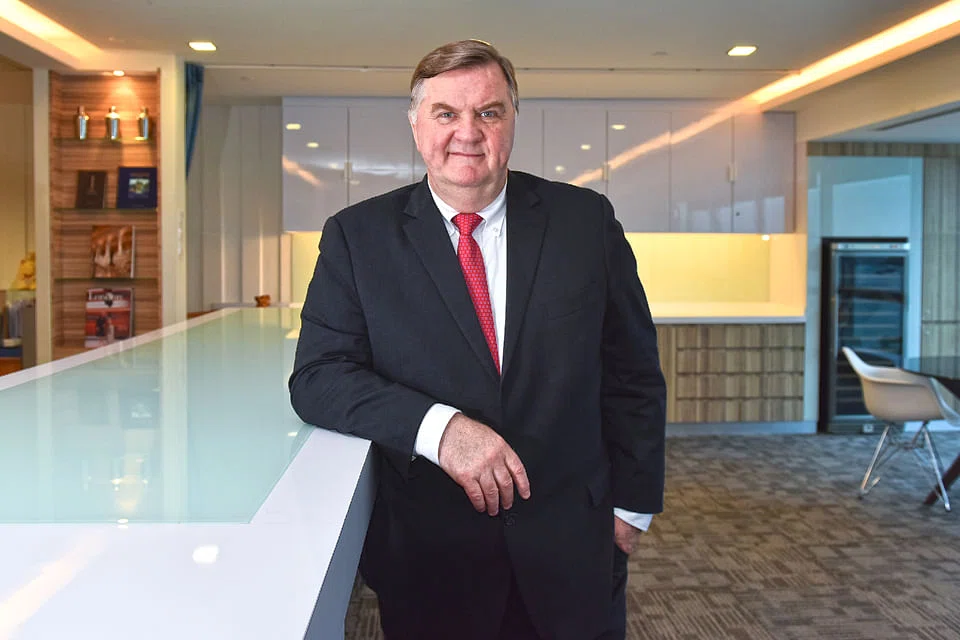
SHORT-TERM home rental platform Airbnb is here to stay, which means that hoteliers must step up their game, says global industry veteran John Kidd.
And one trick remaining up incumbents' sleeves is the ability to dream up new portfolio brands for different consumer segments, he tells The Business Times.
As chief executive and chief operating officer of Radisson Hospitality, Inc, Mr Kidd, 65, oversees the Radisson Hotel Group's corporate offices and hotels. Its brands include Radisson Blu, Park Inn, Country Inn & Suites and Prizeotel.
Adapting to changing consumer tastes has also meant trimming the fat, by his account. He describes the Park Inn brand - envisaged for a "mid-scale to upper-mid-scale" market - as "super branded right from the construction stage" and suited to Radisson's expansion plans for China.
"We don't get the owner to waste money on real estate like big marble lobbies and big ballrooms if they're not necessary. And that every square metre of space is able to achieve revenue," he adds.
"That's the way to go, because the market in the primary and secondary cities has, for years, already been very over-populated with top brands, big-box hotels, and they're all fighting with each other for business."
Besides that, he comes across as particularly excited by the new Radisson Red brand, which opened its doors in 2016 with the goal of having 60 hotels up and running by 2020. The line is "aimed at the younger-thinking person" - which seems shorthand for bold decor and a mobile app.
"We have no intention of introducing any new brands in the very near future because we want those brands to be special," he says. "We have put a lot of time and money into improving our current brands as one of the pillars of our five-year strategic plan."
Mr Kidd notes that tastes have come a long way from bus trips at the dawn of the travel industry: "There's still the group tours, of course, particularly as first-time travellers start - they usually start that way, with groups."
But he adds: 'The independent traveller - after he or she has done Europe, for example, climbed the Eiffel Tower in Paris, gone to the Leaning Tower of Pisa in Italy, et cetera - they're looking for something different. So then you start talking game safaris in Kenya and South Africa and places like that, climbing Mount Kilimanjaro to be able to say they've done it.
"And those trends are becoming more and more popular with people, and it doesn't have to be expensive. People can go to Kenya backpacking if they want to - they don't have to go on a luxury tour and stay in an expensive environment. So, you know, those are the trends to look out for as well."
The other consumer trend that he is keeping a close eye on is the rise of digitally savvy travel: "It's mostly around technology and making it easier to book, and that's where we are spending a lot of money in terms of our dedicated five-year strategy."
'Wish they weren't around'
The fact that Radisson has a five-year plan might point to not everything being well in the hotel industry. And one tempting suggestion would be that this is because of technological disruption, such as couchsurfing and home-sharing rental platforms.
"A few years ago, the industry was complaining about this new disruptor, but we've had to face facts that they're here to stay and they're doing an extremely good job of satisfying a particular segment of the travelling public," Mr Kidd says bluntly, when asked.
"Have they taken some of our business? Absolutely. They have, because they are serving a particular segment of the market that wants to use that kind of accommodation.
"And that's great. It's just like companies bringing out new brands because they see a niche in the market where it's not really being served, somehow... Each one of those is going to take away customers from the traditional hotel company offering."
Mr Kidd adds: "We wish they weren't around. But they offer a great offering to a particular segment of the travelling market, and we just have to work on our products and services.
"You know, it's not about reducing prices because Airbnb is charging this so we should reduce our prices. That doesn't work. We have to make sure that we live up to our 'every moment matters' point and the experience that comes from that."
Another way for incumbents to tackle the influx of tech startups might be by adopting technology of their own. Indeed, Mr Kidd declares: "I think the biggest challenge in the industry is really about technology. We've incorporated a huge change in our IT platform, technology platform, to be able to accommodate the challenges," he lets on.
"And we also have to remember that we have a shifting market as well, and today we're focusing on the millennials as an extremely important market. Of course, they are very different to the markets that preceded them. They have a great need for experience, as opposed to just consuming products. They want to enjoy that experience, and we believe we, as a company, are able to satisfy that.
"And they want things now. They want things immediately. Everything must be as quick as possible, which means our mobile platforms have to be not up-to-date but future-thinking as well, future-proofed."
Traditional hospitality providers still house facilities that up-and-coming alternatives do not have access to, he points out. "There are overlaps in terms of guests staying in those properties and using the hotels for food and beverage, for Mice (meetings, incentives, conferences and exhibitions) opportunities, fitness centres, you name it. So, there are ways of trying to make it work."
But, asked if Radisson would consider working with new entrants, just as taxi company ComfortDelGro weighed tie-ups with ride-hailing rivals, Mr Kidd says flatly: "Not in the near term."
It's partly a case of "buyer beware", for him: "There's a lot of regulation in countries vis-a-vis the hotel industry - regulation from fire safety to security to even security of food consumed, health regulations. We are festooned or covered with regulations in every country we work in - First or Third World, it doesn't matter.
"And those regulations have to be maintained and that's obviously a cost to us which they don't have, so that's their opportunity. But the guest has to take that into account when they stay in one of those properties."
Journey to the east
Minnesota-based Radisson, which was formerly known as Carlson Rezidor, has gone through two owners in as many years. It was picked up by Chinese conglomerate HNA Group for an undisclosed sum in 2016 - one source told Reuters that the deal was worth more than US$$2 billion - only to go to a consortium led by hospitality group Jin Jiang International Holdings in August, as HNA launched a fire sale amid debt woes.
But Mr Kidd says that Radisson is "a self-funding, self-operating company", and stands by the strategic decision to grow its footprint in China, irrespective of company ownership.
He calls Radisson "a completely independent, private business", adding that it is self-sufficient when it comes to cash, after it pulled off a restructuring last year.
"Our growth strategy is very much an organic one, so we're not looking at spending a lot of money on acquisitions and we don't need a lot of money," he says. "We're able to finance our five-year plan from our own proceeds, our own funds."
But he does not elaborate on his media statement about the deal, in which he had said that efforts to transform the company "have helped make Radisson Hotel Group an extremely attractive acquisition target", with the group still on track to triple its portfolio in China by 2022.
"China's huge. The market potential is phenomenal. I lived in China for 14 years and am very comfortable with that market and respect it very much," says Mr Kidd, who was previously general manager for the Hilton brand in Nanjing and Chongqing, among other cities in the Asia-Pacific.
He sees room for growth, even despite what he has dubbed the problem of "a surfeit of very, very good-quality international brand properties, which have crowded out the lesser-branded or non-branded properties and older properties over time" and put a crimp on room rates.
Follow the Red brick road?
"Again, one has to be selective in the city that we choose to operate in, in the owner that we choose to operate with, and the brand being in the right location," Mr Kidd emphasises.
"So, for example, the Radisson Red is not going to fit in every city in China because there might not be an understanding of what the brand is intended to achieve. Similarly, our top-end brands - the Radisson Blu and the new brand that we just launched in early March, the Radisson Collection - would also not have resonance in a lot of the tertiary or fourth-level cities."
The road to growth, he believes, will come on an affluent middle class, which could fuel domestic tourism. "Mid-scale is the way to go in China today," says Mr Kidd. He points to Chongqing or Chengdu as potential markets to hit up: "Chengdu has all the big-name hotels, the Waldorf Astorias, for example, and Conrads, and hotels like that. So we come in with our mid-scale brands, the Park Inn; and the opportunity in Chengdu would be ripe for a Red as well."
He discloses that Radisson is also looking at resort opportunities, which he calls "fabulous" and ripe for the picking beyond the traditional beach getaway destination of Sanya in the island province of Hainan.
"Everybody's gone down to Sanya, so Sanya is swamped now," he argues. Leaving his words unminced, he adds that its beachfront "is like a parking lot with five-star hotels".
Mr Kidd is also unfazed by the challenges of a franchising model, insisting that "franchising is a terrific opportunity to put a flag in the ground".
"There's less money in it for us. But it's easy money, if you have a prestigious brand or brands that owners feel are worthwhile," he says.
"It's only been in the last 10 years or so that more and more companies are now willing to franchise their brands overseas in countries such as China, for example, and India. But that's also because the owners in those countries are becoming very much more sophisticated over time.
"Owners in China, India and other places now really know what hotels are about. They know how to make money in hotels, and they are now telling the brands 'This is what I want, this is what I need'. So companies have much more confidence today."
Mr Kidd adds that "this is not to say that we'll just throw franchise out to everybody". "You cannot do that. There has to be some control... We don't quibble about, you know, 'we must have managed properties as opposed to franchised'. The only concern would be that the owner would respect the integrity of the brand, and if they do, then, for us, it's another flag."
Despite the pivot to China, Radisson has not ignored other emerging markets for its brands, Mr Kidd says, reeling off targets in the Asia-Pacific as well, naming Myanmar, Vietnam and Thailand. "I would like to see us move into Japan and South Korea, but it is tough there - it's extremely competitive there," he adds.
"There's not a lot of new stock opening, so we would have to look at conversions, but those are very conservative markets and traditionally they will not change just for the sake of change. They will only change if there's an extremely good business reason for it and we have to try and show it to them... Australia is another great opportunity, again probably for conversions.
"These are mature markets and, you know, businesspeople are savvy. They're not going to open a hotel in a market that's already got a lot of hotels, because that's when your average rates start to drop and everything else."
Calling South America "a classic example" of an economy with room to spare, he says: "We have an extremely good relationship with an operator down in Brazil - we've had that for quite a few years - but it was very much at arm's length. We've taken the opportunity to make several trips down there, speak with them, work with them, and they're talking to us about some big deals now.
"We just opened a Red in Peru. We're opening hotels in Colombia and there is truly a great opportunity there."
Still, when all's said and done, if this businessman had his druthers, which Radisson room would he lay his head in? But on that million-dollar question, a coy Mr Kidd declines to play favourites with his brand babies.
JOHN KIDD
Chief executive and chief operating officer, Radisson Hospitality, Inc
Born: October 1953, New Zealand
EDUCATION
BComm with honours in business economics, University of South Africa
MBA and MSc in strategic planning, Heriot-Watt University
CAREER
1993 to 2013: General manager at Hilton hotels in the Asia-Pacific
2013: Executive Vice-President, HNA Hospitality Group
2014 to 2017: President and Chief Operating Officer, HNA Hospitality Group
Since May 2017: CEO and COO, Radisson Hospitality Inc
TRENDING NOW

Indonesia’s coal tycoon Low Tuck Kwong replaced as Bayan Resources president-director

OCBC names Ang Eng Siong as global corporate banking head in rejig of wholesale banking business

Consider lowering homeownership barriers for some non-resident foreigners

DBS opens flagship investment strategy to retail investors with new fund

