Solar vision: Why it's not all sunshine and roses for Singapore's solar energy plans

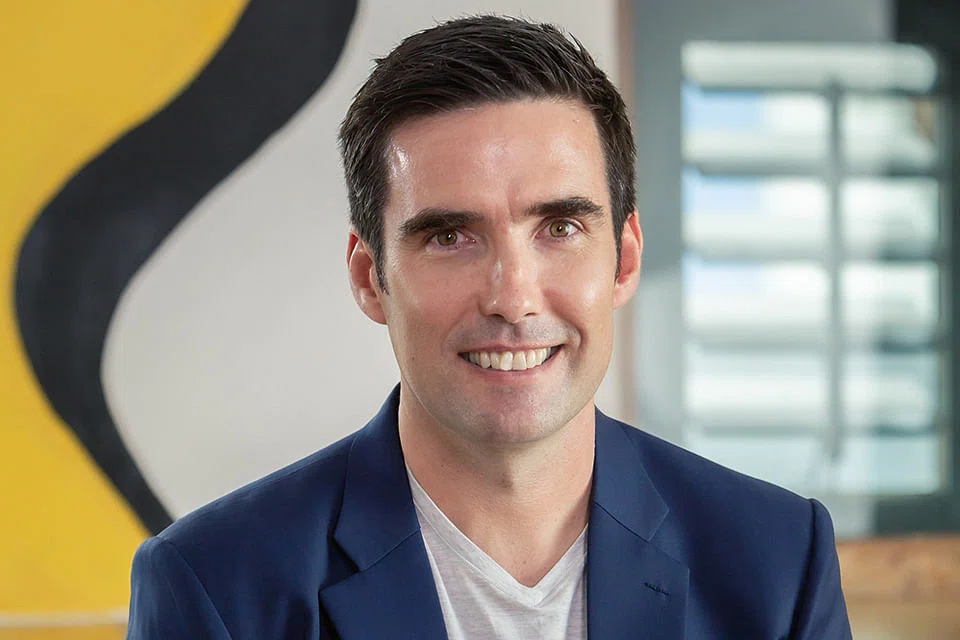

Dutchman Edgare Kerkwijk must be "walking on sunshine". His solar business, to use his own words, is going "gangbusters" and his phone has been blowing up. The Singapore resident's over two-decade-long wait for a big break in the city state's renewable energy space is paying off. "Every time one of the ministers says something about green energy, we get more phone calls. My phone goes off every hour," he gushes.
He heads Urban Renewables, a small firm he co-founded and launched six months ago that provides solar rooftops and energy storage services. The firm is giving away electric vehicles' charging units and solar roofs for free to entice building owners here to buy solar power from it. The strategy appears to be working. With a solar project pipeline of nearly 28 megawatts (MW) including the latest one snagged from Singapore-listed marine firm Amos Group, Mr Kerkwijk can't wait to pass the hat soon to raise fresh equity.
Indeed, the Lion City's solar sector, its most viable source of renewable energy, is abuzz with activity and promise despite two party poopers - limited land to harvest solar power and intermittent sunlight owing to high cloud cover and rain.
From floating solar panels offshore and on reservoirs, mobile panels and game-changing energy storage technologies, aided by homegrown firms and Big Oil, to the "outsized" role played by industrial landlord JTC Corp to solarise roofs, vacant land and linkways, Singapore has been going all out to meet its solar goals.
Sun-kissed island
Singapore's push towards a low-carbon energy future, now led by the Singapore Green Plan 2030, has a tone of urgency, not least owing to the Covid-19 pandemic which, as is the case globally, has shifted the new energy paradigm of renewables into overdrive. The city-state has pledged to halve emissions by 2050 and hit net-zero as soon as viable in the second half of the century.
"Singapore has ramped up solar deployment and we are one of the most solar dense cities in the world," says Lee Seng Wai, the Energy Market Authority's (EMA) policy and planning department director.
Having hit its solar target of 350 megawatt-peak (MWp) last year, Singapore's next goal is to deploy 1.5 gigawatt-peak (GWp) of solar by 2025 and at least 2 GWp by 2030. This, says Mr Lee, is enough to meet the annual electricity needs of around 260,000 and 350,000 households in Singapore respectively or around 2 per cent and 3 per cent of total estimated energy consumption in those years respectively.
Much of the installed capacity is based on solar photovoltaics (PV) systems, which has grown nearly seven-fold in the past six years to around 428 MWp as at the fourth quarter of 2020, accounting for about 1 per cent of current electricity demand.
Solar PV systems can be deployed much faster than any other major electricity-generating technology and hence, Singapore will "very much so" be able to meet its targets, according to Thomas Reindl, deputy chief executive of the National University of Singapore's Solar Energy Research Institute of Singapore.
"In addition, the local banking sector is increasingly open to support the PV adoption with various financing options. Singapore also aims to become a hub for "green financing", and solar will play a key role in that," he adds.
Not all sunshine and roses
While 95 per cent of Singapore's electricity needs are powered by natural gas - cleaner burning but nevertheless still a fossil fuel, all of which is imported - with plenty of excess capacity, some observers say its green capacity can't seem to grow fast enough to match rising demand.
That has led to a conundrum for some data centre operators that have flocked to the city state, wowed by its stable politics and solid infrastructure, but have found their plans to build new data centres (DCs) thwarted owing to Singapore's temporary pause on the release of state land for new DCs since 2019.
The move to moderate the growth of energy-guzzling DCs, which some players deem as an implicit moratorium, is in place until Singapore can figure out a sustainable option that supports its climate goals under the Paris Agreement.
Darren Hawkins, chief executive of SpaceDC, a Singapore-headquartered firm that designs, builds and operates data centres, says his phone has been ringing off the hook from potential customers but his plans to build two centres here have not budged given the "moratorium".
"Singapore should be capitalising on this (booming demand for DC facilities) as it's an awesome opportunity for strategic positioning in the region. More DCs mean more capital investments and more jobs.
"It's a catch 22 for all - industries need green power for growth, and realistically it may need to come from overseas. The drive to be greener is great, a worthwhile cause, (but) we need the regulatory framework to move forward for elements like solar power," he continues.
DCs consume a great deal of energy, specifically to cool the servers during operation. According to EMA's Mr Lee, DCs consumed around 7 per cent of Singapore's total electricity consumption last year, double that in 2017.
Singapore is a DC hotbed. Tech giants like Facebook, Alibaba and Amazon, which run their regional businesses here, have also expanded their data centres in Singapore to support their operations.
It appears easier for the "big fish", more specifically those already present in Singapore. Two weeks ago, Amazon announced a 62 MW solar project that it plans to tap from JTC's solar farms, which aligns with the clean energy vision of the city state as well as the e-commerce giant. The project will supply renewable energy for Amazon offices, fulfilment centres, and AWS data centres in Singapore through the national grid.
"This project, Amazon's first in Singapore, is made up of a series of solar panels mounted on a ground system across nine sites that can be moved. They will deliver clean energy into the grid through Power Purchase Agreements at no cost to consumers in any of these countries," says Conor McNamara, Amazon Web Services (AWS) managing director for Asean.
Other hopeful DC operators may have to wait a while longer. The Government has said its review on the development of new DCs will conclude soon and the plans will be revealed "later this year".
Meanwhile, an outward-looking plan already in motion for Singapore to buy cost-competitive clean electricity from neighbours starting with Malaysia, is making carbon-conscious, energy-intense businesses such as DCs delirious with anticipation. "If data centres are able to tap the energy from this cross border grid, it ticks the box and the problem could be solved," says one energy market player.
Let it glow
The upcoming two-year trial for Singapore to import 100 MW of electricity from Malaysia via a jointly-owned interconnector to speed up the decarbonisation of its power grid and overcome land constraints has set the power sector abuzz. The pact also sets the stage for larger-scale imports from the region in future to supplement the country's local renewable investments.
Dr Reindl deems Malaysia and Vietnam the "hottest" solar markets in South-east Asia. Just this week, Fitch Solutions said Malaysia's solar capacity could more than quadruple and surpass 4 GW in 2030, which will account for more than 7.5 per cent of its energy capacity, citing strong regulatory push and better financing for solar firms.
The two-year trial will focus on imported electricity from preferably low-carbon sources, says Mr Lee, adding that proposals involving imports from coal-fired sources "will not be accepted".
He adds: "EMA will assess the carbon output from the proposals it receives, and cleaner proposals will be scored favourably. Beyond two years, EMA will require the imported electricity to be from zero-carbon generation sources."
Singapore could also get more power from Australia's outback. Sun Cable, which is building the world's largest solar farm in Australia's Northern Territory, plans to export power from the farm to Singapore via an undersea cable.
Good neighbours, as the saying goes, are worth their weight in gold.
Dr Reindl remarks: "If we also consider imports of solar energy (as well as other renewable energies such as wind and hydropower) from neighbouring countries, the share of green electricity in Singapore's generation mix can become very large within the next 10 to 15 years."
SOLAR NUGGETS
Private households
- Installed solar capacity has quadrupled in 5 years from 3.6 MWp to 14.9 MWp as at Q4 2020.
- Grid-connected solar PV installations rose 4X in 5 years from 338 to 1,432 installations at Q4 2020.
HDB
- Has thus far committed total solar capacity of 330 MWp for 6,901 blocks.
Data Centres (DCs)
- 14 DCs with total IT capacity of 768 MW approved to be constructed on industrial state land in last 5 years - a sharp increase compared to 12 DCs with total IT capacity of 307 MW in preceding five years.
Source: EMA, Parliament reply
Key players in Singapore's solar game
THERE are many movers and shakers in Singapore's solar game as the city-state charts its green energy revolution to mitigate the impact of climate change.
Here are just some of the key players and enablers:
JTC Corp
With 14,000 businesses in its estates and a sizeable land portfolio, industrial landlord JTC Corp works with partners to generate and directly export sun-powered electricity from building rooftops to the grid.
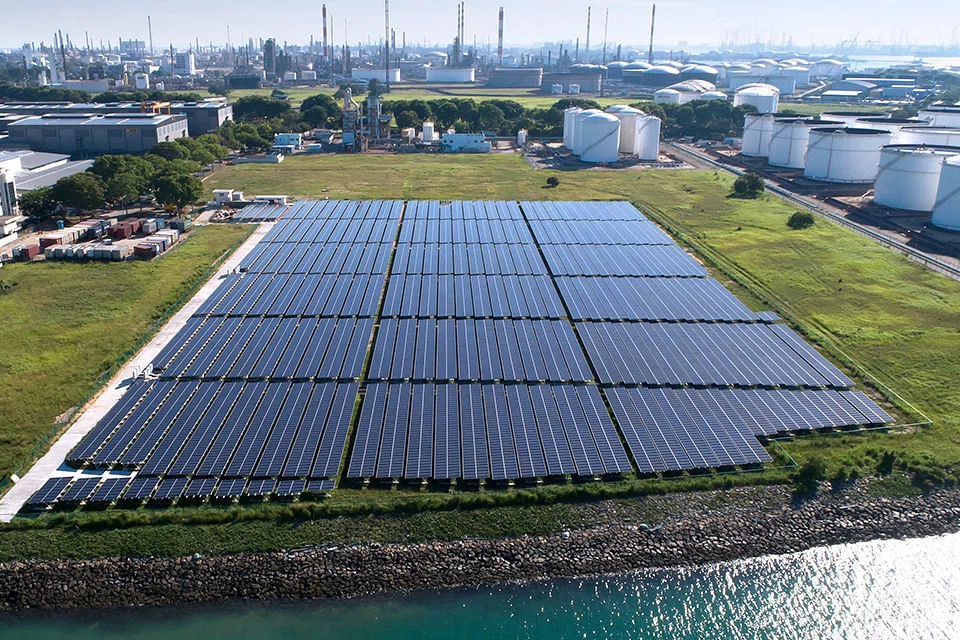
To optimise use of space, large-scale solar PV panels have been installed on vacant land in Jurong Island and Changi Business Park.
The solar farm in Changi Business Park - one of the largest ground-mounted solar projects in Singapore - has portable panels and a first-of-its-kind mobile substation that would save time on redeployment if the land is needed. It also counts Facebook as a renewable energy consumer.
JTC's group director of engineering Calvin Chung says it is exploring more options to optimise space under PV panels for farming and rainwater harvesting. JTC is also mulling combining the panels on Jurong Island with other renewable sources such as solar, tidal, wave and wind. "We are confident to meet or even exceed our target of 100MWp of solar deployment by 2030, effectively reducing 55,000 tonnes of carbon emissions," he adds.
Sembcorp Industries
Sembcorp is one of Singapore's leading solar players with over 360MWp of solar power capacity in operation and under development across rooftop, ground-mounted and floating solar projects. This accounts for 20 per cent of the company's total power capacity in the city state.
The Singapore-listed conglomerate builds, owns and operates rooftop solar systems for nearly 1,800 HDB blocks and just over 70 government sites here and expects to complete its solar rooftop project for 48 JTC buildings by the fourth quarter of this year.
A milestone awaits in July as Sembcorp completes Singapore's largest floating solar PV systems (60MWp) on Tengeh Reservoir for national water agency PUB.
For the past two years, Sembcorp, together with Singapore Polytechnic, has been working on how to manage and recycle materials from used solar panels such as glass, silicon and metals.
Sunseap Energy
Sunseap has been in the news for much of March - a drumroll of sorts, one can say, for an initial public offering sometime this year on the Singapore Exchange, as reported by a newswire quoting sources.
The news follows an earlier announcement by Sunseap that it has secured an investment from Dubai-based Dutco and that it has sold a 39 per cent stake in five solar rooftop projects in Vietnam to Malaysia's state-owned utility Tenaga Nasional.
Backed by Thai energy firm Banpu, the firm last month said it signed a long-term agreement with Amazon to supply 62 MWp of solar energy from JTC's solar farms to the e-commerce giant through the grid.
It also said that it has joined hands with Tenaga to partake in Singapore's trial run to import electricity from its neighbour.
More recently, Sunseap, which also counts Apple and Microsoft as customers, said it completed one of the world's largest floating solar farms on sea water along Singapore's northern shore, in the Straits of Johor.
SP Group
EMA and SP Group have come together to deploy Singapore's first utility-scale ESS (energy storage systems) solution at a substation. The 2.4MW/2.4MWh lithium-ion battery deployed under the project is equivalent to powering 200 four-room HDB households for a day. The project seeks to evaluate the performance and safety of ESS in Singapore's hot, humid and highly urbanised environment.
Big Oil
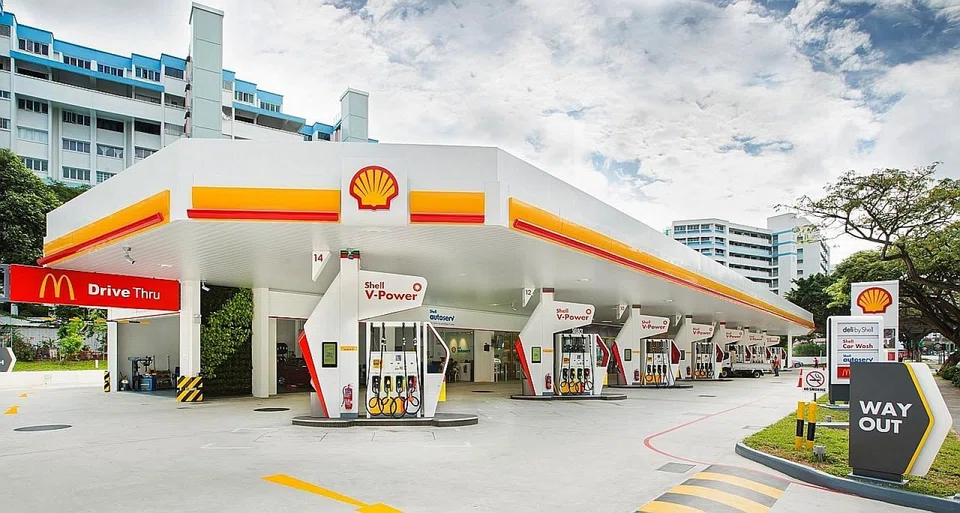
Shell is one of the Big Oil firms supporting Singapore's agenda on decarbonisation, even as it charts its own energy transition plans. It is working with EMA to deploy more energy storage systems (ESS) - a game-changing technology which stores energy for later use - such as the project with Eigen Energy.
Emily Tan, Shell City Solutions' general manager, says Shell is the only energy company in Singapore offering EV (electric vehicles) fast charging at service stations. Shell also has a 3 MW peak solar capacity at the Pandan distribution terminal, Seletar aviation site and Tuas Lubricants Plant. It also owns a 49 per cent stake in Singapore-based Cleantech Solar, a leading solar player in the region.
Eigen Energy
Homegrown solar firm Eigen Energy, under a grant awarded by EMA and Shell, is developing Singapore's first smart and clean-energy powered service outlets at three Shell stations in Tampines, Pasir Ris and Lakeview.
The stations will integrate solar PV panels installed onsite with energy storage systems (ESS) to mitigate weather-related intermittency and is expected to be completed by next year. It will also offer one of the fastest EV charging capabilities - up to three times faster - in Singapore.
Eigen's founder and director Kevin Sim says due to Singapore's high cloud coverage and rainfall, ESS is the ideal solution to mitigate the intermittency of solar energy and optimise renewable energy penetration and grid resilience.