Tackling turbulence
To deal with the impact of the Covid-19 outbreak, Schweizer World CEO Maren Schweizer says the 170-year-old German family business drew on its experience of dealing with two "existential" crises in four years.
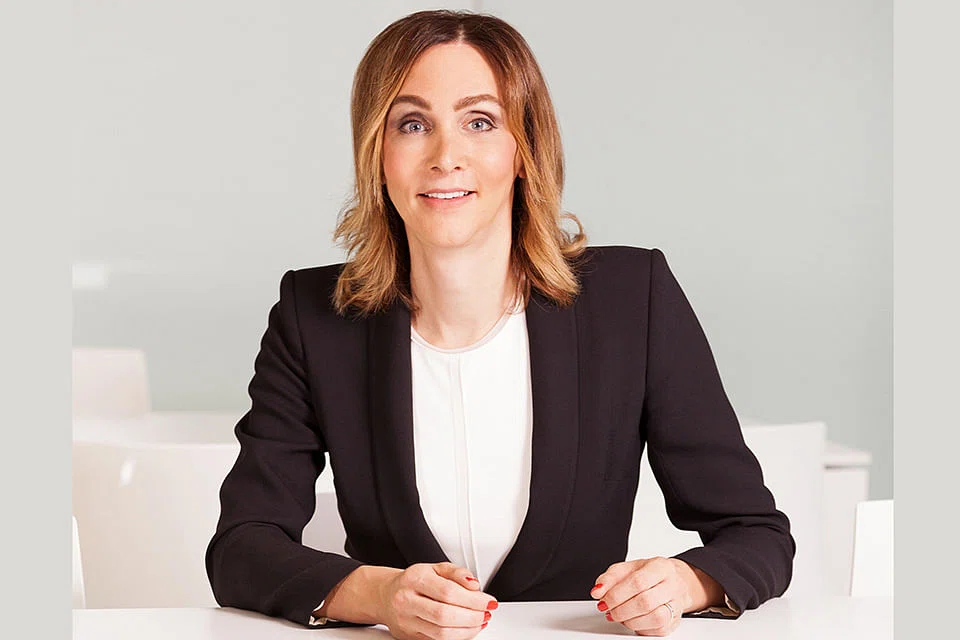
LIKE many others, Maren Schweizer has been working from home amid the Covid-19 outbreak. The chief executive officer of Schweizer World says that it was initially a little bit tough as she "missed the personal interaction" with colleagues.
But they have made the best of it. "We're doing team coffee mornings, and virtual after-hours now. Everybody has FaceTime or Microsoft Teams... We're all sitting there, everybody's pouring a drink... we have to get used to it."
Dr Schweizer believes that tele-working is here to stay, even after the pandemic subsides. "The technology is ready, it works... So from an efficiency point of view, why would you want to go back?" she asks, listing benefits like less commuting, fewer business trips and reduced CO2 emissions.
Besides, she adds, companies have now been pushed to acquire the technology needed to facilitate remote working.
It is also a matter of adjusting to the new order of things. "People have gotten used to going to the office every morning... It's a routine established over many years, and it will take people time to adapt. It doesn't mean we are not social animals anymore, and we need to see each other, but maybe not every day."
The pandemic has heavily impacted all of Schweizer's businesses, says the sixth-generation leader in the family firm that was started in 1849 by her ancestor Christoph Schweizer, and which has now grown into Schweizer Electronic, a German-listed technology company addressing key challenges for the future of low carbon emissions and automated mobility.
The Schweizer Group - with 2019 revenue of around 121 million euros (S$190 million) - is structured around three divisions: Digital, Mobility and Electronics. Dr Schweizer's company, which is headquartered in Singapore, is a tech investment and advisory business in the digital and mobility fields.
To deal with the pandemic's impact, the company draws on the lessons learnt from having faced two "existential" crises in four years. One was in 2005 when the group's main production site in Germany burnt down and had to be completely shut for some time.
"It was a restructuring, cost improvements, rebuilding of the affected factory buildings and equipment while keeping customer relationships alive," explains Dr Schweizer.
Then the global financial crisis hit in 2009. "That was the second restructuring; it was a big stress on trust and our commitment as we had to downsize for the second time to survive."
Schweizer has since put in place two guidance scenarios for such situations. "We run it in a combination of two ways: one is the network of teams; the other is procedure, which is pretty much like crew coordination in flying."
Network of teams
Dr Schweizer believes that it is important to have a network of teams to handle a crisis. It is "difficult when we have one little crisis management team, because there are multiple sets of information that are constantly evolving. So we have been building a network of teams that are reporting to a nerve centre, as we call it, where the information can be consolidated. These teams can act fast because they have the roles and responsibilities, and the authority to do so".
She illustrates the importance of the procedure scenario with an example. "Imagine you are flying from Paris to New York, and there is an engine failure. This is an emergency, and the crew will follow strict procedures they've been trained on - no discussion, no delay, no hesitation."
The "piloting procedure"also works in business. "If you have to pull the trigger and with emergency procedures in place, everybody knows what to do. There is a lot less hesitation, arguing between teams, frustration and emotional instability. And you avoid wasting a lot of time on discussions."
The aviation analogy comes naturally to the licensed pilot and flight instructor. Dr Schweizer started flying gliders when she was 15, when she was "not allowed to ride a motorbike or drink alcohol".
It was a "great character education", she says, noting that "instead of partying and hanging out, I got up pretty early on most days because we did sunrise take-offs".
When she was in her 20s, a pilot friend introduced her to a taxi flying company, which hired her.
Her first job, as she did not have any commercial or airline pilot licence then, was cleaning aircraft and preparing them for customers - kind of "a dishwasher", she quips.
She loved it so much that she went on to become a commercial pilot and fly single-engine and twin-engine aircraft. "The company actually paid partially for my licence and I paid it back while working for them."
She worked two to three days a week as a pilot, while studying for her engineering degrees in Karlsruhe, Germany.
Dr Schweizer also became a flight instructor, and one of her students, who "had a very successful leadership consultancy company in Germany, felt he was spending too much time in the car and in airports. So he decided to buy his own private aircraft".
But he soon realised how expensive it was to own a plane because of the fixed costs. "So his idea was to open a private taxi airline that provides small aircraft to fly within Europe - an on-demand private aircraft charter."
Dr Schweizer's first job was to get an Airline Operator Certificate (AOC) for the company. Later, she was "very fortunate to be appointed managing director at a very young age".
But the business model didn't work, she says, because "we didn't really have the value proposition that differentiated us from the competition".
What she thought would be an inspiring first career role turned out to be a "learning curve".
"I learned basically how to build a value proposition, and the outcome was that we repositioned the company into the supply chain for the automotive industry to avoid production line interruptions. We provided a service with a fleet of old aircraft to pick up all kinds of components from all over Europe and helicoptered them to the production site. It worked very well."
However, a bigger learning curve awaited her when she joined French aircraft manufacturer of military and business jets Dassault. After all, she was moving from a startup-oriented company with US$5-10 million turnover to the Dassault Group subsidiary Dassault Falcon Service which, at that time, had about US$150 million turnover and around 550 employees.
And, to boot, the company wasn't doing very well, so she was involved in a restructuring exercise, to "reconfigure the company and reduce fixed costs while keeping staff motivated and inspired".
"That's been actually the best learning curve for me in my life," Dr Schweizer says, not just because she was the only non-French member in the management team, but also because she learnt to stay strong and positive in tough situations.
Meanwhile, the call of home was becoming stronger. Although her heart was in the family business, she wanted first to prove to her parents that she could manage a career outside. "It had to feel right" before she joined the family business, she says, and in 2005, it did.
It was a challenge in more ways than one. The business itself was different, she points out - moving from "hip" aviation to "down-to-earth" electronic components and systems manufacturing in the automotive industry.
The biggest personal challenge for Dr Schweizer was to build her own management style in a family business. "I was in charge of sales," she says, "and I was constantly compared to my father - 'he does this' and 'he has been doing that'. Initially, I was a little annoyed, but I realised that it was completely normal behaviour."
She soon settled into her role. And then the business brought her to Singapore in 2013. She had first come as a young girl back in 1983, around the time Schweizer started the Pentex-Schweizer joint venture here.
"I was fortunate to be in and out many times as my father used to spend most of his time here for many years. So, all vacations were spent here and family gatherings were held here."
When Dr Schweizer moved here for business, her focus was to internationalise Schweizer Electronic in Asia-Pacific and South-east Asia. Doing it by "remote control" would have involved a lot of travel, so "we came to the conclusion, for team and partnership building, and to also export part of our culture here and combine it with local cultures, it's very important to be physically here in Asia".
Picking Singapore as a base was a logical choice. "Well, it's a great place to live, well-positioned, and we already had a couple of companies in Singapore at that time. And the production site I was in charge of around that time was in Hanoi, Vietnam."
Change of track
In 2017, she started building Schweizer World, a tech company for digital businesses. "The strategic rationale behind it was to prepare Schweizer for the next big change of processes - digitalisation."
The question then was how to do it. "Do we want to be an incubator, do we invest directly in a couple of startups? Schweizer World is separate in its first phase, to have the freedom to operate while also looking into guidance, governance, processes of the portfolio companies from a corporate point of view, to be able to scale at a fast pace, and to understand how Schweizer World can build an ecosystem."
Dr Schweizer explains: "It has two axes. One is the principal investment arm. So we are funding various tech companies that can demonstrate a business case and scalability on their own. Any synergy play is an upside potential for us.
"And secondly, depending on the stage of the company and their challenges, we're also helping them. For example, these days, we are spending a lot of time together on crisis management, contingency planning and communication with all stakeholders."
The mission for Schweizer World is to better understand digital as she had discovered that its digital literacy was "just not good enough to be able to connect digital business models and our manufacturing business model together".
Data is the new fuel
The driver behind the business is big data, according to Dr Schweizer. "Data is the new fuel. Businesses that can work with data can make us understand AI (artificial intelligence) tools and implementation. That's what Schweizer Electronic is already starting in one of its manufacturing plants, which is fully based on IoT (Internet of Things). And we are putting AI tools into the entire supply chain of all portfolio companies."
Family businesses like Schweizer Electronic have also had to grapple with the issue of next-generation leadership. For years, the company had a policy of promoting from within - "basically, no external hires for senior positions".
But evolving markets and customer requirements have pushed Schweizer to also change. "For me, one of the biggest challenges was to mix external and internal talent," she says.
The company now has a "mix of Schweizers and non-Schweizers in all exec boards", including Singaporeans who hold senior positions across the group, in both Singapore and non-Singapore companies.
Hiring from outside also resulted in more diversity and inclusion, which Dr Schweizer is most passionate about. "I believe inclusion equals innovation, whether it is technical, or business model... for all sorts of innovation, the driver is inclusion."
A business drives inclusion by "being a role model, and enabling our senior leaders to understand their own behaviour - whether it's more or less inclusive".
Besides being inclusive, it is also important that teams "click", she says. "We should really focus on this, because teams that click perform better in difficult times than those that don't."
Being in Singapore is an advantage when it comes to talent availability. "And the framework in Singapore for digital ventures - from living lab models to incubators to sandboxing - also clicks together well," Dr Schweizer notes.
"It is also a welcoming place where you can easily settle in, wherever and whichever cultural and religious background you come from, and make friends from all kinds of cultures.
"And it's really a living mix here, that's a great asset of Singapore."
DR MAREN SCHWEIZER
CEO Schweizer World
1972: Born in Germany
EDUCATION
1995: BSc, Karlsruhe Institute of Technology (KIT), Germany
1998: Airline Pilot Licence (ATP), LBA, Germany
2001: MSc, KIT, Germany
2005: Doctorate in Social and Economic Science, KIT, Germany
CAREER
Executive positions
1998-2002: Managing director, WM Aero Charter, Germany
2002-2005: Sales director, Dassault Falcon Service, France
2005: Joined Schweizer Group
2005-2007: Board member, Schweizer Electronic, Germany
2007-2018: CEO, Schweizer Electronic, Germany
2012-2017: Chairman, Schweizer Electronic Singapore, Singapore
2014-2017: Vice-president, board of directors, Meiko-Schweizer Electronics, Hong Kong and Vietnam
2014-2017: Board member, Director, Meiko Electronics Co, Japan
Since 2017: CEO, Schweizer World, Singapore
Non-executive positions
1999-2005: LBA, German Federal Aviation Administration, authorised expert, examiner (CRE, Pilot Examiner)
2003-2005: Daimler Chrysler Aviation, Germany, captain & Pilot Examiner Falcon 2000
2008-2017: electronica Messe Munich, Germany, member, advisory board
2012-2017: ZVEI, Germany, executive board, Financial and Economic Committee
Since 2012: HDI Global SE, Germany, member, advisory board