

Taking the uphill out of upskill
After earning a Wharton MBA, Jake Schwartz started a company to disrupt business schools - and provide people with tech skills for today's digital economy.
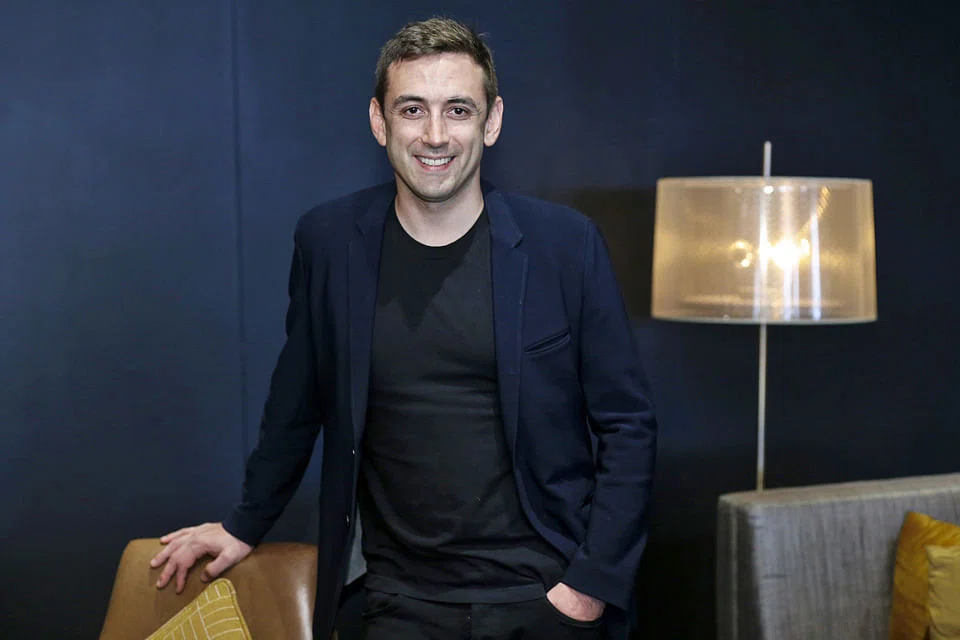
IT IS a widely reported phenomenon of the strange times we live in - we are digitally connected in ways that previous generations could never have imagined and yet young people are growing up feeling lonelier and more isolated than ever before.
It certainly doesn't help that traditional sources of community and stability, such as work, have also become more uncertain today amid technological disruption. In fact, the very notion of a lifelong career itself has come under question. Anyone working or entering the workforce today is expected to be nimble enough to adapt to change at every corner. You have to constantly stay on your toes and keep your skills relevant and future-proof. After all, the robots might come for your job anytime.
In short, it's a scary world out there for a young person. General Assembly founder Jake Schwartz certainly knows it, and he has a plan to help.
Mr Schwartz found out the hard way, when he graduated from Yale University with a degree in American history, that life is not all smooth-sailing, even for an Ivy League graduate. "I thought I had made it and everything was all set. I thought that the degree I got from Yale, this piece of paper in Latin, was like a Harry Potter spell, that it would magically open any door I wanted. Then I got to the real world and realised I didn't have any real skills," he tells The Business Times.
Like so many youth about to embark on the odyssey of adulthood, he felt lost as he began navigating the corporate world. "I spent a lot of my 20s doing a bunch of different things, and feeling anxious, lost and lonely in the world of work. And I always felt that that was such a shame, because it's the time in your life when you're the most willing to work hard, learn fast. And instead, I was wandering around; instead of really being focused."
An abiding interest in music and the arts led him to Los Angeles, where he took on jobs at a recording studio, a record label and an artiste management and publicity firm. But it wasn't long before disruption came for the industry, and Mr Schwartz got to witness it up close.
"It was 2000, 2001, and Napster had just started to become a mainstream phenomenon and there were massive layoffs in the music business. I thought, because of my background, I would just rise to the top but the industry was undergoing such change and I saw how it was not handling it very well and was trying to fight it," he says.
"It left a lot of impressions on me about how industries can manage disruption well or poorly, and it was also a moment of turmoil for me personally."
Eventually he went to The Wharton School of the University of Pennsylvania to do an MBA. "It was there that I realised that even Wharton is just a transitional moment. Wharton exists because there are a lot of people in their 20s who feel lost and lonely, and there are a lot of companies that want to hire people, and it's very convenient if they could just go to one place and do it," he says.
"The problem is that Wharton and a lot of graduate schools are very expensive. They cost hundreds of thousands of dollars and take years of opportunity cost away from working. It is like a very expensive middleman, and I wondered if I could disrupt that with something that was more relevant and quicker and less expensive."
Mr Schwartz graduated from Wharton wanting to start a company but it was 2008 and the financial crisis was starting to unfold. He got scared, and found a job at a private equity firm.
"But, of course, because of the crisis we didn't do any new deals when I was at that firm. Instead, I spent a lot of time with the entrepreneurs who were already in the portfolio trying to help them work their way out of the crises they were all in," he recalls.
At one point, he realised, he loved working with the entrepreneurs, but he wanted even more to become one himself.
"And I had this realisation that I didn't care if I were sleeping on the street, I wanted to work for myself. And it was that moment of realising this was what I wanted to do with my life regardless of whether I succeed or fail that really started my journey towards GA and everything after."
Mr Schwartz took everything he had experienced thus far - his youthful angst, his observations of how technology can upend an industry overnight, his thoughts on how companies could better handle massive industry changes, his idea about having a cheaper alternative to graduate school and his motivation to be his own boss - and turned it into General Assembly.
Initially, GA - which he began with three other co-founders - started as a high-end co-working space for promising startups in New York City. The space included a classroom, where they would host ad hoc classes on various topics.
"We never wanted to just be a real estate business. The very first class we ever taught was the history of the Internet. It quickly became about anything and everything - how to raise your seed round, how to work with Twitter APIs on your website, basic coding," Mr Schwartz says.
"These classes became really popular and sold out all the time. So I said, what if we could take that idea, because clearly there's interest, and turn it into less of a one-night, entertaining and slightly educational experience, into something that was transformational? That led to our three-month programmes in technology, design and data."
When it became apparent that GA was going to embark on a larger vision, it raised venture capital. Since then, it has gone on to raise some US$120 million from investors including Condé Nast owner Advance Publications, Amazon CEO Jeff Bezos and venture capital firms such as Institutional Venture Partners. Other financing options could potentially include even M&A or an outright sale.
Mr Schwartz is speaking to BT during a visit in late-2017. As the business took shape, he says, it became clearer and clearer that GA wanted to "help people be less lost and lonely in the world of work, while matching them with employers and better opportunities".
It does this by offering courses to help people build up in-demand skills such as software development, data science, UX design and digital marketing. Students can sign up for three-month immersive courses, which are full-time and include about 480 hours of instruction in all, or part-time courses.
"We came to those numbers from a bottoms-up approach, by thinking about what people need to learn, and built the programmes up that way, and 480 hours is the number of hours you would receive to get a major in an undergraduate environment," Mr Schwartz notes.
"The difference is all of our courses are taught by practitioners instead of academics, and are very focused on the practical skills you need to have to be very good at your job."
GA started offering these courses online initially, but today has over 100 brick-and-mortar classrooms around the world, including in Singapore. Over the years it has also found ways to use software and remote technologies to create what it feels would be the best experience for every programme.
"Sometimes that is still all offline, sometimes all online, but more often than not it's something in between," Mr Schwartz says. Some 50,000 people around the world have graduated from GA's three-month full-time courses so far. "I like to say that's a larger alumni network than Harvard Business School's living alumni," he quips.
Transforming careers
What is even more impressive is that for the full-time programmes, the job placement rate is well over 90 per cent around the world. In Singapore, 96 per cent of GA's graduates have secured jobs with their new skills.
Along the way, Mr Schwartz has collected some favourite stories about how GA has helped transform people's careers.
One is the former journalist in London who took up a full-time course in UX design and, upon graduation, began doing freelance work for the same news organisation he used to work at - only this time he was creating interactive digital stories and charging four times what he used to get paid.
There is the middle school janitor who became a junior full-stack developer for an e-commerce company after undergoing a coding programme co-organised by GA and New York-based non-profit institution Per Scholas.
Increasingly, however, GA is seeing that its growth lies in working with companies to train their existing employees.
"Our goal is to create employment opportunities so we thought, let's work backwards and start with the employer. More and more over the last few years that has meant working closely with employers," Mr Schwartz says.
"We now work with over a hundred of the Fortune 500 companies around the world, we do programmes for them around reskilling their existing workforce, we set up advanced skill academies inside the companies so they can reskill, upskill and build a talent pipeline from the inside." A surprising number - more than half - of GA's students are getting reimbursement from their employers to attend GA courses, Mr Schwartz notes.
"Over the past couple of years we're seeing more and more companies willing to take their employees out of the workforce for three months to join our immersive programmes, and then have them go back and be redeployed in the company in a new role," he says.
"We're seeing that happen all over the world and it's such a great model that's way better than layoffs. And it's a great example of investing in the right way. If companies do it correctly it's a much higher return on investment than any other way of deploying resources to solve skills-gap problems in a company."
Indeed, Mr Schwartz believes the future of higher education itself will be driven by the needs of employers.
"It makes sense - they are the drivers of employment and see the trends before anyone else. They should be less reliant on governments and institutions to produce the skills they need and they could have a much more active hand in it. And we're seeing that trend playing out on a macro scale."
Aside from just providing people with the skills needed to take on new economy jobs, GA has also begun offering professional certification for these skills.
"One of our visions for the future was to build professional credentials around these newer skills and the first assessment we built was around digital marketing," Mr Schwartz tells BT.
"I did the CFA in my 20s and so the vision was to create a CFA for digital marketing. And we've done the same for data science."
More than 20,000 people have taken the digital marketing assessment around the world. Singapore has the highest scores, he says.
"This is a great story about what digital disruption looks like. Marketing is one of those areas that has shifted from a storytelling job to one that is really about deploying resources in the highest return-on-investment fashion, like a hedge fund.
"Data analytics and data literacy is the biggest determinant of your success as a digital marketer - the ability to process data and create action out of that, and Singapore has a great culture of numeracy and focus on data."
In fact, Mr Schwartz believes the entire world of business is becoming "all about data, all the time".
"I believe all jobs of the future are going to be about data at a much deeper level. So if you're not comfortable at least with a spreadsheet in a world of regressions and big data sets, it will be very challenging. Data skills are the future."
In his interactions with C-suite leaders though, Mr Schwartz still sees a wide range of beliefs surrounding the need to reskill employees.
"There are still people who are aware of the problem but are not ready to take action and people who are vaguely aware there's an issue but can't articulate what it is."
But one thing is for sure, he says. "Companies that are ahead of the curve - who are very aware of the issue and are willing to make meaningful investments to change - will be the ones that will have the competitive advantage going forward."
JAKE SCHWARTZ
Co-founder and CEO General Assembly
Born in 1978
2000: Graduated with a BA in American Studies from Yale University. Moved to Los Angeles to work in the music industry, before entering business school.
2008: Graduated with an MBA in Entrepreneurial Management from Wharton.
2011: Co-founded General Assembly.
2012: General Assembly opens its first campus outside of the US in London.
2014: Named EY Entrepreneur of the Year.
2015: General Assembly opens Singapore office in 2015 and forms a partnership with the Infocomm Media Development Authority (IMDA) to train Singaporeans in tech, data and UX design via its immersive programmes






