

Tech layoffs’ missing humanity
Letting go of workers in a downturn doesn’t have to be as cold and callous as we’ve seen in some of the recent tech retrenchments, say business school experts

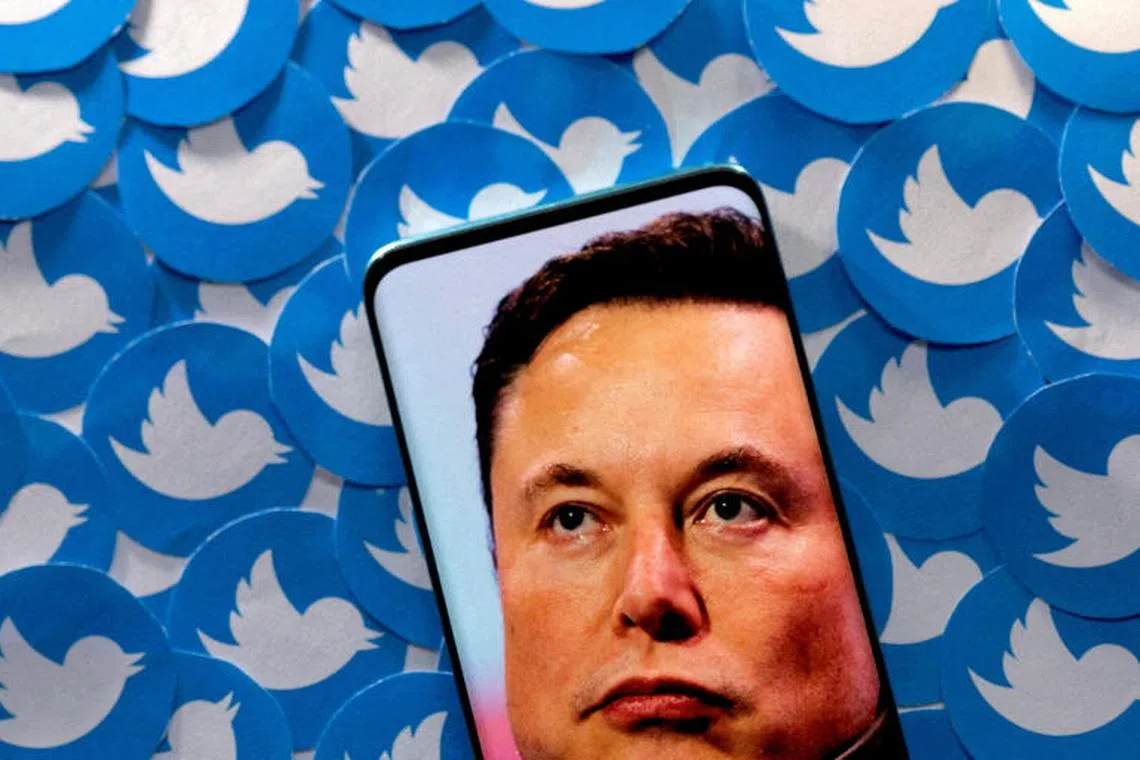
WHEN tycoon Elon Musk completed his US$44 billion takeover of US-based social media giant Twitter in October, Paul knew that a mass layoff at the Singapore office was on the horizon. But the message that arrived in his personal e-mail on Nov 4 still came as a shock.
The 160-word notice told Paul (not his real name) that he had been locked out of the company systems because his job was at risk, although not yet officially cut.
The e-mail, which opened with “Hello”, did not even address him by name. Paul had never before felt like “just a number”.
Anxiety soon gave way to disappointment.
On Nov 9, Twitter offered Paul and others that were to be let go only half a month’s salary per full year of service, capped at three months.
This is a fraction of what the company had earlier indicated a “general severance package” would look like on Oct 24: At least two months’ base salary, prorated performance bonus and some health coverage.
It was also after Musk mentioned “three months of severance” in a Nov 5 tweet.
Even when no layoffs have been declared, working conditions can sometimes feel like worker retention is no longer a priority. An employee at Singapore-headquartered consumer Internet company Sea told The Business Times (BT) that he felt like he was caught in the middle of a “disguised retrenchment”, in which companies create intolerable work environments so that employees quit of their own accord.
The Sea employee said that on Jan 19 – a few days shy of the Chinese New Year holidays – staff were told that those whose positions are assistant manager and up would not get a cash bonus this year.
Instead, they would get an equity bonus that would only be fully vested after four years, with the first tranche only paid out in February 2024.
Unvested bonuses are typically forfeited in the event the employee quits.
The news came after a 100 per cent work-from-office rule in October, assurances that the team was working on ensuring the compensation structure was in line with market practices, and a wage freeze and bonus cut announced just before Christmas.
“Optics-wise, sure, they still give a bonus. But it is all deferred,” he said. “Who in their right mind would want to take their bonus two years later?”
In response to queries, Sea told BT that it was “disappointed” that the bonus programme was being associated with layoffs. The company noted that workers who were laid off in 2022 “received very fair separation packages that were above market rates to support their transition to new roles”.
“Our bonus programmes are intended as an additional acknowledgement of team members’ contributions even at a time when the industry and macro environments remain challenging, and they enable those who are granted shares to further benefit from the company’s growth over the long term,” the company said.
Peak callousness
Confusing communications. E-mail pink slips. Lack of explanations. Time pressure. Uncaring processes. Retrenchment via Zoom, even. Layoffs are already painful for workers who are being let go, so why make it worse than it has to be?
Yet the recent wave of tech layoffs has unveiled what organisational behaviour researchers and human capital consultants see as corporate callousness reaching new depths.
Nanyang Business School (NBS) senior lecturer Kelvin Yeo said such practices are saddening to hear about, and speak volumes about the companies involved.
“Often times, we hear businesses talk about their company culture and values – which are easy to apply in good times. However, it’s in bad times that these declared values are tested,” he said.
Many companies that take a cold approach to layoffs come from the perspective of trying to shield themselves from the fallout of retrenchment.
“They think they protect themselves by being tough,” said Guido Gianasso, professor of leadership at HEC Paris in Qatar, as he pointed to a sub-trend of lawyers headlining the job of orchestrating terminations.
“Nothing against lawyers, but lawyers tend to have a mono-dimension. They think in terms of ‘how much money I can lose in court’ – but that’s 10 per cent of the risk,” he said.
“And in Singapore, how bad can it go in court as an employer? … Zero risk. The real risk is not there.”
Gianasso, a former associate dean and professor of global leadership at NBS, was referring to the poor statutory protections for retrenched workers in Singapore’s Employment Act, which is generally seen as favourable to employers.
In contrast, some countries write into law minimum notice periods and severance entitlements.
Walter Silvester, managing director and commercial lawyer at Silvester Legal, confirmed that there are no legal obligations for payments on layoffs in Singapore.
“If anything, it has to be contractual,” he said. “Negotiate before you sign the employment contract.”
Yeo said practices such as abruptly cutting employee e-mail access and marching them out of the office has a lot to do with the extremely competitive nature of business today and the fear of what employees could do at the point of termination.
Notwithstanding that, companies should still inform affected staff face-to-face, as it is the most sensitive way to assist the employee concerned to start processing what has just happened and move on, he said.
“Since the world has started to recover from the pandemic, there is very little excuse today for terminating someone over e-mail or on the phone,” he added.
Doing right
Companies need to take a more holistic view of the risks in a layoff, said Gianasso, who had conducted large-scale layoffs while he was a chief human resource officer.
These risks are “image, reputation, scars for the team, clients, information”, he said. “And ultimately, they are physical. Tragically, sometimes people kill themselves.”
With all these in mind, companies “have to be prepared to put enough resources and to give the person concerned hope for the future – enough to be able to go back home and prepare (for) the next steps”, he said.
He added: “Many companies think layoffs are a loss of money. The less you give, the better, right? They think, ‘Let’s not waste money. If we can give you three months instead of four, let’s fight for three months.’
“That’s wrong. It should be seen as an investment.”
A proper severance is also not just a parcel of money, but also dignity and respect – giving affected employees the time to say goodbye, options for outplacement, and support to find another job, he said.
The bottom line: “You don’t fire people online … you just don’t do it,” he emphasised.
“It’s just like your spouse announcing their decision to leave you by WhatsApp. How would you feel?”
Angela Kuek, director of search and recruitment firm The Meyer Consulting Group, said more mature industries such as banking, which are used to weathering redundancies through economic cycles, can serve as role models.
Kuek recalled that when a major Dutch bank decided to pull out of Singapore in 2020, staff were given heads-up a year or more in advance, asking them to hold the shop in return for a certain amount of pay, gratuity, and support in securing another job.
It paid off, with employees staying on, she said.
She is, however, not optimistic that a lot can change in the tech industry, with hypergrowth as a part of its DNA – “where it is bullish, they hire, but when things are not looking good, they fire”.
The clean-up has to start from an overhaul of its hiring practices, she said.
Tech companies should perhaps be mindful of the long memory of the Internet.
Evelyn Kwek, regional managing director of global workplace culture consultancy Great Place To Work, said: “The way the business and its leaders demonstrate the company’s core values and stance on putting valuing their people will be remembered on the Internet, and this will have a very real and tangible impact on the employer brand, the remaining employees’ morale and productivity, and whether the company is able to attract their desired candidates in the future.”
TRENDING NOW

Once staunchly pro-China, Malaysian Chinese businesses are now distancing themselves from Beijing

Britain’s mansion tax shows the difficulty of targeting wealth

Three hats, one goal: How Ng Kian Swan runs sustainability at NUHS

COE review: The gap between luxury and mass-market cars isn’t the only one worth bridging

