

Tech Titan
Since leaving Oracle for Infor, Charles Phillips has been on a shopping spree to retool the enterprise software firm. The IT mogul and former Obama adviser sees business potential even in trade tensions and protectionist borders. BY ANNABETH LEOW

Annabeth Leow
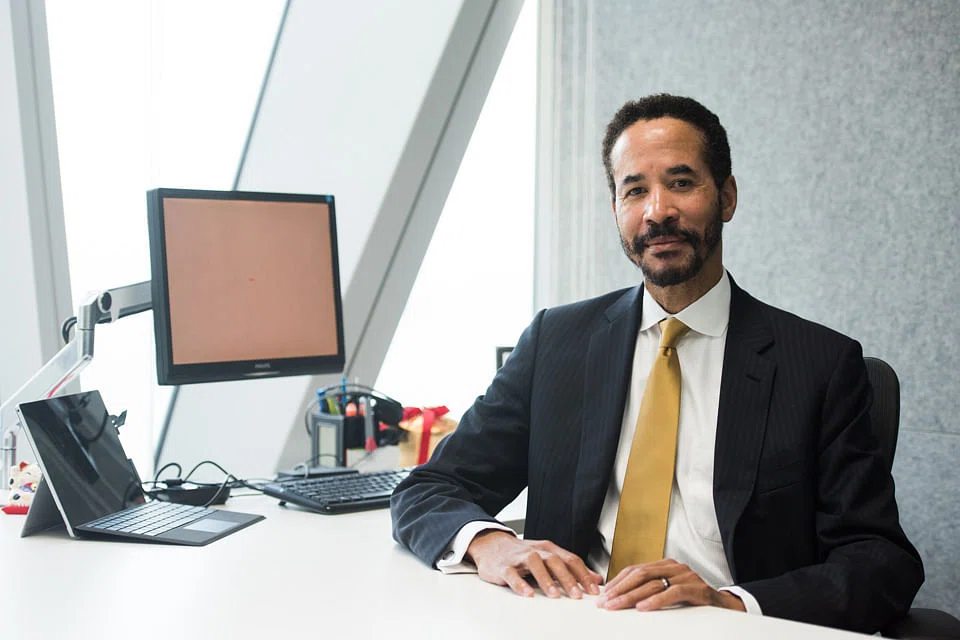
AS former United States president Bill Clinton's campaign strategy ran: "It's the economy, stupid."
And Charles Phillips, the 59-year-old chief executive of software firm Infor, knows something about that, from his time on Barack Obama's post-recession presidential economic recovery advisory board.
"I think what's been missing is the way we train people," he tells The Business Times, his voice rising in earnestness. "We need to train them earlier, and give them more specific skill sets."
His advice to politicians is to focus on training workers for technology-related jobs: "Any technology tends to replace some manual tasks from before, and then create opportunities for new jobs to leverage that technology. So, if you look at the fastest-growing job category in the US for the last 30 years, it's called 'Other' because it's a new job they haven't classified yet. Every year there're new jobs and people just don't anticipate - old ones go away, and new ones get created.
"So I do think (artificial intelligence) and machine learning will be the same thing. We'll have more powerful ways of achieving tasks, more insights, more ways to understand businesses. And you have smart people that learn to take advantage of that."
All's fair in love and war
Mr Phillips was leading a different life a decade ago, with twists and turns that have made his Infor career a comeback of sorts. Once touted as a possible heir to Oracle's founder, he left the software giant under a cloud in 2010.
YaVaughnie Wilkins, his mistress of eight and a half years, had exposed his adultery with pictures splashed on billboards across America, in New York City, San Francisco and Atlanta. Then, a few months later, Oracle publicly rebutted Mr Phillips' brag that the company would spend US$70 billion on acquisitions within five years.
His corporate days almost seemed numbered, at that point. However, Mr Phillips has worn many hats, starting with military service as a captain in a US Marine Corps artillery unit. He spent close to two decades in banking and finance before trading Wall Street for Silicon Valley, joining Oracle in 2003. But, since jumping ship to Infor, Mr Phillips has delivered on his boast and ramped up business buyouts. He oversaw the US$2 billion buyout of Lawson Software in 2011, firing a shot across the bow of market leaders Oracle and SAP. It was the first big deal in a shopping spree that has marked his time at Infor.
"That's just industry, and tech's no different. That always happens," he says of market consolidation. "That's part of the strategy, we'll make acquisitions when it makes sense."
But even in industry, some deals stand out more. Infor's time in the sun came in 2016, as it snagged a cool US$2.5 billion from Koch Equity Development, the investment arm of Koch Industries. The privately held Koch conglomerate is run by tycoon brothers Charles and David Koch, who are known for bankrolling conservative political causes in the US.
Breaking into the conversation, Infor chief financial officer Kevin Samuelson tells BT enthusiastically: "US$2.5 billion is a huge, huge investment - probably among the top 10 investments of all time in technology. So, obviously, a massive vote of confidence for us - they're a US$100 billion company that has used our competitors, has used us internally, and had such a favourable experience."
How does the fund injection - which valued Infor at more than US$10 billion and gave Koch four board seats - change things for Infor?
"Where we're headed with that, I think the good news is they're a wonderful strategic partner. They've rolled out a lot of our products internally, which has proven a lot of our cloud products," says Mr Samuelson.
"And then financially, I think they generate massive amounts of cash flow. This is the beginning of our relationship and so I think the good news is that to the extent that we've continued to grow and do well, there's more opportunities. But all of our internal funding, and the investments in the product, it's self-generated. We're profitable and we're growing very nicely, so we're not at all dependent on that to do what we're doing."
The new corporate relationship came even though Mr Phillips and his wife, Karen - who stuck with him after the headline-grabbing billboard affair - are part of a group of liberal-leaning African-American executives organising in response to the lobbying power of right-wing activists.
According to a report in The New York Times last October, the planned political action committee's leaders are focused on education, employment and voter participation, but "don't want to narrowly define the mandate around race".
"What we've been doing is just writing cheques for years, and we don't know what happened," Mr Phillips was quoted as saying. "We've got to learn from the Koch brothers, do what they do, have them sign pledges."
But he is more guarded about his ties - or opposition - to the Kochs, in his interview with BT.
"I think there are a lot more commonalities - especially between businesspeople - than there are differences," he notes. "So, I think, you know, we all want to grow the economy. We want the standard of living to increase.
"And so there's a lot more alignment just generally than what you read about in the press. And there's always extremes on both sides, but that's not where most people live. So, I haven't found that to be an issue."
Power to the C-suite
A believer in the strengths of the private sector, Mr Phillips is not afraid to cut out the middleman if he thinks the government is moving too slowly. "We spend a lot as companies, but I think we don't spend as much as we used to as a government. We used to do a lot of basic research which resulted in a lot of breakthroughs that the world is enjoying now, invented a lot of technologies people use that started off in the military or in the federal government. So some of that's shifted to the private sector." He adds: "Some would argue maybe it's more efficient that way - that capital goes to the best ideas and that the ideas that aren't working get defunded. And so if it works out, if the market forces are as good as we think, then maybe it's fine."
Besides research and development, skills upgrading is another area where Mr Phillips wants to put industry's money where his mouth is. "We are working with universities around the world, providing them with our software, training them while they're in school, so they understand these concepts of technologies. So when they graduate, they have a specific skill set," he explains, citing a tie-up with the City University of New York that involves teaching students how to use Infor's software.
One benefit he touts is businesses saving on a year of training, once these graduates enter the workforce. "That's our model. But that's us paying for it, instead of government supporting that sort of training."
Indeed, he is unabashedly confident in the supposed market wisdom of the entrepreneur. "Businesspeople have a certain skill set and experience, and I think explaining how commerce works and what drives job growth is always important in any country - because everybody wants to grow and generate wealth. And that's always good for a politician when that's happening.
"We have 90,000 customers. We can see where they're investing, we can see when they're expanding, we can see what their challenges are, what regulations they're facing, because we can automate those regulations for them.
"And so software, business applications are unique, because we automate other companies and so we see a lot of different industries, and we can see when digital transformation is starting to take off - when they feel confident about the economy, and when they don't. . . We're kind of a microcosm of what's going on in global commerce."
When the walls go up
With the spectre of a trade war looming ever-present in the past year or so, Mr Phillips acknowledges: "We're certainly entering a more active period around that issue and a more aggressive protection. And there's not a lot a technology company can do about that.
"But certainly those always present business opportunities as well, to the extent that companies want us to help them become more competitive against other countries. We'll help them do that. That's also starting an arms race in technology, so that's good for all of us, and if that spurs a little more competition globally, then that's good."
His view comes even as the technology sector has been singled out for attention in global trade tensions, often on the grounds of national security concerns. US President Donald Trump vetoed semiconductor maker Broadcom's attempted acquisition of Qualcomm in March, and is now embroiled in a political saga over US sanctions on Chinese telecommunications equipment company ZTE Corp.
"I think what we saw . . . was hopefully an exception and not a regular thing, but I think each country has to decide when those conditions exist, when they have to step in," Mr Phillips says of the stymied Broadcom-Qualcomm deal, which had been valued at US$117 billion. "So, the US did it today - it was unusual for the US, but certainly other countries have done similar things for years, right?"
He maintains that even the erection of barriers can be a boon to firms like his. "Countries are still countries, and so they'll protect themselves. I don't think those borders come down magically overnight. But certainly the potential is there over time. And when I was talking about trade compliance, that's one area that makes sense for more cooperation, plus the whole idea behind treaties and trade agreements is it's two parties. Both sides have to agree on certain trade agreements and we have to inform businesses on both sides."
He adds, chuckling: "If there was more seamless communication between the top 100 countries, that could go a lot more smoothly. But we make a lot of money doing that, so it's okay for it to stay complex for a while."
And, while Goldilocks might be losing her grip on the global economy, Mr Phillips fancies that the outlook is still rosy. "Overall, relative to some past years, we still think the global economy is real good for what we do and certainly see robust activity. Technology is a global product and there aren't many companies that do what we do. Ours is a global industry that's largely based in the US, so I don't expect people to not want to use applications, because they need them and it's not really a realistic choice."
Indeed, with his degree in computer science, he is an ardent evangelist for what the information technology sector can accomplish.
"One of the things that happened is that the tech companies kept investing through that downturn," he said. "Because it's easy to pull back and stop investing when you're going through a couple of bad years, but if you keep investing you come out of that in much-better shape - and most of the large US tech companies did that. And so, when people came back and started buying, the technology was that much further along.
"I think the productivity improvements that came from those investments for our customers certainly helped the global economy and so productivity is improving - not as fast as we want it to, but I think the technology companies have had something to do with that."
Describing technological advancement as "the march towards utopia, if you look at the last 100 years", he adds: "It's change, and I think there's always people concerned about change. It can be intimidating and threatening. We get through it. And we don't have buggy whips anymore, we don't have iceboxes anymore. Those things were all critical not too long ago."
Mr Phillips calls the information communications technology profession "a trust business", noting that "we're in a lot of critical industries" from public sector to healthcare, which means that "we have to make sure we're 100 per cent reliable".
"Everyone talks about the digital transformation that's taking place in companies around the world. We're helping to make that happen," he adds. "We have a lot of experience by industry and have a lot of data we've collected over the years on different companies.
"And now we're using that to add value around machine learning, artificial intelligence, so people are more open to embracing that now, letting us have the data, run the application for them and then give them insights and predict what's about to happen. They're more comfortable letting a software company do that now than they were 10 years ago."
CHARLES PHILLIPS
CEO Infor
1959 Born in Little Rock, Arkansas, US
EDUCATION
1981 United States Air Force Academy, BSc (Computer Science)
1986 Hampton University, MBA in Finance
1993 New York Law School, Juris Doctor
CAREER
1981-1986 Captain, United States Marine Corps
1986-1989 Vice-president of software, BNY Mellon
1989-1991 Senior vice-president, SoundView Technology Group
1991-1994 Senior vice-president, Kidder Peabody
1994-2003 Managing director, Morgan Stanley
2003-2010 President, Oracle
Since 2010 CEO, Infor






