

The legal eagle: Cheng Tai-Heng, Sidley Austin LLP
Highly feted international lawyer Cheng Tai-Heng, global co-head of international arbitration and trade at Sidley Austin LLP, tells why the time is ripe for him to further his work in Singapore.

FROM repatriating a rare rifle used in World War II to winning a US$622 million arbitration award against Brazil's state-owned oil company Petrobras, Cheng Tai-Heng's career in international law - built up over close to two decades in New York - is as diverse as it is illustrious.
In July this year, the 44-year-old Singaporean - who co-leads the global arbitration, trade and advocacy practice at top-tier US law firm Sidley Austin - was also appointed co-managing partner at its Singapore office.
When pandemic restrictions ease, he will divide his time between the offices in Singapore and the Big Apple, and is looking forward to leading his team to tap the growth in demand for dispute resolution services in the region.
"Singapore is already an arbitration hub. The government and the Singapore International Arbitration Centre (SIAC) have just done a tremendous job in building that up over a decade. We have an efficient government, we have pro-arbitration legislation, we have independent courts, we have able managers at the SIAC, among other reasons," he says.
Riding the demand for dispute resolution
The SIAC saw 1,080 new case filings in 2020, marking the first time its caseload has crossed the 1000-case threshold. The total sum in dispute for the year stood at US$8.49 billion - a 4.9 per cent increase from 2019.
While many governments have been talking about localising their supply chains to minimise disruptions amid the Covid-19 pandemic, Singapore as an entrepôt has always been plugged into the global economy. As trade flows grow as economies begin to adapt to a new normal, the demand for dispute resolution services will also increase, says Dr Cheng, who holds a Doctor of the Science of Law (JSD) degree.
He adds: "And as trade and business continue to globalise, international disputes will, inevitably, increase. And generally, in an international transaction, neither party wants to go to the courts on the other side. And so arbitration provides a neutral acceptable alternative. So I do think the sector will continue to grow."
As Sidley nears its fourth decade in Singapore, he wants to continue giving its young Singaporean lawyers exposure overseas, as well as shore up its team with a stable of diverse talents. Two of his recent hires for the Singapore practice include Pem Tshering, who is the first Bhutanese lawyer to qualify in the Bar of England and Wales, and Jennifer Lim, who was twice named the best oralist at the Jessup, the oldest and largest international moot court competition in the world.
Dr Cheng himself had graduated from Oxford University and Yale Law School, where he studied international law under Michael Reisman. The Singapore President's scholar started his career at international law firm Simpson Thacher, then took up professorship at New York Law School, and then headed the New York arbitration practice at white-shoe law firm Quinn Emanuel, before moving on to his roles at Sidley.
Improving communities and being inclusive
His understanding of what it means to be a lawyer has changed over the decades, Dr Cheng says.
"In my 20s, I thought of law as winning in the courtroom. In my 30s, I thought of law as solving my clients' business problems. And now, I still try to achieve those goals, but I also think of law as improving the well-being of the communities in which it operates," he says.
In his current leadership role and as an openly gay lawyer, Dr Cheng also wants to develop a work environment that is inclusive to employees of diverse backgrounds.
One encounter when he was a young lawyer has stuck with him and continues to fortify this resolve, he says, recounting an instance where a colleague made fun of someone from the opposing team for being effeminate.
"She basically disparaged him as probably gay as a result and I was very offended by that. But at the time, as a young junior lawyer - and remember that in America, I'm like gay, a minority, and an immigrant, so as a triple minority at the time - I did not feel empowered to speak up against it, either directly to her or to anyone else at the firm. I wish I had, of course, in retrospect.
"Now that I'm in a position of leadership, I never want anyone, of whatever minority status - whether it's sexuality, race, gender - to ever feel that they cannot speak up or to feel ashamed or embarrassed to bring their whole identity to work. I want everyone to feel like when they come to work, it is their entire being that feels comfortable being at work," he says.
Being inclusive and diverse helps prevent a monopoly of ideas and group think, he notes. "Besides, the clients appreciate the diversity."
Sidley provides "high-end" legal services and does not aim to cater to a wide range of clients.
Or, as Dr Cheng puts it, "I don't think we need to do everything for everyone".
Legal repertoire
That said, he himself has built up a rather varied legal repertoire. When asked about the most memorable cases he has handled, Dr Cheng first highlights a dispute in which the Polish government had US federal agents seize a rare rifle from a gun collector in Fredericksburg, a city in Virginia.
The dispute concluded in late 2013, with Poland buying the wz.38M Maroszek rifle, a weapon made specifically for Polish troops just before World War II, for US$25,000, along with a promise that it will be displayed in the Warsaw Uprising Museum.
In a recent case, Dr Cheng helped get his client off the hook in connection with one of the world's largest cyberheists. In 2016, unidentified hackers stole US$100 million of Bangladesh Bank's funds from the New York Federal Reserve. Three years later, the Bangladesh central bank sued Manila-based Rizal Commercial Banking Corp (RCBC), where some of these stolen funds were briefly deposited before vanishing into casinos in the Philippines, alleging violations under the US federal law's Racketeer Influenced and Corrupt Organizations Act, among others.
Leading a team that represented RCBC, Dr Cheng had called Bangladesh's claims baseless, arguing that the heist was a single incident and not a pattern of racketeering. The suit was a public relations ploy to distract from questions of the central bank's own negligence, he argued. The US district judge later dismissed the case.
Among other matters, Dr Cheng is currently advocating pro bono for journalist Linda Tirado, who was shot and blinded in one eye while covering the Black Lives Matter protests in Minneapolis in May last year.
He recalls: "When all this was going on, I felt it really important to do something. I called a buddy of mine at CNN and asked if there were any journalists I could help. And he said, well, actually, there is one who just called, she had just been shot that night."
Jiu-jitsu and law
Outside of work, Dr Cheng's personal interests include Brazilian jiu-jitsu, which he took up about three years ago and he now fights competitively. In New York, he trains at the Renzo Gracie Academy in midtown Manhattan under world champion Gregor Gracie, and has also found an instructor to continue training with in Singapore.
The sport helped him step out of his comfort zone, he says. "I wasn't very athletic when I was a student, and I thought I'd fix that. It gives me pride to feel like I achieved something and really pushed myself. Because you're really fighting, right? It's not tennis. You're basically trying to choke each other out or break each other down. So it's a real fight, I mean, under controlled conditions," he says.
Brazilian jiu-jitsu has also been helpful in developing clients who share a love for the sport. "Maybe this is the younger version of playing golf with your clients," he quips.
And very often, skills he has cultivated in the courtroom can be applied on the training mat, too.
"You always have to think three steps ahead of what your opponent is going to try. If something is not working, sometimes it doesn't make sense to force your way through. Try something different. You also learn that the team you're with always has your back. And if you fail, there's always the next match, and you try again, you don't give up, and you keep going. These are all the principles I bring to jiu-jitsu which apply equally to being a litigator," he says.
Dr Cheng brings a certain strong-willed attitude onto the mat, too. In response to a physical therapist's advice for him to lay off training to recuperate from a shoulder injury, he had said: "You've got to make me another offer."
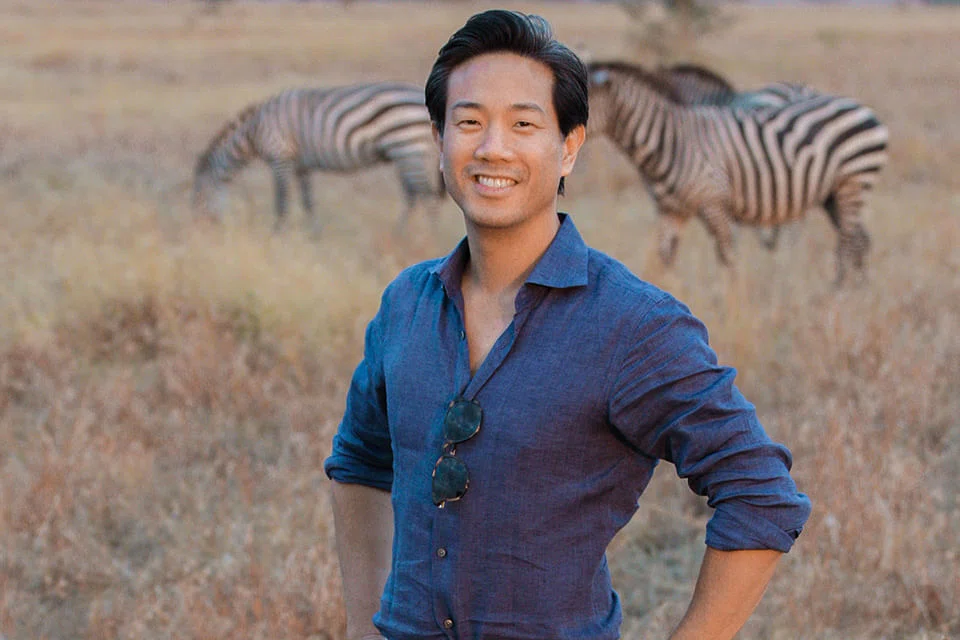
Amid his high-powered lifestyle, there are a few activities that help him slow down and recharge. He did, after all, speak to BT while camping in the heart of the Serengeti National Park in Tanzania.
For the last six years, he has also been practising Japanese tea ceremony, a "highly meditative activity that cleanses the mind", he says.
Dr Cheng is also a trustee of two museums, The Frick Collection in New York, and the Smithsonian's National Museum of Asian Art in Washington DC.
"I'm particularly focused now on having the museums reach out to diverse audiences and communities, and for them to be a welcoming place for those who may not ordinarily come to these museums or who may feel intimidated to know about the arts," he says.
CHENG TAI-HENG
Global co-head, arbitration and trade, Sidley Austin LLP Co-managing partner, Singapore, Sidley Austin LLP
1977: Born in Singapore
EDUCATION
1999: Bachelor of Arts (Law), Oxford University
2000: Master of Laws (LLM), Yale Law School
2001: Graduate Diploma in Singapore Law, National University of Singapore
2004: Master of Arts, Oxford University
2004: Doctor of the Science of Law (JSD), Yale Law School
CAREER HIGHLIGHTS
2007-2012: Professor of Law, New York Law School
2012-2019: Head of New York International Arbitration Practice, Quinn Emanuel Urquhart & Sullivan, LLP
Since 2019: Global co-head of International Arbitration and Trade, Sidley Austin LLP
Since July 2021: Co-managing Partner, Singapore, Sidley Austin LLP
TRENDING NOW

First Resources blames El Nino, outside fires for Kalimantan hotspots amid haze scrutiny

High Court rules against Julius Baer’s Singapore trust arm in US$50 million family trust dispute

Singapore key exports jump by higher-than-expected 68.4% in September, led by non-electronics

MSCI proposes downgrading Indonesia to standalone market status

