

Tradition under pressure: Heritage businesses strive to stay relevant
Despite decades of history, firms dealing in traditional goods face a precarious future amid foreign competition and shifting demand

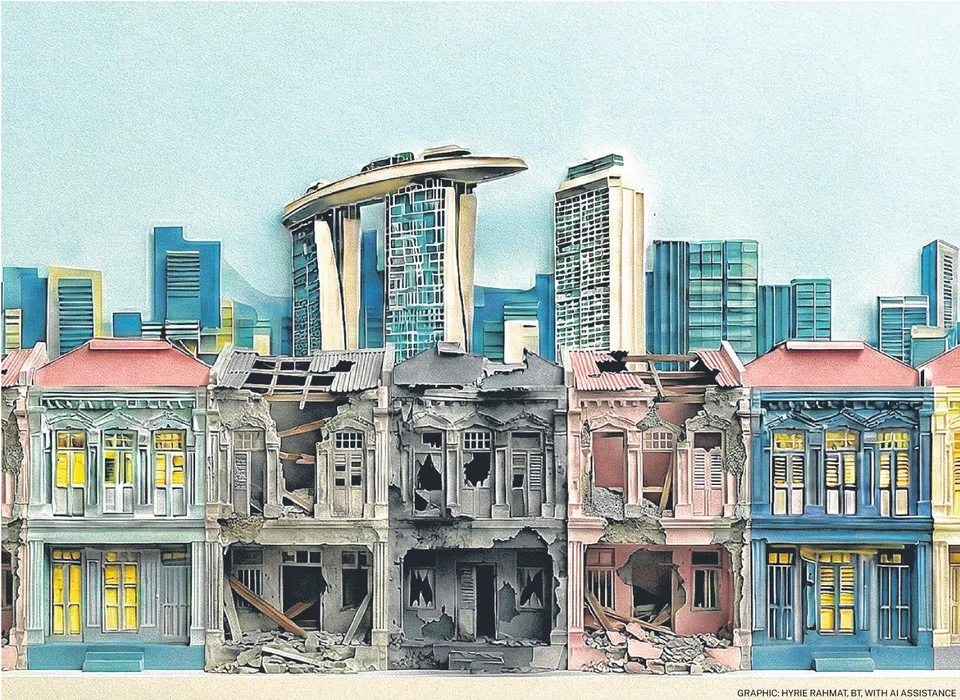
[SINGAPORE] For the past decade, Al-Amal Creations in Kampong Glam has sold non-alcoholic perfumes and Muslim robes known as abaya. But by end-March, it will shut for good.
“There’s no revenue in, but the rent is up. Can’t afford to keep up with it,” owner Naz Bawany tells The Business Times.
Like other heritage retailers, Al-Amal Creations faces the pressures of rising rents, high manpower costs and weaker consumer sentiment. Declining business in the last two years is the reason that Bawany decided to close the shop.
There is no data on how many heritage businesses have closed recently, as the National Heritage Board (NHB) does not track their numbers.
But NHB, in response to queries from BT, says past documentation efforts recorded more than 100 heritage businesses across Kampong Glam, Chinatown and Little India.
How many will survive is another question.
Though Bawany’s shop in Singapore’s historic centre of Malay-Muslim culture gets plenty of tourist footfall, its target audience is local Singaporeans, who increasingly shop online or even overseas.
In a Jan 31 media statement, the Urban Redevelopment Authority noted that “the operating environment for (heritage) businesses has become more challenging over time”.
While some broad economic challenges affect all retailers, heritage businesses – particularly those defined by the traditional nature of their offerings – face the added challenge of staying relevant.
Competition from abroad
One threat is competition from abroad, whether in the form of e-commerce players or the ease of going overseas to shop.
There has been a proliferation of online stores that sell the same wares for less and often use newer sales tactics such as livestreaming, making it increasingly difficult for traditional businesses to compete, says Bawany.
Some of her online competitors even head to Dubai in the United Arab Emirates – the source of her abayas – to hold livestream sales.
More Singaporeans are also visiting Malaysia to buy ethnic items, she adds.
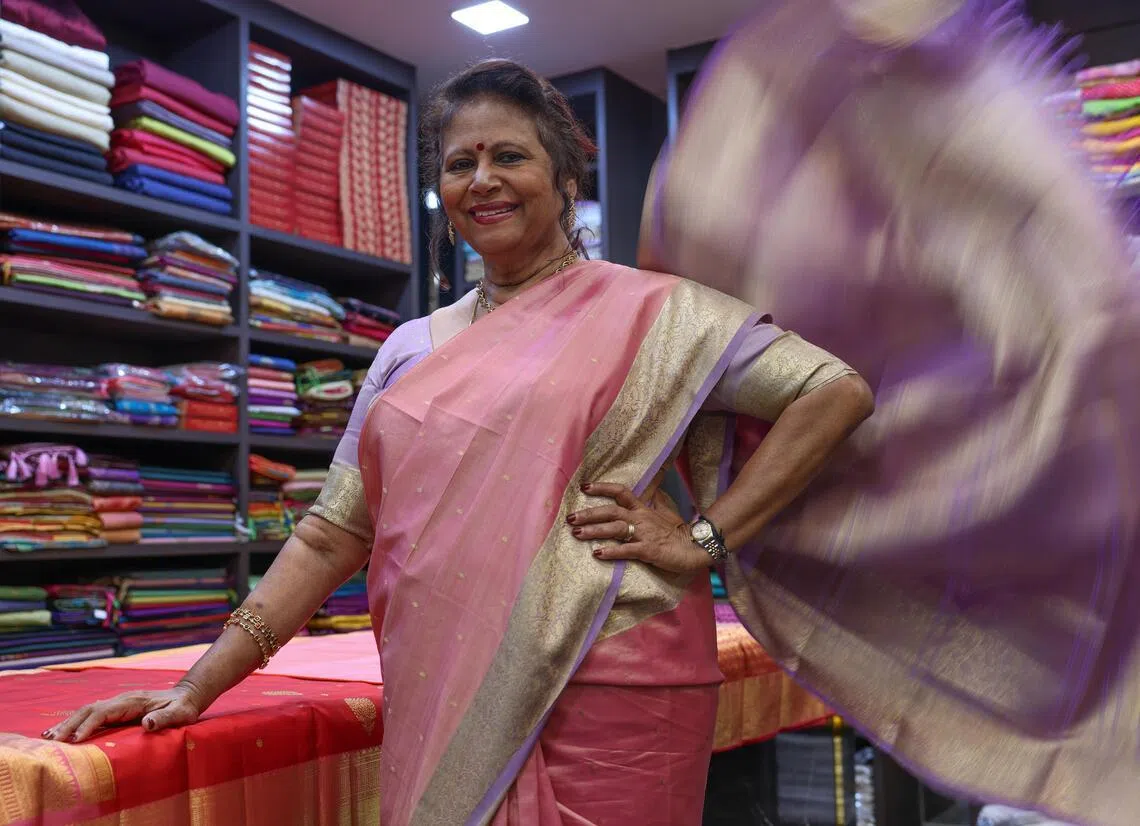
Little India sari retailer Dakshaini Silks faces a similar problem. Managing director Rani Kumar says cheaper flights have meant that more customers can fly to India for saris.
Even religious crafts are not spared from overseas competition.
Family business Say Tian Hng, which moved from China to Singapore in 1896, handcrafts Chinese religious sculptures. But similar statues of Buddha or Taoist gods can be made faster and cheaper by machines, says Ng Tze Yong, son of Say Tian Hng’s owner.
“You can buy it on (Chinese e-commerce platform) Taobao, you can go to China and buy a bunch of these statues for very cheap prices. So we have lost some business,” says Ng, who is being trained to take over the business.
Strong Singdollar, weak consumer sentiment
Meanwhile, the stronger Singapore dollar has hurt businesses that rely more on tourists.
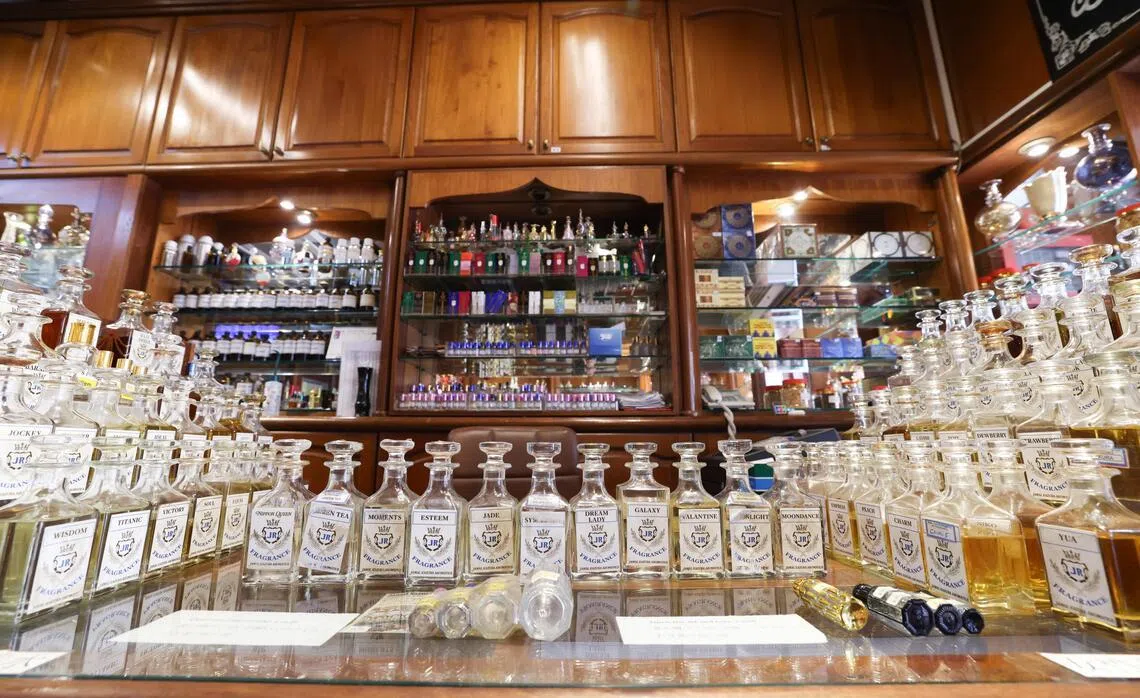
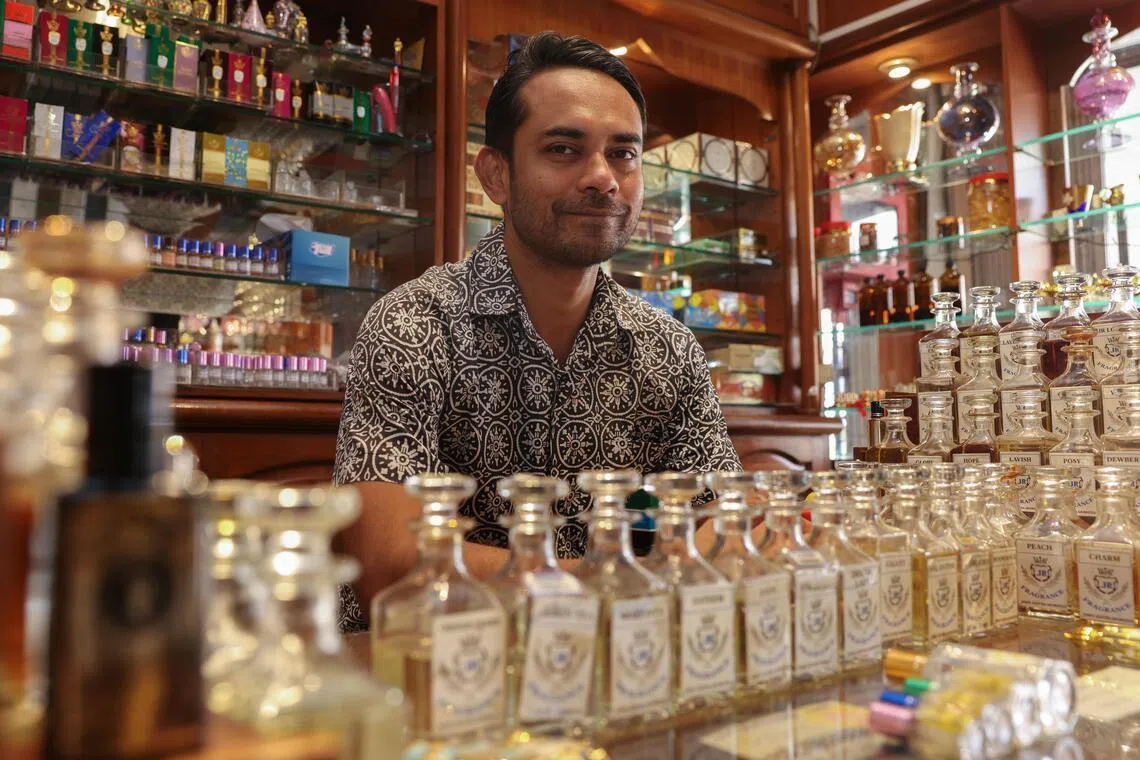
At perfume shop JR Fragrance, 60 per cent of revenue used to come from tourists – mostly from Japan – and the rest from locals, recalls co-owner Samir Kazura.
That ratio has flipped in recent years as the strengthening Singapore dollar eroded tourists’ spending power, with the majority of sales now from locals.
Yet locals, too, may have become more circumspect in their spending.
While business has improved since the pandemic, it has not recovered to pre-Covid levels, notes Kazura.
“(In) the last year or two, due to a lot of economic uncertainties, global uncertainties, I think just generally, consumer spending is skewed towards being more prudent,” says Kazura, whose grandfather started the business in 1933.
The company has four perfume outlets in Kampong Glam but is evaluating whether it needs so many, given these challenges.
From everyday life to special occasions
Some shopowners cite a challenge unique to heritage businesses: Cuisine aside, tradition is now less embedded in Singaporeans’ daily lives.
Kumar notes that today, saris are mainly worn during special occasions, but in the early 1990s, when she started her business, they were part of everyday wear.
While Say Tian Hng has seen stable demand in its six generations of operations, its local customers are predominantly middle-aged or older, says Ng.
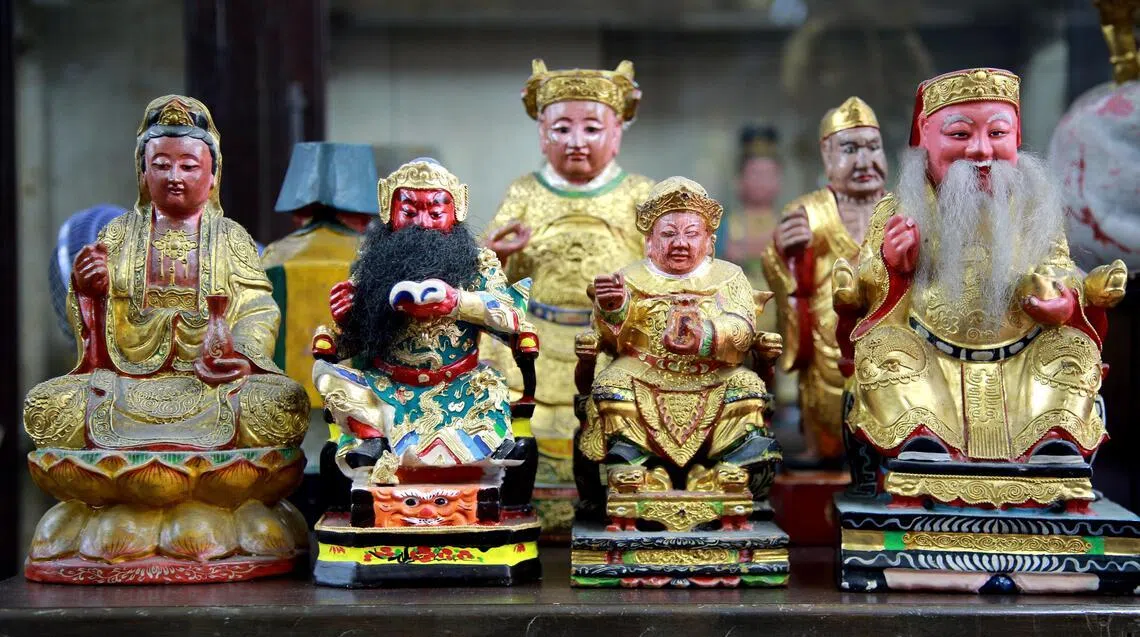
Commissions for new sculptures form a diminishing share of revenue, with its restoration segment instead growing to form about half.
Most of JR Fragrance’s local customers are also of the older generation. Says Kazura: “(For) smaller heritage brands, if we don’t make an effort to grow, reach out, rebrand and stay relevant, (we) have a risk of slowly dying out.”
These anecdotal experiences seem backed by data. In 2023, an NHB feasibility study on heritage businesses found that only 46 per cent of respondents regularly purchase from such businesses.
The low consumer support could be due to factors such as limited awareness of heritage goods and services, the survey found.
This is despite the vast majority of respondents in a 2024 survey agreeing that heritage businesses play an important role in promoting an appreciation of Singapore’s history and culture.
Other challenges faced by heritage businesses include a lack of successors and the ability to retain manpower with relevant skills, the 2023 survey found.
“Is there a warm body that’s able to come into the business to pick up the skills? Once you’ve got someone like that, you buy yourself another 30 years,” says Ng. “But of course, that’s increasingly challenging today.”
Even if a heritage business declines for a long while, its closure may seem sudden, he observes.
“When it happens, you see it in the papers: ‘A shop has closed.’ And then there’s a collective mourning about it. Then there’s the usual discussions about how we should be doing more.
“But usually by that time, it’s too late,” he adds. “Because you need a number of years for that person to come in to learn the skills, to overlap with the previous master artisan, before the business can be stabilised again.”
Scarcity and nostalgia
Yet, for some heritage businesses, it is precisely the scarcity of their traditional offerings that makes them valuable.
Ng hopes to tap this scarcity to keep Say Tian Hng relevant. While machine-made statues are cheaper, the business aims to position its handcrafted products as unique and valuable. It can produce only a few dozen statues a year, as each takes two to five months to make.
The company is looking at expanding to Europe and North America, where there is a thriving market for antiques from Asia, as well as a scarcity of such products.
There, Say Tian Hng can be an “East-West cultural bridge”, says Ng.
“If you live in a city or a town in Europe, it’s not easy to find these statues, because there may not be a Chinatown. And even if there’s a Chinatown, a lot of these will be the cheaper, mass-produced statues,” he explains.
“And Europeans, they like handcrafted stuff, they like refined stuff. So they cannot find it, and they also don’t know how to tell between statues. So that’s the space we’re trying to enter.”
Scarcity applies at home, too. Aster by Kyra, which sells vintage tiles salvaged from demolished buildings here, has seen steady business since opening in 2009, says manager Victor Lim.
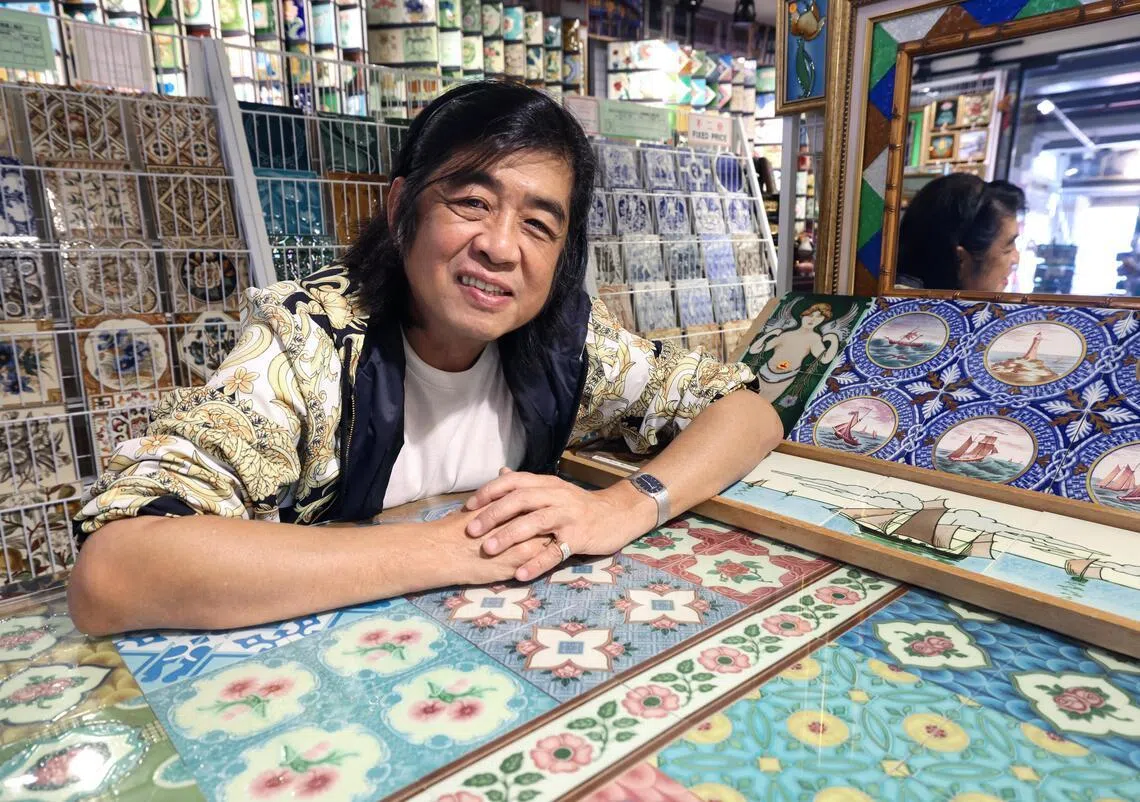
In fact, these glazed ceramic tiles – known locally as Peranakan tiles – are increasingly sought-after collectors’ items, thanks to auction houses putting them on the market.
Close to 80 per cent of the shop’s customers are Singaporean, even though it is located in the heart of Chinatown.
Lim believes demand will endure as such tiles are no longer produced using traditional methods. “When this piece is sold, there’s no replacement. (So the interest is because of) the rareness.”
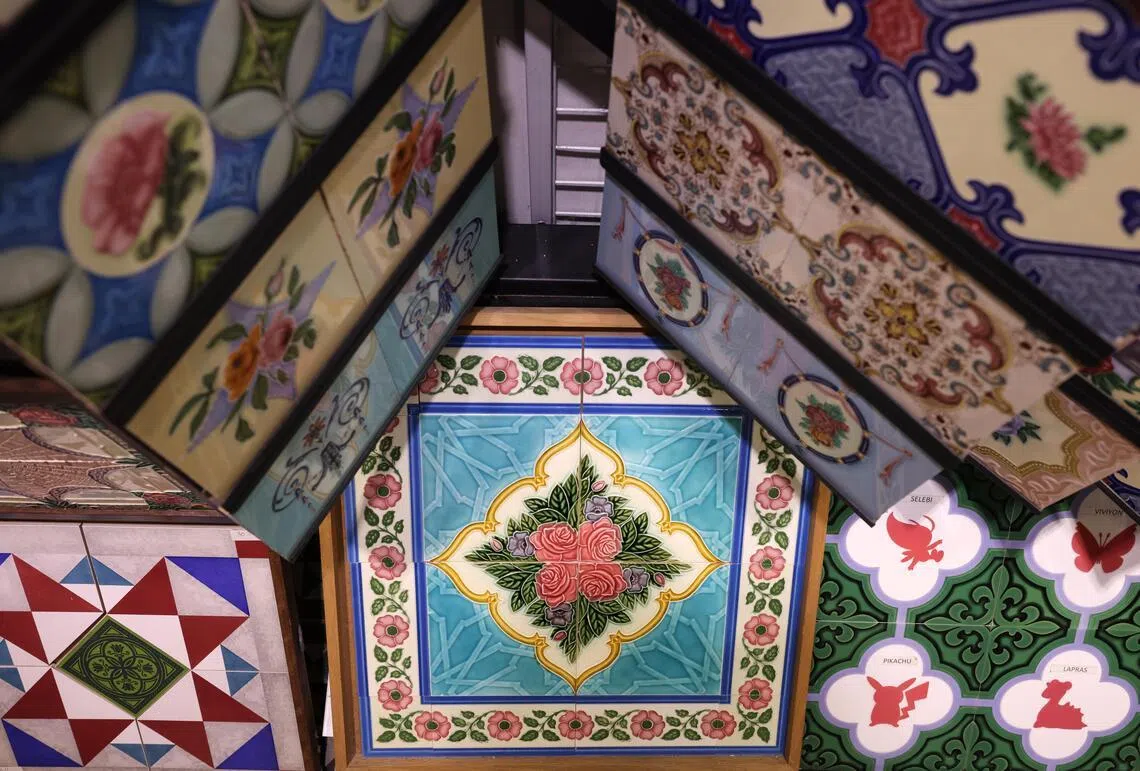
Demand for such items could also be due to an emerging “heritage halo” effect, says adjunct lecturer Joe Escobedo from NUS Business School’s department of marketing.
“A lot of younger Singaporeans are actively seeking out brands that feel real, something with a bit of soul,” he says.
“For them, picking up a hand-painted Peranakan tile or a tin of traditional medicinal balm isn’t just buying something useful. It’s about owning a piece of who they are, culturally speaking.”
Ng has also seen a rise in Singaporeans’ interest in their heritage and identity, with the country now developed enough to have an interest in matters beyond material concerns.
“I think it has been a condition in Singapore where we are always forward-looking. We like new things. We like things that are not Singapore. We worship the West. We worship Japan. We worship anything that is not local,” he says.
“For many years we have done that, and I think it’s just part of the story of a young nation trying to find itself. But I think we’re reaching a point where the younger generation now are more comfortable in their skin, to want to define themselves.”
Broader offerings
To boost demand at home, Say Tian Hng started organising English-language tours to the shop around 2017. Ng was surprised to find more Singaporeans than tourists taking part, although this did not translate to increased sales.
Nevertheless, holding experiential activities seems to be a common strategy.
To attract younger Singaporeans, JR Fragrance is holding perfume-making workshops at one of its four outlets that also houses more artisanal perfumes and offers customisation.
Dakshaini Silks is also exploring the idea of educational workshops, with schools already making tour stops at the sari shop.
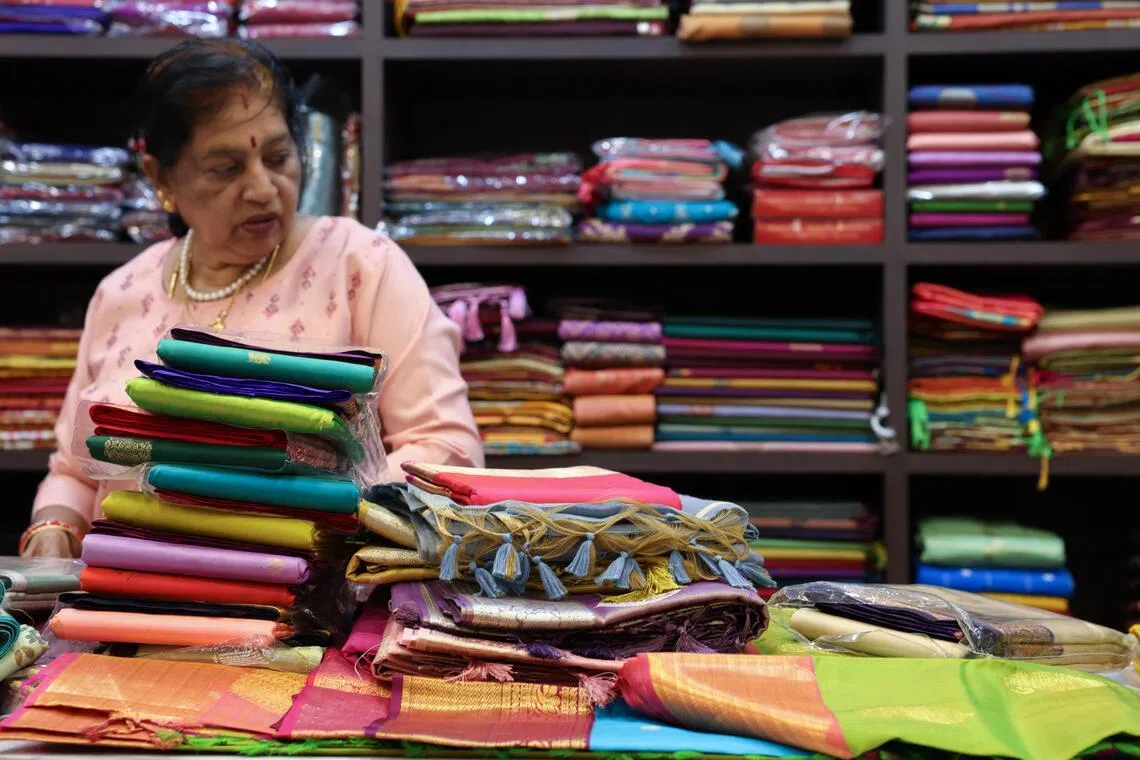
While Singaporean Indians are still its core market, its customer base is increasingly diverse, from Indian diaspora living in Europe to non-Indian Singaporeans.
Says Kumar: “We like to share the tradition and heritage of Indian ethnic wear with tourists and other races in Singapore.”
With saris now less common as everyday attire, the shop has expanded into Punjabi suits, which are more casual daily wear.
Other businesses are diversifying their product range; among them is medical oil and balm manufacturer Chop Wah On, which has done so since its founding in 1916, says third-generation owner Tong Kok Wong.
The company started with three products, but Tong’s father developed three more, including the farm crocodile oil that has become their signature offering. Today, the shop in Chinatown sells more than 28 items, including skincare and health supplements.
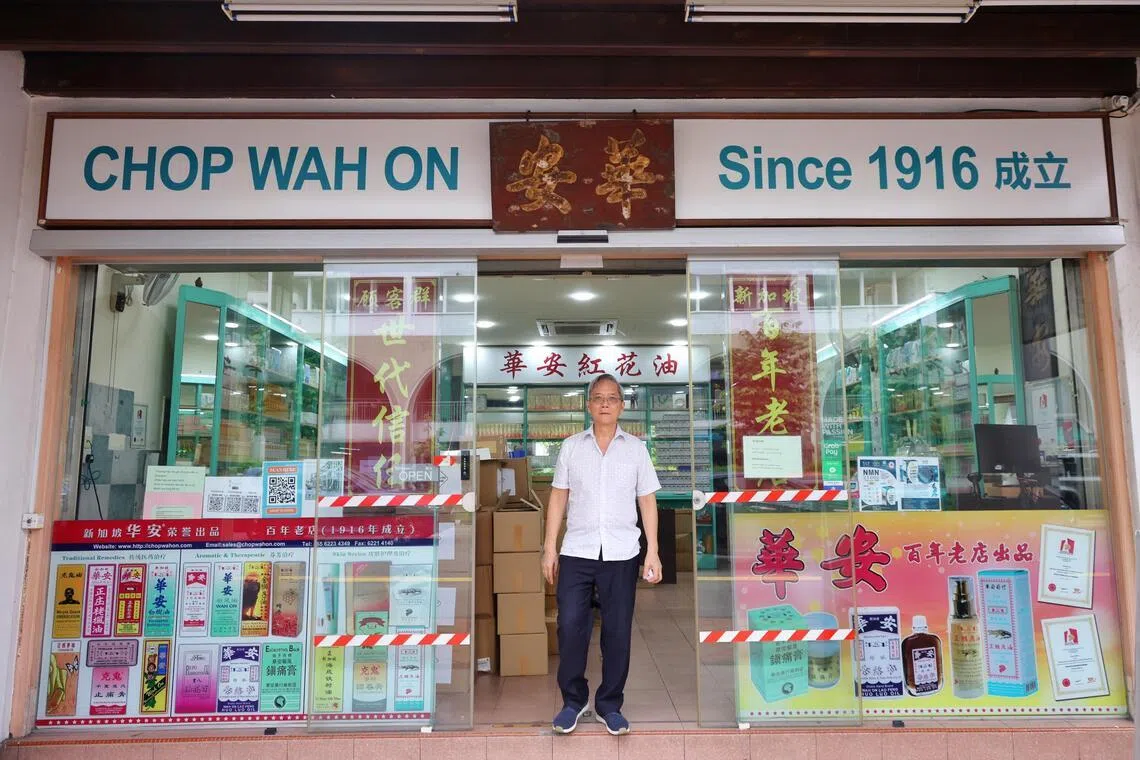
“We are always on the lookout for new business opportunities which are in line with our core medicated oil and oil business,” says Tong.
“Companies which produce only a single or limited range of products run the risk of their business being eroded over time as product obsolescence sets in.”
Except during the Covid-19 pandemic, business has grown yearly as the company pivoted to focus on tourists. Mostly from elsewhere in South-east Asia, mainland China and Hong Kong, they now form close to 90 per cent of customers, says Tong.
Selling heritage, not just products
Traditional businesses are becoming “aspirational lifestyle brands” that sell not just products, but heritage, says Escobedo.
Explaining what this may entail, he says: “They’re all over Instagram and TikTok, but not in an intrusive way. They’re showing people the actual process: the hours of work, the skill, the craft... They’ve figured out how to evolve without losing themselves.”
To stay relevant, heritage businesses can apply their craftsmanship to modern lifestyle products, he adds. For example, traditional carving techniques for religious sculptures can be used in making home decor or jewellery.
“Preservation shouldn’t be like putting something in a museum display case. It should be about letting things grow and adapt,” says Escobedo.
“We need more collaborations between traditional craftspeople and contemporary designers. When you put them together, you get products that actually work in modern life while keeping those traditional techniques alive.”
In response to queries from BT, an NHB spokesperson says heritage businesses themselves feel they need greater visibility and public awareness, and would like promotion and recognition by government agencies.
In February 2025, an inter-agency task force was set up to review policies to improve the mix of uses and activities in Singapore’s historic districts.
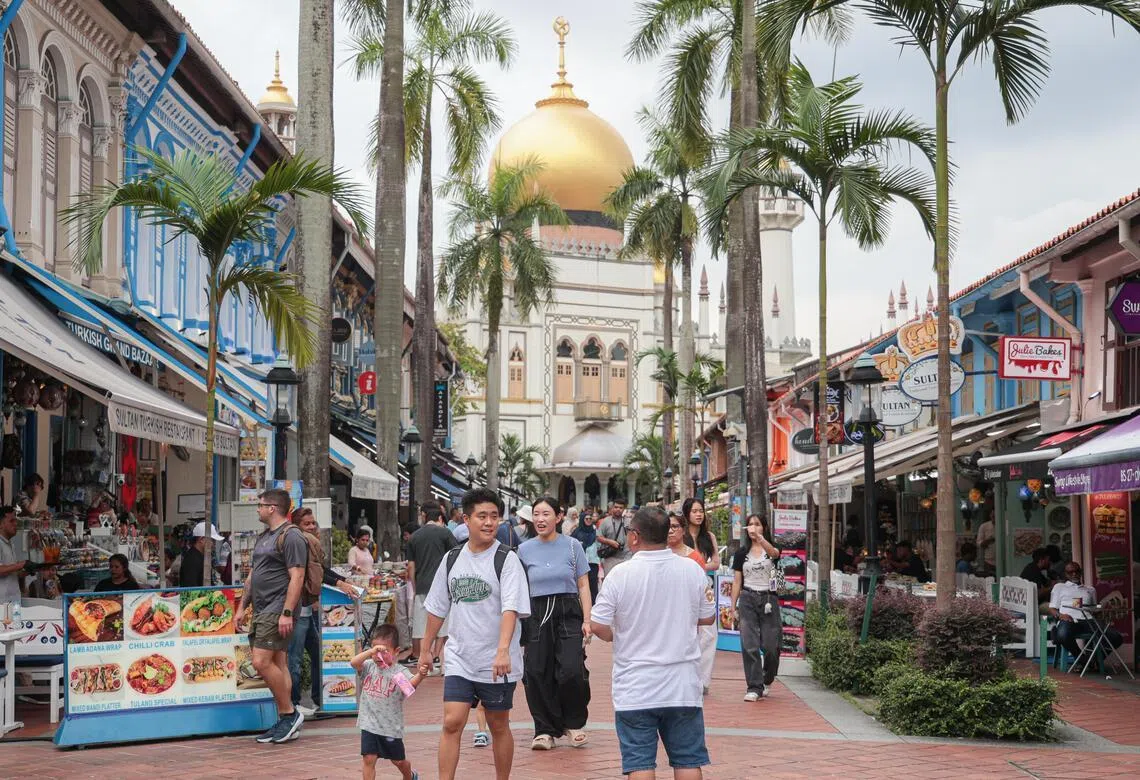
For instance, it updated guidelines in June 2025 to disallow new souvenir shops in the Kampong Glam historic district, after feedback that the proliferation of such shops could hurt the district.
Last March, NHB also launched the SG Heritage Business Scheme, which provides branding, marketing and consultancy services to successful applicants.
The scheme is open to heritage businesses with at least 30 years of history and has recognised 42 so far, including Dakshaini Silks, Chop Wah On and Say Tian Hng.
Businesses under the scheme may also apply for a transformation grant from NHB if they want to implement recommendations arising from the consultancy services.
This March, NHB will launch a marketing campaign to spotlight the offerings and community impact of these 42 businesses.
To extend their reach, an online register of designated businesses will also be developed, targeted at local and international customers looking to support heritage businesses or participate in heritage experiences. This is expected to be ready by June.
Besides government support and business adaptation, consumers themselves bear a responsibility in keeping heritage business alive, says Escobedo.
“We need to accept that heritage costs more. If we want these businesses to survive, we have to be willing to pay for the slow, careful quality of handmade stuff instead of always reaching for the cheaper, mass-produced option.”
TRENDING NOW

ComfortDelGro appoints two new independent directors

Once staunchly pro-China, Malaysian Chinese businesses are now distancing themselves from Beijing

NoonTalk needs continued financial support from CEO Dasmond Koh, auditors warn

DP Architects sets the benchmark for sustainability disclosure and design

