

Turning the world pink: Jakob Angele, CEO of foodpanda APAC
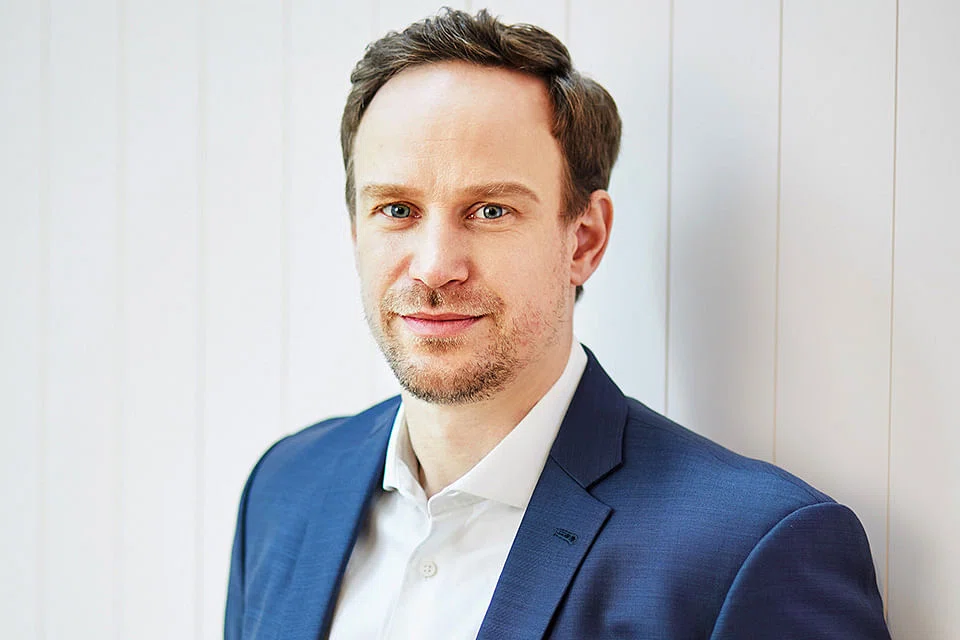
Jakob Angele, CEO of foodpanda APAC, is on a mission to see that every household uses its app at least once every single day.

IT is 10am on a Sunday morning, and you've promised your family you would make them pancakes. As you are getting the ingredients ready, you open the fridge and realise there is not enough milk. What do you do?
Do you cancel pancake morning? Get dressed, head out and battle the long supermarket queue?
Or order the milk and other groceries from pandamart, the cloud grocery store from foodpanda?
Give yourself a pat on the back if you picked the third option, because in less than 25 minutes, the milk and groceries arrive at your doorstep.
Jakob Angele, chief executive officer (CEO) of foodpanda Asia Pacific (APAC), recently did that, and naturally he raves about it. But the quick delivery is not a perk of his position - all customers get to enjoy it.
"Right now, groceries from pandamart are delivered within 25 minutes, but we are striving to deliver in 10 to 15 minutes," he says. "Our aspiration is for pandamart to be faster than you going to the shops, and pandamart (to be) like an extension of your fridge."
Those who regularly have meals delivered are no stranger to foodpanda. A subsidiary of Delivery Hero, a global leader of the food delivery industry based in Germany, foodpanda started in Singapore in 2012. Today, it operates in more than 400 cities across 12 markets in Asia, including Malaysia, Pakistan, Bangladesh, Laos, Cambodia, Myanmar, and Japan.
pandamart was launched in Singapore in 2019. Today, with 200 pandamart cloud stores in eight markets including Malaysia, Thailand, Taiwan, Hong Kong, Bangladesh, Pakistan and the Philippines, it is Asia's largest network of cloud grocery stores.
Mr Angele describes the past 18 months or so since the pandemic started as "a bit of a weird feeling". Once a frequent flier around the region because he oversees the Asia market, he has pretty much been grounded too. "I'm a very social person and I like to visit the teams, so personally, the pandemic hasn't been a good experience," he shares.
Capturing new customers in a pandemic
The company, on the other hand, has fared well. While the pandemic has hit industries such as aviation and tourism hard, the food delivery business has boomed. With food and beverage (F&B) establishments closed for periods of time and dining restrictions in place, more people have turned to players such as foodpanda to get their meals.
"We are in a luckier industry compared to aviation," Mr Angele says. foodpanda was multiplying its business every year even before the pandemic. "And Covid-19 gave us the tailwind. During lockdowns in the various cities, it was very easy to acquire new customers, to convince people to try us out for the first time," he says. "And we also reached new demographics such as the less tech-savvy, and the older crowd, so that's a good development."
Even better, he noted that after restrictions were eased, "the older demographic customers still stuck with us, so that's reassuring". "Even the younger customers who tried us out for the first time because of the pandemic are sticking around, so we have built a loyal customer base."
But it has not all been sunny and smooth-sailing: "We had a lot of challenges and problems to navigate."
He has had to see restaurants struggle: "Many countries have restrictions that are so severe that the restaurant ecosystem is impacted." And there was the challenge of ensuring "a proper assortment of restaurants" was available to customers.
The firm also had to stay focused on keeping its riders safe and well-informed about the restrictions, which were not only different in each country but also constantly changing.
While food delivery still makes up a large core of the business, pandamart has been growing strong too.
The company expedited its plans to grow pandamart when it saw that consumers could not go out as often or preferred to shop for their groceries and other essential items online in the safety and comfort of home.
foodpanda reported close to 250 per cent growth in fresh produce orders on pandamart between October 2020 and March 2021, while total grocery goods orders grew almost 160 per cent (or 2.5 times), as consumers turned to fast, safe and convenient on-demand home deliveries.
Mr Angele is confident that quick commerce will still be in demand when restrictions are lifted and shopping and dining out return to pre-pandemic times. "The quick commerce business model is a good one and it is strong. It provides convenience, choice and an improved quality of life to our customers," he says. "I believe we are still at the beginning of the journey of marrying food and technology."
Growing pandamart
The focus of the company now is largely on pandamart, starting with the plan to double the number of cloud stores across Asia within the next year. It is also reworking the way it operates pandamart, which started out with 1,500 products, mostly convenience store items.
"We are now ramping up to 5,000 items, which is more than some of what the standard supermarkets offer," says Mr Angele. The company is doubling down on technology, using smart data to optimise its inventory. There will always be customers who are looking for a specific item, the CEO says, and he wants pandamart to have that item even before the customer asks for it.
Customers who first try out pandamart often start with convenience store items, such as bags of chips and bottles of soft drink. Then they move into buying weekly groceries, such as eggs, milk and rice on the platform - and that is the area Mr Angele wants to grow.
During the week, there are more varied purchases of household necessities and groceries, while orders for snacks and alcoholic beverages usually increase on weekends. Other popular items include diapers, tinned milk powder, and painkillers.
New items that have seen growth in recent months include alternative meat products such as Quorn and Beyond, as well as fresh produce such as fruits and vegetables.
Some pandamarts even offer fresh meats and seafood. One would think that consumers would want to buy such items in person, but "it is exciting that consumers trust us enough to buy fresh seafood", says Mr Angele.
As the groceries are delivered in under 25 minutes, the items have to be picked and packed quickly. Indeed, while giant pandas are slow-moving and appear clumsy, pandamart staff are quite the opposite.
Each pandamart resembles a large warehouse, where the shelves are clearly labelled and items are all stacked in neat rows. Once an order comes in, a pandamart employee begins picking up the items, which are checked for quality and then scanned for real-time inventory tracking. Items need to be packed and ready for a rider to pick them up in under two minutes.
foodpanda also works with other retailers and small to mid-sized enterprises (SMEs) that double as "foodpanda shops". These include 7-Eleven, small mom-and-pop grocers, supermarket chains such as Tesco, health and wellness stores such as Guardian and Watsons, and other retailers such as The Body Shop, Wine Connection and Bee Cheng Hiang.
In such cases, staff from the respective shops pick up the items on the shopping list before they are handed over to a foodpanda rider, as it is more cost effective this way.
Singapore, says Mr Angele, is the only country where the big supermarket chains such as NTUC FairPrice and Cold Storage are hesitant to work with foodpanda. "I think the grocery chains are concerned about the cannibalisation of their core business," he says. "I believe this thinking is a bit short-sighted. Technology will evolve regardless of whether you want to take part in it."
The CEO, however, prefers working with smaller shops, who may find it difficult to move their business online. For such businesses, foodpanda offers them a technology-enabled platform which then serves as an additional stream of revenue.
When the pandemic started, foodpanda launched programmes to help new merchants with fast on-boarding at reduced rates.
pandamart may be the new focus, but food delivery is not taking a back seat. Test pilots are being done using automated vehicles to deliver food. Mr Angele envisages that gradually, more and more orders will be partially delivered by such vehicles. He declines to reveal too much but adds that it is also working with restaurants on how they can be more efficient, such as helping them manage their inventory.
"We see ourselves as a tech provider to restaurants. When we help restaurants become more efficient, this will not only benefit the restaurants themselves, but also foodpanda customers. For example, a shorter food prep time can mean lower prices," he says.
Market insights
As he oversees the Asian region, Mr Angele shares his insights on how each market is different. For example, he says, in Bangladesh and Pakistan, a lot of restaurants order their ingredients from pandamart: "We didn't expect this, but in these countries, the supply chain to get ingredients is unreliable, so they turn to us."
In those two countries, it is still more common for families to have home-cooked meals, so the concept of food delivery takes a while to grow on customers. "And the restaurant ecosystem there is not as developed as in Thailand or Singapore. So the fewer restaurants there are, the harder it is for foodpanda," says Mr Angele.
In Pakistan, the company runs a foodpanda Home Chef programme for home-based chefs to turn their passion into income and deliver home-cooked meals via foodpanda. The programme helps local businesses grow and provide an alternative economic opportunity for local communities.
Singapore consumers, he notes, are very open and curious about technology. "They always want something new and exciting, such as the newest restaurant or special meals that are on offer," he says.
Another fun fact he shares is that pink is the corporate colour not only because it is eye-catching to potential customers, but the bright shade makes its riders more visible on the roads.
Not losing focus
It is no secret that the food delivery industry is very competitive, and "focusing on what we are good at, and what customers want" is how foodpanda stays ahead of the competition, says Mr Angele.
"We believe in synergy. People come to our app for food, so naturally, we offered groceries as well."
He says foodpanda does look at its competitors and sometimes wonder about their moves. "Did we miss something?" is a question he sometimes asks himself. But he tells his team to spend only 20 per cent of their effort in studying competitors and learning from them.
"We spend 80 per cent of our time on what foodpanda believes is the right thing for consumers. To be focused on your own lane is really important," he says. Across Asia, outside of China, foodpanda is a market leader, so he must be doing something right.
But it is no mean feat keeping restaurants, riders and customers happy. "It is a super complex problem especially when you have to keep delivery fees low, ensure that riders are well compensated, restaurants are taken care of, and customers have their orders in double-quick time. I like solving complex problems," says Mr Angele on leading foodpanda.
He also feels that there is no other business model that can connect with consumers throughout the day as foodpanda can. He cites how the average person might use the foodpanda app five to eight times a month.
"For e-commerce standards, these are good figures. But if you put that into perspective, if people eat 90 times a month, and only eight times through foodpanda, that's a very low number."
The strategic question, he asks, is how to make more of those 90 food occasions somehow tech-enabled. "Not all the meals will be delivered, but how can we be a part of those other occasions? That's why we launched pandamart. People want to cook, and we enable them to do that with technology," he says.
Mr Angele personally uses the foodpanda app five times a day. Ideally, he would like for every household to use the app once or twice a day. He has not set any date, but aims to achieve the target the foodpanda way - by making small, progressive steps towards the goal.
JAKOB ANGELE
CEO foodpanda Asia Pacific
1981: Born in Germany
EDUCATION
Master of Science in Physics, Technical University of Munich
MBA, INSEAD
CAREER
2008 - 2014: Project Manager, McKinsey & Company
2014 - 2016: Senior VP SEA and CEO Singapore, foodpanda
Since 2017: CEO, foodpanda APAC
TRENDING NOW
OCBC Q3 profit rises 3% to S$2.04 billion, slightly above expectations
Stocks to watch: OCBC, IHH Healthcare, FLCT, SingPost, Koh Brothers Eco Engineering

From legacy to launch: Francis Yeoh and Yeoh Pei Xien on family unity and YTL’s next‑gen ventures

Wealthy Indonesians snap up government bonds as yields near 8%: OCBC

