

What next for the Singapore Turf Club?
With Covid dealing a body blow to the business of horse racing, has the sport of kings been stopped in its tracks in Singapore?
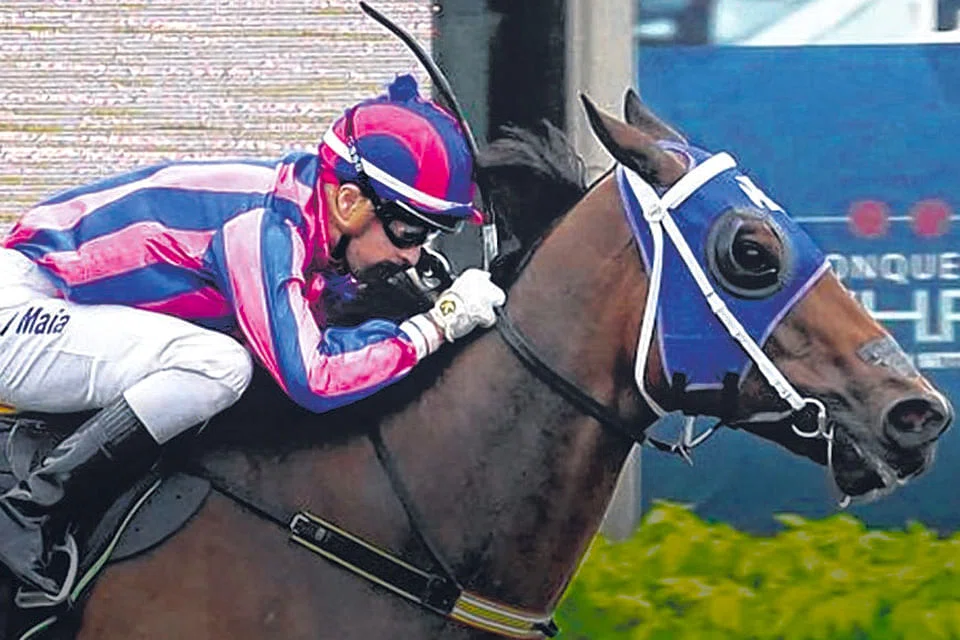
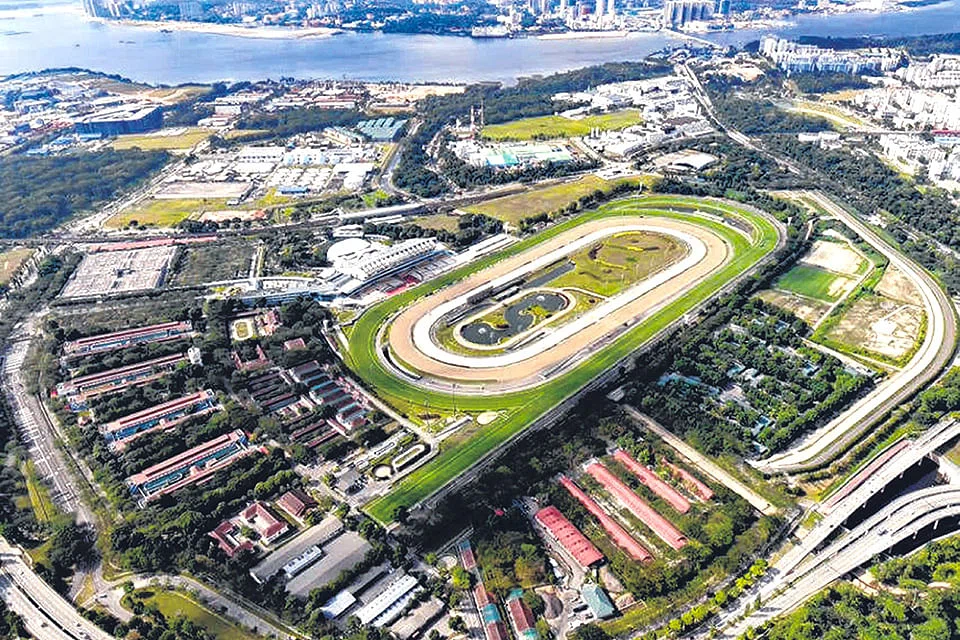
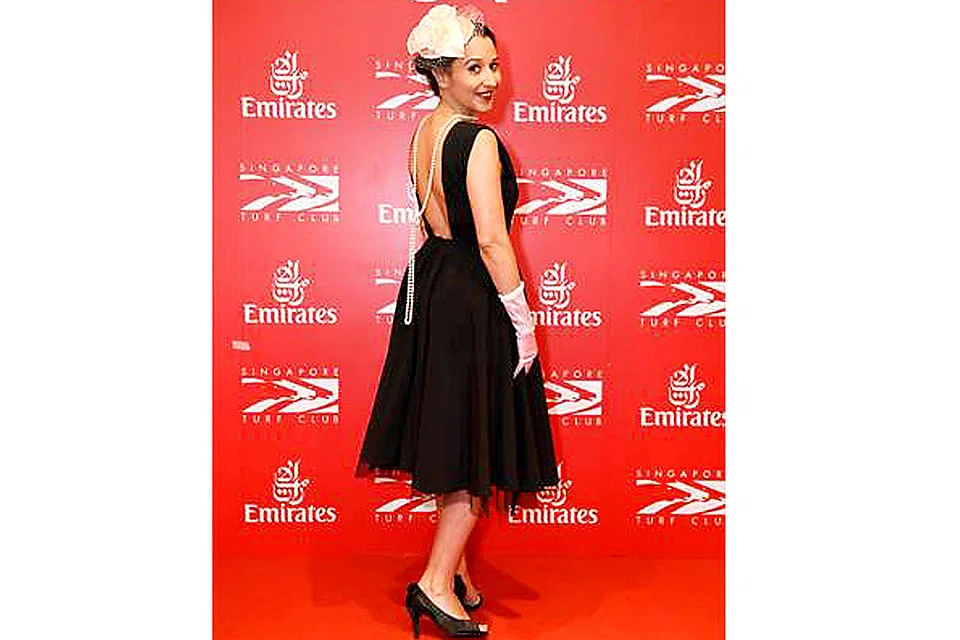


ON this auspicious day in the annual horse racing calendar, all roads and MRT tracks lead to Kranji. Crowds, by the thousands, throng to the Singapore Turf Club (STC), many invited guests dressed up to the nines. Elegant hats, frills and heels jockey for position with crisp shirts, smart suits and wingtips, as a princely prize awaits the best-dressed race-goers and the Tatler photographer snaps away busily.
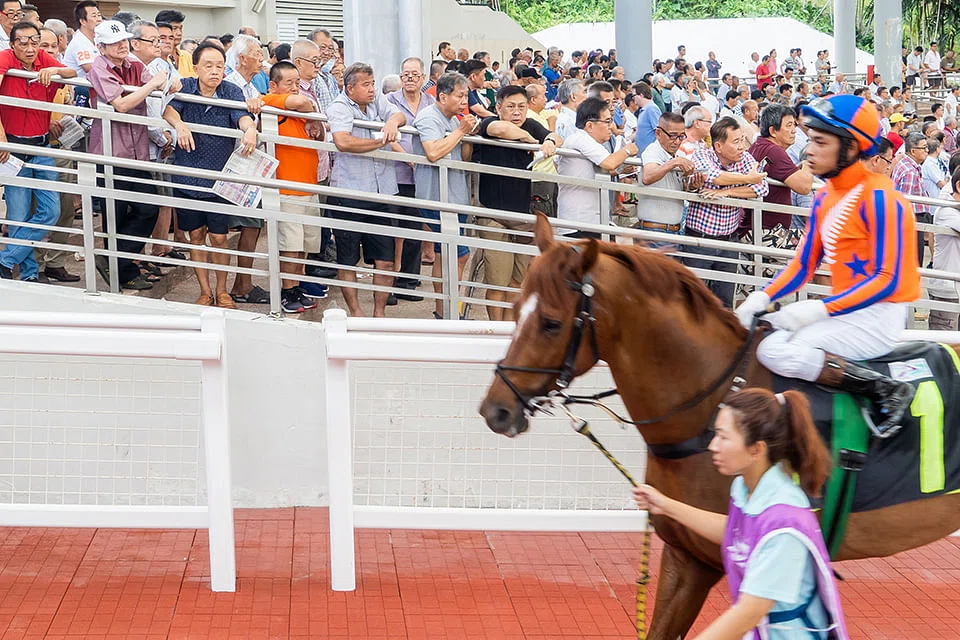
At the ground-level public gallery fronting the racetrack, thousands of punters appear under-dressed, some even in shorts. Yet, they are the heartbeat of racing with their imposing presence and intimate racing knowledge.
Sadly, today, that is history. Despite its 179-year history here, horse racing is now a sport on the decline. Then came the pandemic, which has all but eradicated the viability of racing for many of its stakeholders here - horse trainers, jockeys and horse owners. Those in the racing fraternity report an exodus from Singapore, with several leaving in recent months for the greener grass of the Hong Kong Jockey Club.
Has the "sport of kings" been stopped in its tracks in Singapore?
Emirates Singapore Derby Day is a glitzy, festive event on a Sunday in July. At the STC hospitality suites where invited guests are hosted, the buffet spread is fabulous, to be washed down by a free flow of champagne, fine wines, and hard liquor. Among the well-appointed guests there are some, better versed in bling and Birkins, for whom "quartet" is a foreign word and the only "forecast" - both betting terms - they know is linked to the weather.
Not so at ground level, where the thousands scrutinising the field are well acquainted with betting procedures and racing jargon.
Dressed up or not, every one of the 15,000 fans at the races on Emirates Singapore Derby Day is there to soak in the ambience, grandeur and excitement of the day, and, of course, hope to make a quick buck from their wagers placed on the dozen-or-so races at the pristine grass track.
But in the last few years, the atmosphere on big race days is not what it used to be. The Emirates Singapore Derby was replaced by the Singapore Derby in 2019. Earlier in 2016, the plug was pulled on the S$3 million Singapore Airlines International Cup (SIA Cup). The STC restarted the May event in 2018 as the Kranji Mile, also an international race. Since then, the two races have fielded strong horses sometimes ridden by elite jockeys, but with reduced prize money.
Attendance is a far cry from the heyday of the past, and has been forced to zero with the Covid-19 outbreak. Races have resumed since July 2020, behind closed doors with no spectators allowed.
The beginnings of the decline have been put down to the opening of casinos in Singapore in 2010. And younger Singaporeans have not been enticed at all by horse racing (some race-goers question the lack of aggressive marketing on the part of the STC), while TV sport is a far better draw for the majority of locals.
With the Covid-19 hit, the STC's finances have suffered a huge blow. Cutting prize money by up to 50 per cent for some races and calling off events translated to more than $4 million to ease the strain on the club's finances last year.
The STC said in July 2020 that due to the restrictions on public attendance at the racecourse and off-course betting centres, it is "facing a hugely negative financial outlook" for the financial year 2020/2021.
As one observer notes: "There was a time when S$2 million was received from betting through from each race. Now it is down to S$700,000 from each race. And S$700,000 figure is break-even point."
Diminishing returns
The Emirates Singapore Derby, inaugurated in 1991, had a S$1.15 million prize purse when the race was last held in 2018. The Singapore Derby, which replaced the Emirates event, now offers S$400,000 for the 2021 race, down from S$500,000 in 2020 and S$1 million in 2019. The SIA Cup carried S$3 million in prize money in its last year in 2017. It was replaced by the Kranji Mile, now the STC's marquee event, with S$1.5 million in prize money in 2018 and 2019.
Last year, the Kranji Mile was downgraded to a domestic event (no international horses were invited) and carried only S$1 million in prize money. The purse remains at S$1 million this year.
For the recent racing season there were 24 races scheduled with prize money ranging from S$150,000 to S$400,000. But seven - The Jumbo Jet Trophy, El Dorado Classic, Singapore Three-Year-Old Sprint, Rocket Man Sprint, Committee's Prize, Moonbeam Vase and Saas Fee Stakes - have been cancelled.
The winning horse owner earns 48.25 per cent of the total prize money, with the trainer taking 6.25 per cent and the jockey 5 per cent. Owner, trainer and jockey earn only if their horse comes in the top four placings in the race.
That prize money has dwindled is to be expected and mirrors what is happening on race courses everywhere. In England, the purse for the esteemed Royal Ascot meeting, which runs over four days in June, has been more than halved from £8 million (S$14.8 million) to £3.68 million for 2021.
What is more damaging to the sport in Singapore is its steady decline in popularity and departures of key players. A sport that was on par for interest and recognition with the goings-on in the centre of horse racing in Hong Kong, is today a far cry from what the former British colony continues to offer for race-goers and punters.
Founded in 1842 as the Singapore Sporting Club to operate the Serangoon Road Race Course at Farrer Park, the club was a great source of enjoyment and an entertaining pastime for Singaporeans and visitors.
And with Singapore Pools being the only authorised local operator of horse racing betting services, the local racing fraternity found this to be their weekend staple to pass the time and, hopefully, make a few bucks.
In 1924, the club changed its name to the Singapore Turf Club, which moved to Bukit Timah in 1933 before relocating to its present location at the Singapore Racecourse at Kranji in 1999.
At each race day, crowds by the thousands continued to flock to Kranji which was easily accessible - the MRT takes you right to its doorstep.
But over the last decade, horse racing has lost its appeal and wow factor. The low payouts due to the higher takeout by the club (sometimes you get only S$5.10 for a S$5 outlay), less competitive racing and the absence of better-quality horses and big-name jockeys have all contributed to the waning interest.
Competition from other sports like football (especially with live coverage and betting possibilities) and e-sports (a new hit with millennials) also saw young Singaporeans turning their backs on horse racing.
The slide began sometime in 2010 when the Marina Bay Sands integrated resort (IR) opened in downtown Singapore and allowed for casino betting, followed by the second IR at Resorts World Sentosa.
With the shiny new casinos facilitating legal betting and the surge in football betting, the horse-racing industry suffered a big loss in revenue. What followed was a series of problems - an almost 30 per cent drop in the horse population, and lesser earnings for horse owners, trainers and jockeys with the reduction of prize money and fewer races.
Changes to the racing schedule have quickly eroded earnings. Race meetings, which used to be scheduled for weekends (Saturday and Sunday), were changed to Friday and Sunday, and now only take place on three Saturday afternoons and one Sunday every month, to avoid a clash with the Hong Kong races.
The restriction to one race day per week (and on some races the prize-money ranges from a meagre S$20,000 to S$70,000) has put pressure on trainers as their opportunity to earn prize money has shrunk. And with maintenance costs of horses estimated at about S$4,000 a month for horse feed, supplements and vitamins, spelling and visits to the vet, there is financial strain mainly on trainers.
So it was not surprising to hear of the sudden departure of some of the better-known trainers from Singapore.
Well-established trainer Cliff Brown suddenly announced in January that he was leaving Singapore and returning to Australia to continue his racing career. Mr Brown, who spent 12 years in Singapore, followed in the footsteps of Lee Freedman, a five-time Melbourne Cup winner, both having left recently.
Mr Brown had enjoyed a successful season with a top-five finish last year and 33 winners. He finished fourth on 57 winners in 2016.
The multiple-time winner says that radical reforms brought about by the STC had made his business model unsustainable, when it was previously viable since his relocation from Victoria, Australia, in 2008. He attributed three reasons for his decision to leave: the STC's drastic changes to the racing system, his children's future (youngest son Felix is with him, while the older two, Harvey and India, are in university in Australia) and his most-recent star horse Inferno, which has been sent to Australia.
As he wound up his operations after 12 memorable years, Mr Brown admitted that the pandemic was a destructive force to horse racing here since last March.
"Covid-19 has crushed the club, and has also hit other racing centres. No one is immune to its devastating effects. Here, the number of races has dropped, we can't get a run for our horses. And this has greatly affected our income and bottom line," he says.
One trainer, on condition of anonymity, vented his frustration saying: "Ironically, Covid-19 has helped the Turf Club. It has been used as a reason for the slump in racing and hence seems to absolve the club from its inefficiencies
"The government has, rightly, provided a framework and guidelines for horse racing. If there are seeming obstacles, it is for the club to think out of the box and get round them. So interpret the rules, exploit the rules and find an edge. The punter profile must be studied.".
He added that there were about 750 horses raring to run. With one race meeting a week, and 10 races with an average field of 12, there will be 120 runners each week. That is 480 runners a month. So many horses remain idle for a whole month but need expensive upkeep.
He concluded: "Thus how do we sustain, maintaining a horse, when we have to cough up around S$4,000 a month on the cost of feeding, vitamins, spelling and vet visits? The Turf Club must pay attention to the racing turnover."
During the reign of trainers such as Ivan Allan, Malcolm Thwaites and Laurie Laxon, and famed jockeys such as Kim Clapperton, Saimee Jumaat and Oo Khuang Liang in the 1980s and 1990s, horse racing in Singapore hit its heights. Even legendary jockeys such as Englishman Lester Piggott and Italian Frankie Dettori had ridden in Singapore.
And because Singapore took a "welcome" stance, many top trainers and jockeys spent long stints here as against Hong Kong's policy of short-term stints. But even then, trainers like Mr Allan decided to opt for the more lucrative Hong Kong circuit.
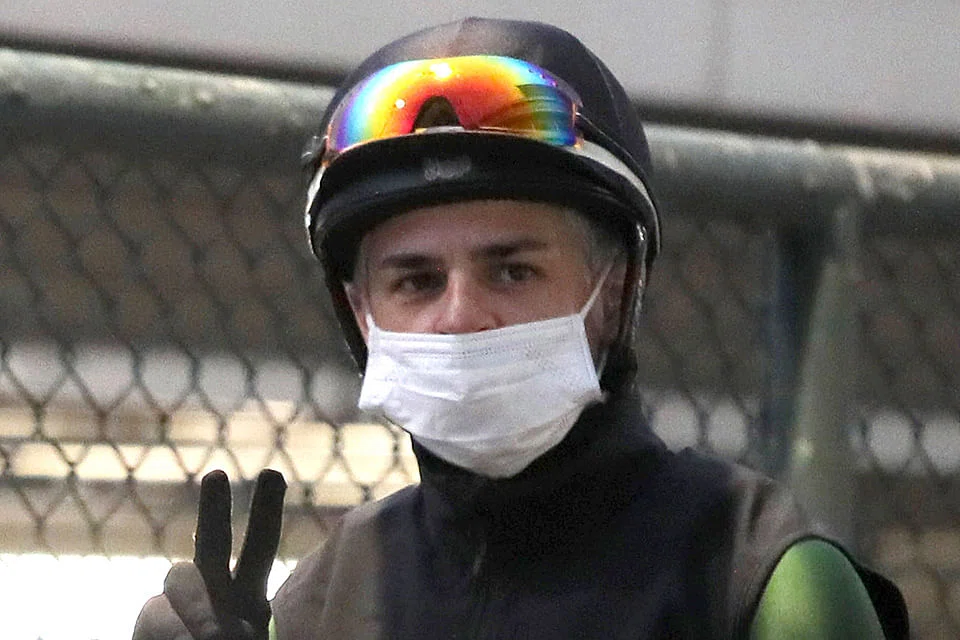
The high-profile exits of Mr Freedman and Mr Brown are a matter of concern. Coming on the heels of departures of Australian jockeys Michael Rodd, Daniel Moor and Patrick Moloney, Kiwi jockey Alysha Collett and South African rider Ryan Munger, this trend signifies that all is not right with Singapore racing.
Former STC chief stipendiary steward Terry Bailey too has relocated to Hong Kong, where top jockey Ruan Maia of Brazil has also left for.
Looking to the future
But bucking the trend of what seems a "bailout of a sinking ship" are New Zealand trainers Mark Walker and Donna Logan, who have pledged allegiance to Singapore racing.
Mr Walker recently told ANZ Bloodstock News: "Racing has a proud history in Singapore and the government does so many things so well. I believe it is the best-run government in the world, so once they get Covid-19 under control, I am pretty sure they will look at racing and put the right structures in place, and hopefully get prize-money back to the levels they were when I first arrived here."
The 48-year-old New Zealander claimed the trainers' championship five times in seven years in New Zealand, before coming to Singapore a decade ago.
Mr Walker, a three-time Singapore champion trainer, is keeping a positive outlook about the Singapore racing industry's future, with no intention of scaling down on his 60-horse stable at Kranji. He said: "The government's handled Covid-19 extremely well, so hopefully once the vaccine situation picks up and we can get crowds back to the races, turnover goes up, and the number of race meetings will increase."
Ms Logan echoed similar feelings in a recent radio interview, saying: "Even with today's struggles, Kranji is still a better business model than New Zealand. I am a fighter. I have come here to have a crack and I will stay until I do crack. I intend to stay for as long as I can financially sustain it."
Currently there are about 40 jockeys (only about 10 foreigners) and 25 trainers on the racing roster, and the horse population has dropped from 1,300 to about 900.
Some owners, like Jayven See who has scored notable successes in the region, are a disillusioned lot. He says: "I have over 60 horses around the world. And I have eight in work in Singapore. But, mind you, I stopped watching Singapore races."
The image of racing in Singapore has taken a body blow. Excitement is waning and there is a gradual drift towards mediocrity, at best. The STC has a monumental task ahead if it is to restore confidence in racing.
Meanwhile, the club has opened up its facilities to the public for weddings, workshops and events to ensure better utilisation of its expansive premises. And last year, a nine-month SingapoRediscovers S$45 million campaign was launched to drive local spending to Singapore's eateries, shops and leisure attractions.
At the launch, Trade and Industry Minister Chan Chun Sing said it is part of a broader medium-term plan to get Singapore's tourism industry to reinvent and redesign its offerings. He added that, in the long term, Singapore remains committed to executing plans like the redevelopment of the Singapore Racecourse in Kranji into a leisure destination that will complement nature-based attractions in the Mandai area.
When asked for their views on the current horse-racing scene and the departure of trainers and jockeys, STC bided its time before sending this short reply from corporate communications manager Eunice Choy Keng Mei: "We have assessed your request and will decline comment at this point while plans are developing."
A bureaucratic reply, no doubt.






