

Fed pause is no reason to turn less bearish
Financial markets, real estate sector may be underestimating the resolve with which restrictive policies are being implemented

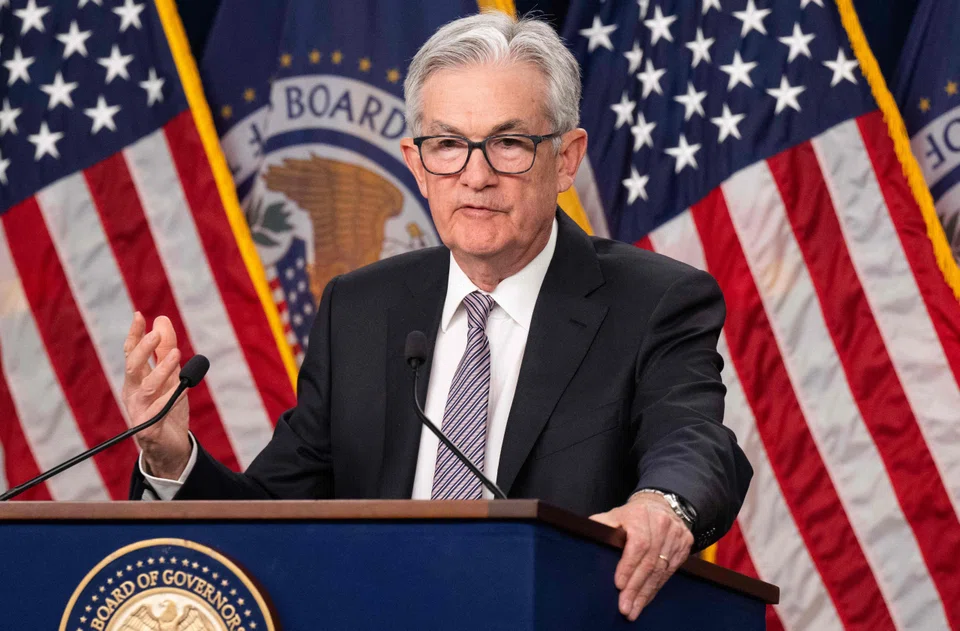
THE US Federal Reserve all but said this past week that it is going to pause its rapid tightening of monetary policy.
On May 3, the Fed said the target for the federal funds rate would be raised by another 25 basis points – to between 5 per cent and 5.25 per cent – and that the Federal Open Market Committee (FOMC) will consider a range of factors in determining the extent to which additional policy firming may be appropriate to return inflation to its long-term target of 2 per cent.
This was a marked shift from the Fed’s rate-hike announcements over the past year, each of which telegraphed that further increases in the federal funds rate were on the cards.
For instance, the statement that accompanied the Fed’s rate hike in March said: “The (FOMC) anticipates that some additional policy firming may be appropriate in order to attain a stance of monetary policy that is sufficiently restrictive to return inflation to 2 per cent over time.”
Fed chairman Jerome Powell was careful to say during a press conference on May 3 that no decision on a pause has actually been made yet, but highlighted this change in rhetoric in the Fed’s official statement.
“That’s a meaningful change,” he said, responding to a question about whether the Fed would pause its rate-hiking cycle.
“We’ll be driven by incoming data, meeting by meeting. And, you know, we’ll approach that question at the June meeting,” he added.
This more dovish stance by the Fed does not make me any less bearish on the market, though. Even if the Fed does pause its rate-hiking cycle in June, the lagged effect of all the rate hikes that have already taken place may weigh on the economy and financial system.
The recent spate of bank failures in the United States could also lead to tighter financial conditions, as financial institutions become more risk-averse in managing their assets and deploying their capital.
More to the point, the US labour market has remained resilient. On May 5 – just two days after the Fed’s most recent rate hike – the US Bureau of Labor Statistics reported that non-farm payroll employment rose by 253,000 jobs in April.
This was higher than the 165,000 jobs (revised down from 236,000) added in March, and the 248,000 jobs (revised down from 326,000) added in February.
US unemployment also remained close to five-decade lows in April, at 3.4 per cent. The unemployment rate has ranged from 3.4 per cent to 3.7 per cent since March 2022.
This raises the risk of the Fed having to hike rates further, possibly exacerbating the economic slowdown that appears to be underway.
Hot residential property
Here in Singapore, a thornier problem than subduing inflation is reining in residential property prices.
On Apr 27, the government doubled the Additional Buyer’s Stamp Duty (ABSD) for foreigners buying residential properties: from 30 per cent to 60 per cent.
Singaporeans buying their second residential property will now pay an ABSD of 20 per cent, up from 17 per cent. Permanent residents (PRs) buying their second residential property will now be hit with an ABSD of 30 per cent, compared with 25 per cent previously.
Singaporeans buying their first home still pay no ABSD, while the ABSD for PRs purchasing their first residential property remains at 5 per cent.
Some property market watchers have said the steep ABSD hike on foreigners will have little impact, as foreigners account for less than 5 per cent of private home purchases in Singapore.
Some also argue that administrative measures such as increasing ABSD may actually spur demand in the short term, as the expectation of further such measures incites potential homebuyers to quickly make a purchase.
Just two days after the higher ABSDs kicked in, a new residential development called Blossoms By The Park in the Buona Vista area saw strong sales. Many of the buyers were reportedly Singaporeans and PRs, but there were a few buyers from China too.
This raises the question of whether the residential property market can be gently restrained; or, whether the necessary policy measures to cool the market will inevitably lead to an unpleasant correction.
Indeed, successive rounds of cooling measures ended up triggering a decline in the private residential property price index in late 2013 that lasted for about four years.
Sell in May and go away?
There is more to the analogy between Singapore’s exuberant residential property market and stubborn global inflationary pressures than that they are both proving difficult for policymakers to handle.
People who work in financial markets and in the real estate sector often downplay the extent to which restrictive policies may be needed in their respective fields. Some even argue the restrictive policies may do more harm than good.
For some financial market watchers, the solution to US inflation – which has been driven over the past year by commodity prices, supply-chain bottlenecks and labour shortages – is not tighter monetary policy but more investment.
The way they see it, tight monetary policy only destroys economic activity and takes jobs away from people who want to work.
In the property sector, one could argue that cooling measures make property developers less inclined to expand the stock of private property in Singapore at a time when there is a shortfall in supply.
Yet, high inflation and runaway property prices prevent the spoils of growth from being shared widely. Inflation eats away at the purchasing power of workers’ incomes, with low-wage workers likely to suffer the most.
Inflated residential property prices result in everyone living in cramped spaces, and burdened with excessively large mortgages.
People who work in financial markets and the real estate sector – who shape opinions about interest rates and property cooling measures – may be underestimating the importance of anti-inflation policies and property cooling measures, as well as the resolve with which they are being implemented.
If the residential property market remains frothy, further cooling measures may well be rolled out in the weeks and months ahead.
If the Fed does pause further rate hikes, as it has indicated, from June onwards, it would only be because US economic growth has slowed sufficiently to bring inflation down. This is unlikely to be a conducive backdrop for stocks.
The old market adage – sell in May and go away – might well be a sensible investing strategy this year.
TRENDING NOW

Singapore bars Alice Huang, woman tied to affair with Nvidia’s Jensen Huang, for misleading police

Nvidia prepares to oust Jensen Huang after news of second affair, with executive: reports

Higher rates, weaker spending: Is the Philippines entering stagflation?

Nvidia’s market value sinks below US$4 trillion after CEO Jensen Huang resigns

