Fed rate cuts could spur risk-taking in 2024
A weaker US dollar may allow Asian central banks more flexibility to support their economies with looser monetary policy

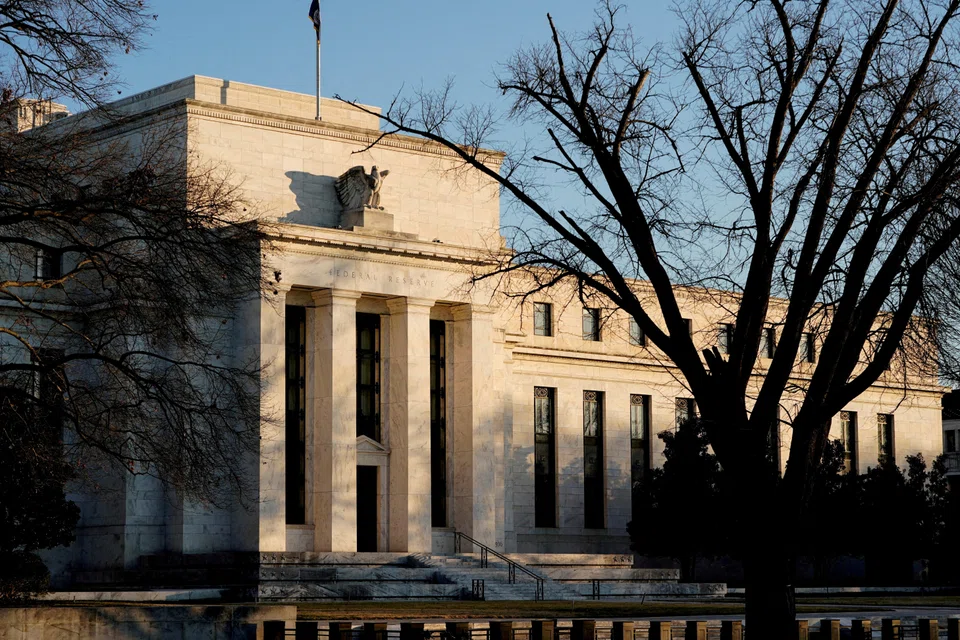
CHRISTMAS may have come early for investors positioned for a loosening of global monetary policy.
At its final meeting for 2023 last week, the US Federal Open Market Committee (FOMC) held the federal funds rate unchanged at 5.25 to 5.5 per cent for a third time, and tweaked the wording of its policy statement to indicate that another hike is now unlikely.
The latest summary of economic projections by FOMC meeting participants also showed none of them expect rates to be hiked any further. Their median projection is for the federal funds rate to end 2024 at 4.5 to 4.75 per cent – which implies three cuts of 25 basis points each next year.
In September, their median projection was for the federal funds rate to finish 2023 at 5.5 to 5.75 per cent; and 2024 at 5 to 5.25 per cent.
This dovish shift by the Federal Reserve will likely have markets heading into 2024 with a bullish tone, though the timing and magnitude of any rate cuts is uncertain at the moment.
The 10-year US Treasury bond yield ended Friday (Dec 15) just below 3.92 per cent, down from nearly 4.25 per cent at the end of the previous week and as much as 5 per cent in October.
The S&P 500 closed Friday at 4,719.19 – up nearly 2.5 per cent for the week, and up more than 14.6 per cent from its October low.
Weakening US growth
Investors should not throw caution to the wind, though. Even with the rate cuts pencilled in for 2024, the federal funds rate would be at levels not seen since before the global financial crisis.
The Fed is also continuing its “quantitative tightening” policy, which some market watchers fear could disrupt liquidity in the financial system from time to time.
The European Central Bank and Bank of England – both of which also held their policy rates steady last week – were more hawkish than the Fed in their comments on the future direction of their monetary policies.
The point is that global monetary policy will probably remain fairly tight in 2024, even if the Fed cuts rates three times.
More importantly, US economic growth is expected to slow in 2024 in response to the cumulative impact of the rapid tightening of monetary policy in 2022 and 2023.
Indeed, the more dovish projections by FOMC meeting participants last week of the federal funds rate in 2024 were accompanied by projections for slightly weaker GDP growth.
The median projection for US GDP growth in 2024 is now 1.4 per cent, down from the median projection in September of 1.5 per cent.
For investors, the really important question in 2024 might well not be how much interest rates will be cut, but the extent to which global economic activity will slow as the Fed and other major central banks traverse the “last mile” of bringing inflation to heel.
Supply side tailwind
One of the biggest surprises of 2023 for me was that US economic activity and corporate profitability were not more adversely affected by the sharp rise in interest rates.
The median projection by FOMC meeting participants last week puts US GDP growth for 2023 at 2.6 per cent. This is up from a median projection of 2.1 per cent in September, and 0.5 per cent in December last year.
Why has US economic growth in 2023 proven so much stronger than expected?
This column said in June that pent-up demand fuelled by savings accumulated during the pandemic made some sectors of the economy impervious to high inflation and interest rates. For example, sky-high air fares and tight monetary policy did not stop people wanting to travel.
The result was a “rolling recession” of sorts, in which downsizing and layoffs did not hit all sectors of the economy simultaneously.
Yet, US economic resilience in 2023 wasn’t just a demand side story. The supply-chain bottlenecks and low labour force participation rates, which fuelled inflation when economic activity restarted after the pandemic, have also been unwinding over the past year.
This helped bring inflation down quickly, despite the strong economic expansion.
The question now is how much longer this supply-side tailwind will last. “We definitely think that the supply chain and shortages side has some ways to run. Does labour force participation have much more to run? It might. Immigration could help,” said Fed chair Jerome Powell during a press conference last week.
“But it may be that at some point you will run out of supply-side help,” he added. “And then, it gets down to demand, and it gets harder.”
Increased risk-taking
What does all this mean for investors? Clearly, the increased likelihood of Fed rate cuts in 2024 will spur risk-taking in the market.
This could be reflected by the S&P 500 setting new highs in the months ahead, and investors hunting for laggards and bargains among smaller-cap stocks.
With the prospect of slower economic growth in 2024, however, investors should focus on companies with strong balance sheets and reasonable market valuations.
A weaker US dollar could also take pressure off Asian currencies, and allow central banks in the region more flexibility to support their economies with looser monetary policy.
The US dollar index, which measures the value of the greenback against a basket of major currencies, fell more than 1.3 per cent last week. The index is now more than 4.1 per cent below its October highs.
Closer to home, the Straits Times Index closed Friday at 3,116.51 – up less than 0.2 per cent for the week, and up only 2.1 per cent from its October low.
One reason for this relatively weak performance is that DBS , OCBC and UOB – which account for nearly half the index – are likely to suffer weaker profitability as interest rates plateau and fall.
On the other hand, real estate investment trusts are beneficiaries of lower interest rates and could benefit from a significant re-rating in 2024.
CapitaLand Integrated Commercial Trust ended last week 5.8 per cent higher. Mapletree Industrial Trust and Mapletree Pan Asia Commercial Trust were up 6.5 per cent and 7 per cent, respectively.
The Mark To Market column will take a two-week hiatus over Christmas and the New Year