Fed rate cuts, ‘reverse globalisation’ may spur relatively undervalued Singapore, Asian stocks
FOMC meeting participants are now projecting only one rate cut this year, while both Biden and Trump want tariffs on imports from China

ABOUT a year before the pandemic struck, the chief investment officer of a Swiss private bank offered me a rather dystopian analysis of the global economy during an interview.
He told me the widespread use of technology had made it harder for workers in the US to demand higher wages during the preceding couple of decades. With stagnating middle class incomes, demand had been increasingly fuelled by rising asset prices and borrowings.
He added that limited upward pressure on wages had also paved the way for a long-term decline in inflation and interest rates. This further fuelled asset prices and enabled everyone to borrow even more.
Monetary policy, he said, was no longer about curtailing inflation but preventing asset prices from collapsing.
To drive home his point that technological advances do not necessarily benefit ordinary people, he told me global economic growth during the decade that followed the launch of Apple’s iPhone was actually lower than the decade that preceded it.
This was a rather glib argument, of course – not least because the period following the launch of the iPhone had been marred by a global financial crisis.
Still, I thought he had a point. The iPhone has greatly enriched Apple’s shareholders, employees and suppliers. Yet, smartphones have also contributed to the disruption of sectors such as media, telecommunications and transportation.
For many people, smartphones are now an indispensable life tool. Yet, few people would say these devices have made them materially better off.
These were among the thoughts that crossed my mind earlier this month as I watched the market value of chipmaker Nvidia shoot past the US$3 trillion level, and the Federal Open Market Committee (FOMC) signal uncertainty about the scope for rate cuts this year.
Is artificial intelligence (AI) a new technology trend that will unleash further downward pressure on wages even as it enriches investors? Is it just a matter of time before central banks revert to ultra loose monetary policy?
Or, is the FOMC’s struggle to bring inflation down to its long-term target a sign of some fundamental change in the markets? If so, what should investors do?
Pandemic-related distortions
One of the difficulties with forecasting interest rate movements is that we are in the midst of an unusual economic cycle – thanks to the gradual reversal of pandemic-related distortions to demand and supply.
In particular, easing supply chain bottlenecks and rising labour force participation following the pandemic have helped reduce inflation while supporting economic growth.
These positive supply side shocks may have made it harder for the Fed to calibrate its monetary policy, and resulted in rates staying high for longer than expected.
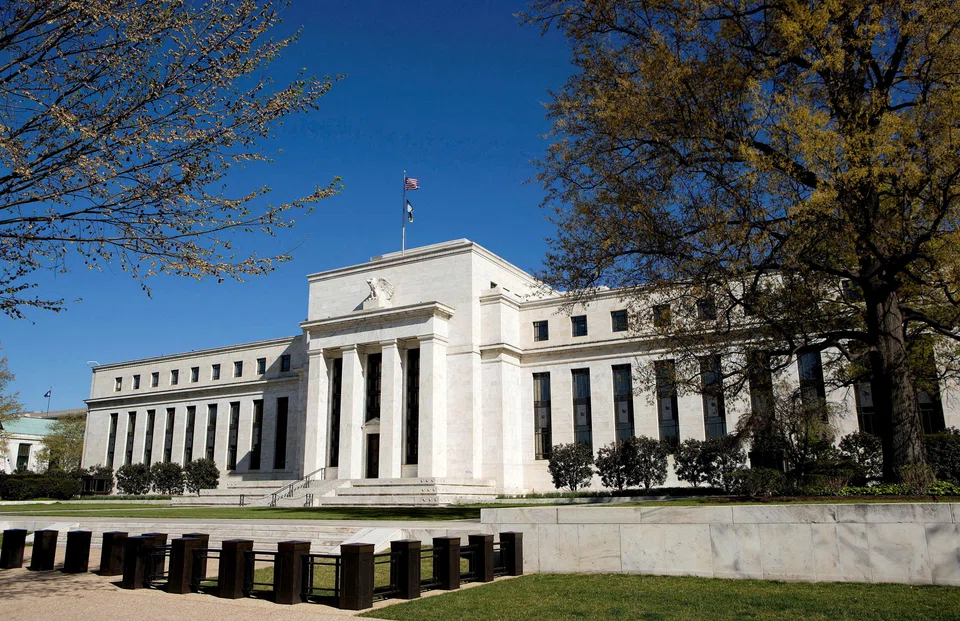
The FOMC decided at its most recent meeting – held on Jun 11-12 – to maintain the target range for the federal funds rate at between 5.25 per cent and 5.5 per cent for the seventh time in a row; and continue reducing its securities holdings.
The FOMC meeting participants also raised their forecasts for inflation for 2024 and 2025, and reduced their predictions for rate cuts in the immediate term.
Their median projection now is for the federal funds rate to end this year at 5.1 per cent, which implies just one 25-basis-point cut.
Back in March, they were projecting a federal funds rate of 4.6 per cent by end-2024, which implied three rate cuts.
Their latest median projection for the federal funds rate by end-2025 is now 4.1 per cent, up from 3.9 per cent back in March.
They are also projecting a “longer run” federal funds rate of 2.8 per cent, up from 2.6 per cent in March.
Federal Reserve chair Jerome Powell said FOMC meeting participants were coming to the view that rates are less likely to fall back down to their pre-pandemic levels. But he did not completely discount the possibility that rates and the US economy are “experiencing a series of persistent, but ultimately, temporary shocks”.
Coming inflection point
My own view is that it is only a matter of time before the FOMC begins cutting rates. This should take pressure off currencies in this region, and clear the way for a broad loosening of monetary policy.
Other major central banks are already lowering their policy rates. Earlier this month, the Bank of Canada and European Central Bank kicked off their rate cutting cycles. The Swiss National Bank last week cut rates for the second time.
Yet, it seems unlikely to me that inflation and interest rates will sink all the way back to their previously low levels.
The way I see it, technology was not the only factor that has weighed on inflation over the last few decades. This column previously noted that the world began embracing a neoliberal-shareholder-first philosophy some 50 years ago.
Governments cut taxes and regulatory red tape, and encouraged the cross-border flow of goods and capital. Companies moved production to lower-cost countries, and ruthlessly maximised shareholder value.
It was a glorious time for the corporate sector and financial market investors.
However, things have been changing in the wake of the pandemic, the war in Ukraine and growing US-China trade tensions. Importantly, both Joe Biden and Donald Trump seem to be in favour of tariffs on imports from China.
For big multinational companies, this “reverse globalisation” trend could mean having to cope with sub-optimal supply chains and generally higher costs.
This isn’t necessarily bad news for investors here in Singapore – as the key beneficiaries of increased US-China trade frictions are likely to be the main Asean economies.
The presence of several large real estate investment trusts with high quality assets in the Singapore market could also attract investors wanting to position themselves for rate cuts later this year.
Another potential attraction that some analysts see in the local market is the possibility of further value-enhancing restructurings.
On Jul 13, I will be delving into these and other big investment themes at the Mark To Market “Live” event with the help of three experts: CGS International’s economic adviser Song Seng Wun, Maybank Securities analyst Krishna Guha, and Beansprout’s chief executive Gerald Wong.
Full details of the event and a registration link can be found below.
My own view is that relatively undervalued stocks in Singapore and around the region could reach an inflection point later this year. I have no doubt the three gentlemen joining me on Jul 13 will have some good ideas on where to put my money.
Meet Ben Paul and his guests at Mark to Market ‘Live’ 2024, taking place at Guoco Midtown Network Hub on Saturday, Jul 13, from 10 am to 12.30 pm. Register now at bt.sg/m2m24.