MARK TO MARKET

Fed’s inflation fight making painless headway, but investors should not quickly jump into stocks

An early loosening of monetary policy is only likely in the event of economic and financial sector turmoil that risks unemployment overshooting

Ben Paul
Ben Paul

Published Mon, Feb 6, 2023 · 05:52 AM
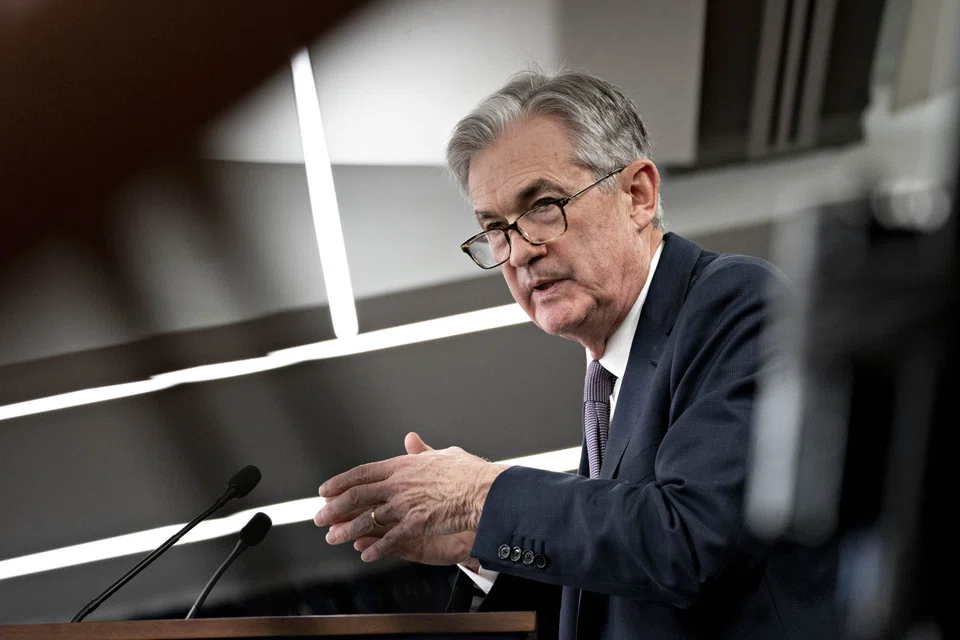
    • Fed chairman Jerome Powell said last week, "We can now say, I think for the first time, that the disinflationary process has started."
    • Fed chairman Jerome Powell said last week, "We can now say, I think for the first time, that the disinflationary process has started." PHOTO: BLOOMBERG

    IT FELT like stocks were heading for a euphoric melt-up this past week, even as the major central banks pushed interest rates higher and United States employment data came in stronger than expected. The reason? US inflation now appears to be subsiding without much economic fallout.

    “We can now say, I think for the first time, that the disinflationary process has started,” said US Federal Reserve chairman Jerome Powell, during a press conference on Wednesday (Feb 1), after announcing a 25-basis-point hike in the federal funds rate to 4.5-4.75 per cent.

    Powell said much of the disinflation so far has been driven by lower goods prices, as a result of softer demand and easing supply chain bottlenecks. He also expressed confidence that inflation in the housing sector will come down in the months ahead.

    Disinflation in the broader services sector is not yet evident, though. Powell said reduced tightness in the labour market will probably be necessary to achieve this, but many other factors matter too. “Take restaurants, right? So, clearly, labour is important for restaurants, but so are food prices.”

    Powell went on to say, “I continue to think that there’s a path to getting inflation back down to 2 per cent without a really significant economic decline or a significant increase in unemployment.”

    Powell’s comments last week – and his repeated use of the word “disinflation” – would have been music to the ears of investors who have been wading into the market in recent months in anticipation of the Fed pausing its aggressive monetary policy tightening.

    On Feb 1, in the wake of Powell’s comments, the S&P 500 index surged to a close of 4,119.21 – up more than 1 per cent for the day. The technology-oriented Nasdaq 100 index closed Feb 1 at 12,363.1, up almost 2.2 per cent.

    A strong US jobs report on Friday seemed to temper this bullish sentiment. Non-farm payroll employment in January rose by 517,000, compared with an average monthly gain of 401,000 in 2022. The unemployment rate sank to 3.4 per cent in January, versus 3.5 per cent in December and 3.6 per cent in November.

    Nevertheless, the S&P 500 closed Friday at 4,136.48 – up 1.6 per cent for the week and 7.7 per cent since the beginning of the year.

    The Nasdaq 100 closed at 12,573.36 – up 3.3 per cent for the week and 14.9 per cent since the beginning of the year.

    Are we on the cusp of a new bull market fuelled by robust economic activity and loosening monetary policy? Or, is the prospect of disinflation already baked into stock prices?

    Cautious Fed

    Despite Powell’s acknowledgement that the process of disinflation has started, further rate hikes still appear likely.

    The Federal Open Market Committee (FOMC) said on Feb 1 it anticipates “ongoing increases in the target range will be appropriate” to return inflation to the 2 per cent target over time. In December, the median projection by FOMC meeting participants put the midpoint of the federal funds rate at 5.125 per cent by end-2023.

    Raghuram Rajan, a former governor of the Reserve Bank of India who is now a professor at the University of Chicago Booth School of Business, said in a column last month that the Fed is likely to err on the side of doing too much in getting inflation under control.

    “It fears that until some slack emerges in America’s red-hot labour market, wages could still catch up with inflation and then push it higher. The last thing the Fed wants is to hit pause and then see inflation ramp up again as financial markets celebrate and financial asset prices rise, reigniting demand,” he said.

    But things may go awry. One risk is that the Fed pushes the US economy into recession while inflation remains stubbornly above its 2 per cent target. “It is here that the Fed’s inflation-fighting zeal, and its ability to withstand political pressure, would be truly tested,” Rajan said.

    An even more difficult scenario is that inflation abates but with a sharper-than-expected rise in unemployment. With the very tight labour market since the pandemic, many small businesses have been holding on to their employees even as some large firms have been laying off workers. But as slack builds in the labour market, Rajan warned, “the stream of lay-offs that we are already seeing may become a flood”.

    Rajan also pointed out that many weak companies have been propped up by access to cheap debt during the pandemic. “If that debt has to be rolled over in an environment of increasing economic gloom, it is a fair bet that many will not be able to refinance, and corporate bankruptcies will increase significantly.”

    Reits rebounding

    For now, the market is evidently unconcerned about these risks.

    Even the Straits Times Index (STI), which held up well in the face of synchronised monetary policy tightening in 2022, has started off 2023 on a strong note. The local benchmark index ended Friday at 3,384.29 – up nearly 4.1 per cent since the beginning of the year.

    Reflecting anticipation that the global monetary policy tightening cycle might be coming to an end, many of the best performing components of the STI so far this year have been real estate investment trusts (Reits).

    Notably, Keppel DC Reit has bounced 20.3 per cent this year. Last year, the market value of KDC’s units tumbled 28.3 per cent.

    Frasers Logistics & Commercial Trust has rallied 17.2 per cent this year, after sinking 23.7 per cent last year. Mapletree Industrial Trust is up 8.6 per cent so far this year, after falling 18.1 per cent in 2022.

    On the other hand, the three local banks are widely seen to be beneficiaries of rising interest rates, and suffered a sell-off immediately after Powell’s comments about disinflation last week.

    DBS and OCBC are up 4.7 per cent and 6.7 per cent, respectively, since the beginning of this year. UOB has slipped 1.8 per cent. Last year, DBS was up 3.9 per cent, OCBC 6.8 per cent and UOB 14.1 per cent.

    So, what should investors do? Even though inflation is showing signs of abating, I am inclined to resist the urge to jump into the market in anticipation of an early cut in interest rates. The Fed and other major central banks are only likely to loosen monetary policy quickly in the face of economic and financial sector turmoil that risks unemployment overshooting – which would probably be accompanied by a slump in stocks.

    In any case, a possible cessation of the global monetary policy tightening cycle is not the only likely driver of the market going forward. China’s post-pandemic re-opening, shifting geopolitics and even breakthroughs in fields such as artificial intelligence are all potentially potent investment themes in the months ahead.

    The strong gains that markets have charted in the first few weeks of 2023 might just be the beginning of another bout of volatility rather than the start of a new bull run fuelled by loosening monetary policy.