Financing climate solutions for the Global South
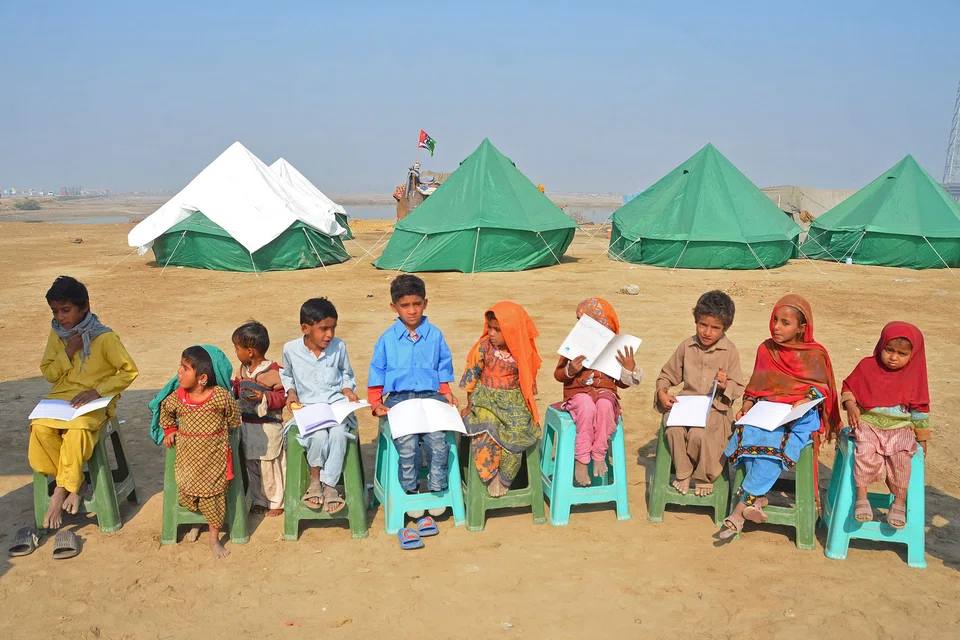
IN THE past few months, many countries in the Global South have been battling natural calamities and disease outbreaks driven by the changing climate. Whether it is floods in Pakistan, heatwaves in India and across the world, or unseasonal outbreaks of dengue, malaria, and Ebola, these countries face irreconcilable loss and damage in addition to existing financial constraints.
At COP27 in Egypt last November, developing countries voiced the lack of support in climate financing for vulnerable nations. They sought a new global climate finance target by 2024, known as the New Collective Quantified Goal (NCQG), which should be in the trillions of dollars, to address recent climate change issues. UN Secretary General António Guterres even urged that a Climate Solidarity Pact between wealthier nations and developing countries be created to meet key global climate goals. Private sector players such as Schneider Electric and Amazon also extended financial support to countries in the Global South.
The 190 countries represented at COP thus announced a “loss and damage” fund to aid vulnerable low- and middle-income countries that bear the brunt of the worst consequences of climate change even though they are hardly the highest carbon emitters. The operational details of the fund, however, remain undefined. This comes at a time when developed nations fell short of their COP21 pledge of mobilising US$100 billion a year starting from 2020 as climate financing aid for developing nations.
What gets measured gets financed
In collaboration with Boston Consulting Group, The Rockefeller Foundation recently released a report that further assesses climate finance flows and trends globally, and where the biggest gaps remain.
The “What Gets Measured Gets Financed” report found that the actual financing needed to hit net-zero targets, currently available and deployed flows, and the existing funding gap remain unclear. But the best estimates suggest that the world needs US$3.8 trillion annually to meet its climate needs, only 16 per cent of which have been met.
There are also inherent limitations in data availability. Data is poorly measured and tracked across climate finance in areas such as energy efficiency and adaptation and resilience (A&R) infrastructure. Lack of robust data systems also pervades several Global South nations, thus affecting the flow and measurement of investments.
The available metrics for Asia’s investments enhance the need for data. While the continent does receive the highest A&R financing (52 per cent), 81 per cent of it goes to China. Apart from China, data about the emissions, mitigation, A&R issues, financing gaps, and outflows of several other Asian countries are not readily accessible, which obscures the region’s true climate financing needs.
Additionally, even if the private sector is providing investments, they are poorly traced. The absence of regulatory requirements around disclosure of investments exacerbates the problem.
The need of the hour is to establish benchmarks, tracking systems, and more robust data to build trust and transparency. This will ultimately help the Global South, and the world, mitigate and adapt to climate change.
Addressing the widening climate financing gap
To deliver on the Paris Agreement’s goal of curbing global warming to less than 1.5 degrees Celsius, it is crucial to establish a transparent climate financing system. This would require all stakeholders coming together and creating concrete, defined processes to understand how finances would be collected and disbursed.
What is clear is that the COP21 pledge of US$100 billion is no longer enough. It is important that the NCQG is adapted at its earliest. We need powerful global leadership, strong political commitments, and multi-sectoral collaboration, including significant investments from private organisations and philanthropies. It is critical to move from lending to providing concessional and climate financing grants. It is also vital to ensure that these investments are equitably distributed among communities and find eventual cross-deployment into food security and healthcare access, as they are intrinsically linked to climate change.
It was heartening to see the Global South exerting its voice at COP27. The Global South needs to become a more active part of the decision-making, grantmaking, and target- and goal-setting processes to ensure that its countries’ needs are addressed and that they can meet the necessary warming targets. The Global South’s vulnerability to climatic losses and damages must be mitigated.
The writer is vice president of The Rockefeller Foundation’s Asia Regional Office