

Five global trends in business and society in 2023
Climate change, inequality and instability are among the greatest threats and opportunities for the year ahead
FORECASTS are rarely perfect, but last year our predictions for global trends in business and society proved fairly accurate. As expected, extreme weather events revealed the immediate impacts of climate change. The growth rate of the global economy remained well below average. And the lingering effects of Covid-19 hit the poorest hardest.
Yet our forecast did not predict the most disruptive event of the year: Russia’s invasion of Ukraine, which sparked a series of new crises and exacerbated existing ones. The intersecting and compounding challenges of a warming planet, weakened economy, geopolitical conflicts and social instability ushered in problems of skyrocketing inflation, food insecurity, an energy crisis, a cost-of-living crisis and a potential global recession.
Volatility and uncertainty remain high this year, clouding our view as to what lies ahead. We recently conducted a survey to capture the Insead academic community’s perspective on the top threats facing businesses this year, and the greatest opportunities for businesses to act as a force for good.
Between Dec 16 to 31, 46 Insead faculty members from nine academic areas and three campuses participated in the survey. They identified the following five issues as critical, with recent reports from major world institutions underscoring their importance.
Climate change
A quarter of survey participants cited climate change as the top societal issue for businesses to address in 2023. A further 9 per cent ranked climate change as the fourth-biggest societal threat to business this year.
These results are in line with the World Economic Forum’s Global Risks Report 2023, which highlights the urgency of the climate emergency and compares its impact in the short and long term. Among the top 10 risks identified by the experts surveyed, “failure to mitigate climate change” is the fourth-greatest risk in the next two years, and the number one risk in the next 10 years.
According to the Intergovernmental Panel on Climate Change’s Climate Change 2022 report, the planet has already warmed by 1.1 degrees Celsius, leaving approximately 3.6 billion people dangerously exposed and vulnerable to climate impacts. The world is on track to warm by 2.5 deg C by the end of the century, far exceeding the 1.5 deg C target set by the Paris Agreement.
An issue intimately connected to climate change is biodiversity loss and ecosystem collapse, something the Global Risks Report identifies as one of the “fastest deteriorating environmental risks”. The interplay between nature loss and climate change – in conjunction with other parts of the “polycrisis”, as the report calls it – means that as natural ecosystems are increasingly burdened, climate change will continue accelerating, and vice versa.
Fortunately, nations across the world are taking bold steps to address this mounting risk. At the United Nations Biodiversity Conference in December 2022, 188 governments agreed to the Kunming-Montreal Global Biodiversity Framework.
This historic package outlines four goals and 23 targets for addressing biodiversity losses and restoring natural ecosystems by 2030. These include cutting food waste in half; protecting 30 per cent of lands, oceans, coastal areas and inland waters; and reducing annual government subsidies that are harmful to nature by US$500 billion. It also requires large companies and financial institutions to monitor and disclose their risks, dependencies and impacts on biodiversity in a transparent manner.
Income and wealth inequality
According to the Insead survey, the second-most important societal issue for businesses to address this year is income and wealth inequality.
The World Inequality Report 2022 indicates that global progress on inequality is mixed. According to the report, inequalities within countries have grown significantly over the last two decades: the gap between the average incomes of the top 10 per cent and bottom 50 per cent of individuals has nearly doubled.
However, inequalities between countries have declined. The average income of the richest 10 per cent of countries is now about 40 times that of the poorest half of countries, down from about 50 times.
On a global scale, income and wealth inequality among individuals remains staggeringly high. Currently, the richest 10 per cent of the global population earn 52 per cent of global income and possess 76 per cent of all wealth. The poorest 50 per cent earn 8.5 per cent of global income and possess only 2 per cent of wealth.
Who is responsible for addressing the wealth gap? Of the 32,000 people surveyed in the 2023 Edelman Trust Barometer, 77 per cent say they expect chief executive officers to take a stand.
Social instability
Social instability was cited as the biggest threat by 18 per cent of faculty members surveyed.
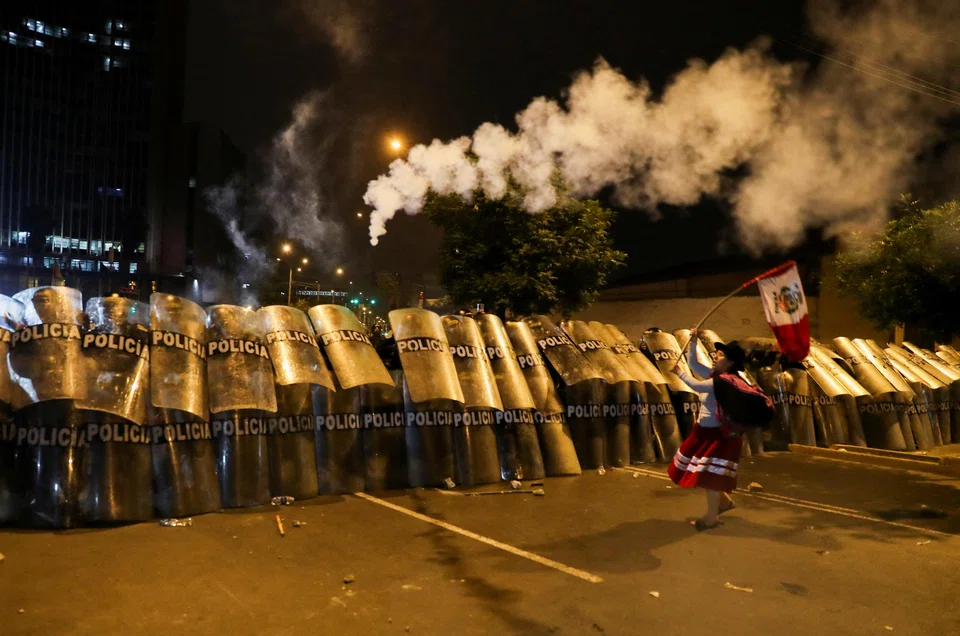
Indeed, 2022 saw a significant increase in civilian protests worldwide, affecting developed and emerging economies alike. Many protests were triggered by economic woes caused by inflation. Others were political in nature, such as the riots in Peru following former president Pedro Castillo’s ousting and the more recent storming of Brazil’s government buildings in a scene eerily similar to the Jan 6, 2021 attack on the United States Capitol. In America, there is continued talk and questions about the prospect of a civil war.
Many of the factors contributing to social instability are expected to persist in 2023. Economic optimism is continually declining; the Edelman report finds 24 of 28 countries are experiencing all-time lows in the number of people who think their families will be better off in five years. More than half of those surveyed said their country was more divided today than in the past, and 65 per cent said the lack of civility and mutual respect is the worst they have ever seen.
The report also suggests that citizens expect businesses to take on greater responsibility in addressing these issues, as many have lost faith in governments. While business is perceived as competent and ethical, government is viewed as unethical, incompetent and a source of misleading information.
Inflation and recession risks
In the Insead survey, 17 per cent of faculty named inflation and recession risks as the greatest threat to business.
Up until very recently, other institutions hinted at a similar outlook. On Jan 1, the International Monetary Fund (IMF) announced that it expects third of the world economy to fall into a recession in 2023 as a result of the Russia-Ukraine war, inflationary pressures and rising costs of borrowing. The cost-of-living crisis was cited as the top risk to the global economy for the next two years in the Global Risks Report 2023. And 74 per cent of participants in Edelman’s survey shared fears about inflation.
In the last several weeks, however, the economic forecast has started to improve. Economists point to factors such as supply chain improvements, a robust labour market, lower energy prices and the reopening of China’s economy. While some caution that a recession remains a possibility, the broad consensus is that any downturn will be mild and brief. At the World Economic Forum, an IMF spokesperson announced the fund would upgrade its economic forecast to reflect this sunnier outlook.
That said, inflation remains high and interest rates continue to climb. In the absence of further government intervention, these variables have the potential to create headwinds to growth.
Geopolitical crises
A quarter of Insead faculty flagged geopolitical crises as the top threat facing business in 2023. Another 11 per cent cited it as the most important area for firms to address to serve as a force for good.
Currently, geopolitical tensions are prevalent in virtually every corner of the globe. In January, the Council on Foreign Relations’ annual Preventive Priorities Survey identified 30 potential conflicts for the year ahead, including spillovers from the Russia-Ukraine war, rising tensions between China and Taiwan and ongoing nuclear threats in North Korea and Iran.
Meanwhile, the World Economic Forum highlighted the emergence of “geoeconomic warfare” as an offshoot to geopolitical fragmentation, ranking geopolitical confrontation as the third-biggest risk in the short term.
Tensions are also running high within countries. According to the Edelman survey, six countries – Argentina, Colombia, South Africa, Spain, Sweden and the US – are in the “severely polarised” category.
Though the consequences of these threats largely fall on the shoulders of governments, businesses have a responsibility to step in and help mitigate them. Public-private partnerships are four times more likely to yield optimal results for society than if government or business work alone, according to the 2023 Edelman Trust Barometer.
The Global Risks Report 2023 reinforces this point, emphasising that the time to act is now. “Concerted, collective action is needed,” the report said, “before risks reach a tipping point.”
Katell Le Goulven is executive director, Ilian Mihov is academic director and Mark Stabile is deputy academic director of Insead’s Hoffmann Global Institute for Business and Society. Prof Mihov is also dean of Insead, while Prof Stabile is a professor of economics. This article was first published in Insead Knowledge.
TRENDING NOW
Two Singapore-listed palm oil firms named in Greenpeace report on Indonesian plantation fires

Singapore Airlines flight returns to San Francisco after ‘unruly’ passenger incident
Singapore looking into which companies responsible for haze-causing fires: PM Wong
Deluge IPO 3.86 times subscribed ahead of SGX debut

