Five years on from Covid outbreak, world still unprepared for future pandemics
The world will not be ready to combat new threats until persistent inequalities in access to both funding and vaccines are addressed
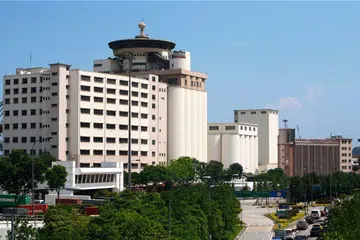
THURSDAY (Jan 23) marks the fifth anniversary of Wuhan, China, entering lockdown in 2020, amid what would become the Covid-19 outbreak. Yet, a half decade later, the world is still under-prepared for a future pandemic, with growing concerns about a range of diseases, including bird flu.
Most recently, the Louisiana Department of Health confirmed the first US death linked to bird flu. A 65-year-old contracted the so-called H5N1 avian influenza strain and was hospitalised before passing away.
In November 2024 too, Canada reported the hospitalisation of a teenager with the D1.1 genotype identified in the Louisiana case. Moreover, US state Missouri also noted a bird flu case last September.
The fact that the world remains underprepared for such future health catastrophes is underscored by experts such as Maria Van Kerkhove, an American epidemiologist who heads the World Health Organization’s (WHO) Department of Epidemic and Pandemic Prevention and Preparedness. She asserts that “many things have improved…But I don’t think the world is ready for another pandemic or mass epidemic”.
This is not just the view of one single, senior official. For instance, WHO head Tedros Adhanom Ghebreyesus has said that “if the next pandemic were to occur today, the world would still face some of the same weaknesses and vulnerabilities” as those experienced during the Covid-19 outbreak.
One of the key reasons for this is outlined by the group of independent experts in charge of pandemic preparedness and response set up by the WHO. This cohort argues that the world won’t be ready to combat new pandemic threats until persistent inequalities in access to both funding and to the wider tools needed to combat pandemics, including vaccines, are addressed.
These key points should have been key lessons learned from the Covid pandemic, when it became clear that big policy mistakes were made that may have significantly extended the length of the crisis.
Vaccine inequality
On the issue of vaccine inequality, for instance, former UK prime minister Gordon Brown fiercely took up this issue, calling it a “monumental international policy failure” and warning “history will not be kind” to world leaders, mainly in the West, for stockpiling jabs.
Brown, who is a United Nations special envoy and chair of the World Economic Forum’s Global Strategic Infrastructure Initiative, highlighted how a relatively small number of countries monopolised the purchase and therefore controlled the supply of the vast majority of vaccines during the Covid pandemic. It even got to the point where many of these stockpiled vaccines ran past the use-by date and had to be destroyed.
Brown proposed template for handling future pandemics is not a health-related one. Instead, it relates to his time as UK prime minister when he hosted the 2009 G20 summit in London, when he was widely credited with having staved off the worst financial crisis since the Great Depression.
Brown believed that a similar act of international coordination was urgently required to tackle the coronavirus crisis. In so doing, he urged countries at the time to consider “extraordinary measures” similar to those taken during the global financial crisis a decade earlier under his prime ministership to fill a double-digit billion funding gap to increase access of developing nations to vaccines.
The second part of why the WHO asserts that the world is still unprepared for future pandemics relates to the wider health toolkit, beyond vaccines, of policymakers. For instance, there are question marks over whether the world has a fit-for-purpose global health infrastructure, including digital libraries, so as to be better prepared for the next pandemic.
Such infrastructure would not just help ensure countries coordinate better in identifying emerging new threats but also help develop, test and manufacture treatments.
On this agenda, there have been calls, for instance, for creation of a more responsive system for tracking diseases and collaborating on tackling them. When the next pandemic comes, the response would then be more akin to a military operation, tracking the emergence of new diseases using state-of-the-art surveillance, with surge capacity.
Taken together, what this agenda points to is the urgent need to enhance resilience to a new generation of health threats, pandemics and beyond. Globalisation appears to have rendered the world increasingly interdependent, and potentially vulnerable.
Unstable, uncertain
The degree of instability and uncertainty accompanying this high measure of current international interdependence may now mean that crises are recurrent – and thus the rule rather than the exception. And the speed with which threats spread may be magnified in proportion to the degree of interdependence. Not least, while there was around a century between the big 1918 influenza pandemic, and the 2020 Covid one, this is not necessarily a good guide to the future.
This instability is exacerbated by the fact that the nature of the potential health crises we face is constantly evolving. This includes increasingly sophisticated human-made threats such as biological devices whose transportation has been facilitated by global networks.
So the fact that crises are recurrent and constantly evolving means it is essential to continually upgrade our capacity to deal with them by identifying, exposing and remedying deficiencies. This is a relatively uncontroversial ambition, shared by many, but much more is needed to deliver on it, including bolder international leadership in the West and also the Global South to make it a reality.
The nub of the argument is that coordination and mobilisation on a global scale is key. For if there are large populations that are not vaccinated – such as much of the African continent, for instance – during the pandemic, diseases may mutate faster and further, possibly into vaccine-busting variants.
In building and embedding resilience, a much wider range of challenges must be analysed. And then also put into action by outlining policy options to shape preparation, response and recovery.
Expertise-wise, there is also a need to bring together practitioners from the public, private and third sectors with other stakeholders, including academics, in order to combine theory and practice. Such partnership collaboration is paramount because of the scale of the challenges.
If we are to be able to keep up, and potentially be one step ahead of future health challenges, and seize new opportunities too, we will need to pool our ingenuity to innovate and deliver solutions.
In particular, the more policymakers act on a key lesson of the Covid pandemic that no one is safe until everyone is safe, the faster the next crisis may pass. Our goal is ensuring that governments, business and society can not only cope, but thrive, in uncertainty ahead.
The writer is an associate at LSE IDEAS at the London School of Economics