

Flexible work arrangements: A delicate balancing act for employers
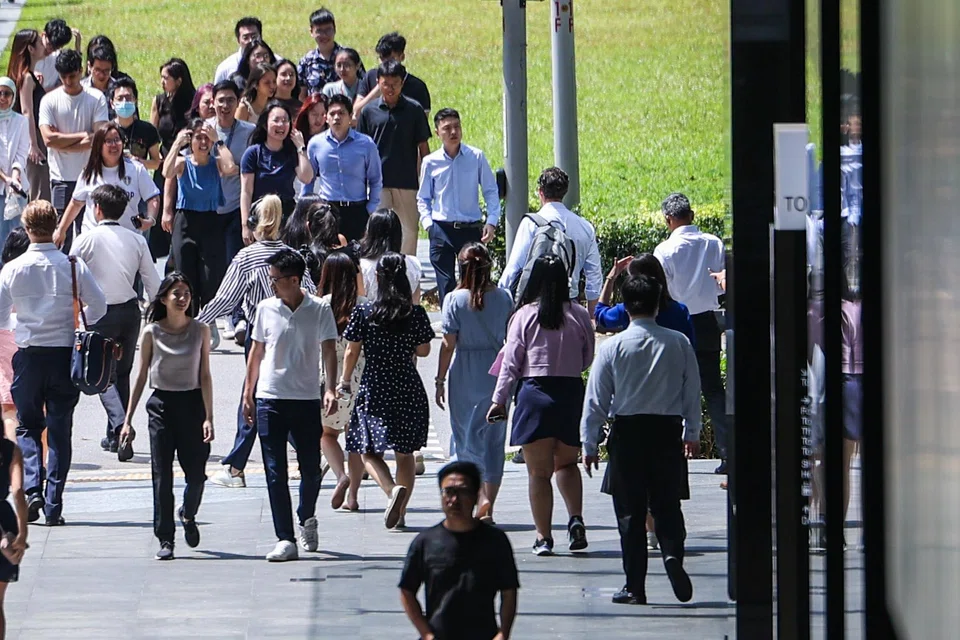
DEAR employee,
You may be wondering what your workplace will look like with flexible work arrangements (FWAs). Believe us, we have thought hard about it too, as we prepare for the Tripartite Guidelines on Flexible Work Arrangement Requests to take effect on Dec 1.
These guidelines will allow you to put forth formal requests for FWAs. With Singapore’s ageing population and shrinking local workforce, FWAs will allow us to unlock more workforce potential by keeping senior workers engaged and providing caregivers the flexibility to balance their work and other responsibilities.
However, we hope you also know that FWAs come with their own set of challenges. After all, change is rarely smooth – we seek your understanding as we figure out how we can work together to make these guidelines work for us both.
Different employees face different circumstances and have different needs, and implementing the same type of FWAs across the board is unrealistic.
As employers, we often find ourselves on the balance beam, having to make the difficult decision between acceding to your requests and ensuring our organisational goals continue to be met. We will need to carefully evaluate each of your requests and adapt where possible, which is why FWAs could look very different between you and your colleagues who may have the same needs.
Perhaps you are a young working adult, looking to further your studies part-time. A flexible workload could help you balance work and your academic commitments. Or, you may find yourself shouldering heavy caregiving responsibilities, so the flexibility of working from home allows you to attend to the immediate needs of your dependant.
You may even be looking to rejoin the workforce after a career break. A reduced workload may just make the reintegration process that much less daunting. These are all reasonable and legitimate requests, and we are keen to help you out. However, the form of FWAs that best answers your needs may not work out for your colleagues’ situations.
What we are trying to say is, FWAs come in different forms. This all depends on what you do specifically. Some of you take on roles that are simply too pivotal for work-from-home arrangements! If you are a frontliner, for example, then you may benefit from flexi-time or flexi-load arrangements instead, rather than being physically away from the action.
Recently, we learnt that nurses working at Tan Tock Seng Hospital may be able to enjoy flexible work arrangements soon, in the form of flexi-shift arrangements. This shows that with proactive discussion and careful consideration, we can iron out FWAs that best fit you and our organisation.
There are other things to think about too. Workplace safety, for one – how do we ensure that you continue to have a safe and conducive workspace, even as you embark on flexi-place arrangements? If you have a good reason to work away from the office, we encourage you to come to us to discuss it. After all, as employers, we are also responsible for your safety during work hours.
The notion of performance appraisals needs to be examined as well. With flexi-place arrangements, physical time in the office can no longer be the key metric for gauging your performance at work.
While this means that meaningful evaluations will need to shift focus from presence at the office to factors such as performance outcomes, we will also need to balance this shift to consider workers who cannot complete their duties while away from the workplace. In the office or not, we are sure that you are doing excellent work, and we want to recognise and reward the value you bring. In this sense, a fair and catch-all standard is elusive, at least for now.
Allow us, for a moment, to offer another perspective on flexible work. Yes, we are moving towards a more supportive environment for flexible work, which includes working from home, but coming to the office has its upsides too.
Being physically present offers valuable opportunities for team collaboration and skills development, which will be beneficial for your career in the long run. Similarly, while flexi-time arrangements can give you more control over your schedule, we urge you to also be considerate towards your team members. As you need your teammates to step up so that you can have the flexibility that you want, you should do your part by stepping up to support them too, such as taking those less desirable shifts from time to time.
At the end of your FWA period, we will review the arrangements – the aspects that went well, and the areas that can be further refined. This allows us to discuss their effectiveness, make adjustments where necessary and provide your colleagues opportunities for FWAs too. There may also be cases whereby we cannot approve your FWA requests, as they may not be feasible for our business operations.
Ultimately, FWAs are an exercise of mutual trust. Simply put, we seek your trust that we will evaluate your requests with due care. At the same time, we also trust that you will make FWA requests responsibly and in good faith.
This two-way trust forms the foundation for the win-win outcome that we aim to achieve through FWAs. The Tripartite Guidelines will help to start honest and open conversations about flexible work, allowing us to move towards sustainable labour policies and a more productive workforce. We look forward to your cooperation in creating a flexible workplace that supports your needs and ours.
Yours sincerely, Your supportive employers
The writer is honorary secretary for the Singapore National Employers Federation, and co-chair of the Tripartite Workgroup on the Tripartite Guidelines on Flexible Work Arrangement Requests
TRENDING NOW

Once staunchly pro-China, Malaysian Chinese businesses are now distancing themselves from Beijing

Stocks to watch: HPL, Aims Apac Reit, Zico, Advanced Systems Automation, ComfortDelGro
‘How many will survive?’: Bubble fears arise as China’s humanoid robotics face reality check

Smaller board lots can’t fix a market run by three banks

