

F&N may slake investor thirst as mercury soars

Ben Paul
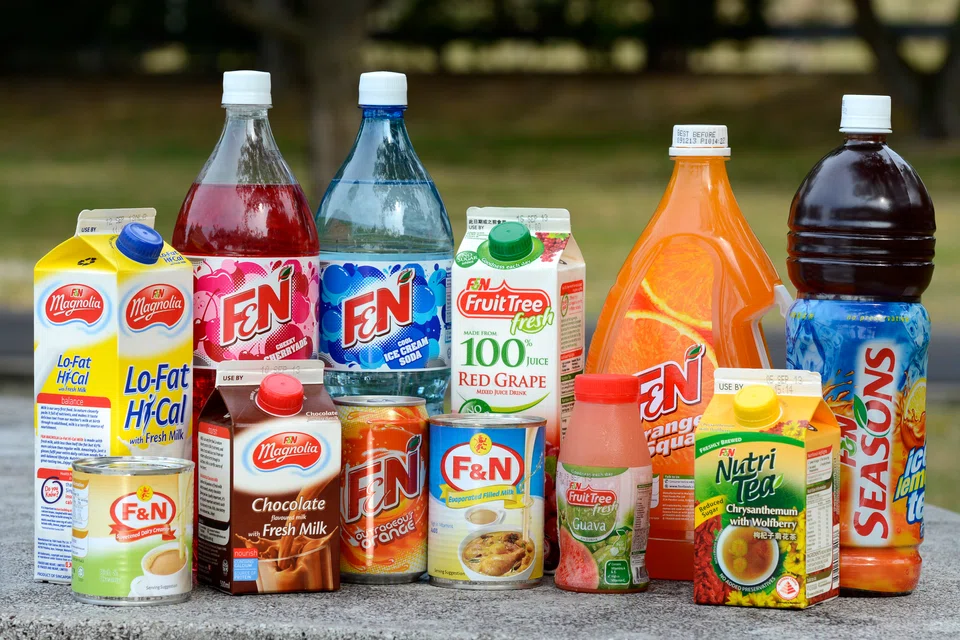
THE blazingly hot weather that has engulfed Singapore and its neighbours could be an unexpected growth driver for Fraser and Neave (F&N) this year.
The company, which has been in the business of quenching thirst since 1883, has all manner of beverage businesses under its umbrella – including its eponymous line of fizzy soft drinks, market-leading 100Plus isotonic drinks, Magnolia and Farmhouse milk, various brands of teas, juices and bottled water, and even a brewery.
F&N has fallen off the radar of many investors over the past decade, though. This is partly due to 87.4 per cent of its shares being controlled by entities linked to Thai billionaire Charoen Sirivadhanabhakdi, after he won a tug of war for the group in 2013.
F&N is also now a much smaller corporate group than it used to be. In 2012, it divested its stake in Asia Pacific Breweries to Heineken. In 2014, F&N’s substantial real estate division – which is now called Frasers Property – was demerged through a dividend in-specie and listed separately.
Then, there is F&N’s lacklustre financial performance over the last few years – caused by the pandemic, cost inflation, regional currency volatility and flooding in Malaysia.
For the financial year to Sep 30, 2022, F&N reported a 10.9 per cent decline in earnings (excluding non-recurring items) to S$129.4 million despite a 6.6 per cent rise in revenue to S$2 billion.
Profit before interest and tax came in at just over S$233.4 million, lower than each of the preceding three years.
For the six months to Mar 31, F&N reported a 3.5 per cent increase in revenue to S$1 billion. Profit before interest and tax sank 16.7 per cent to S$105.8 million. Earnings (excluding non-recurring items) fell 19.8 per cent to S$55 million.
While it is hard to quantify the extent to which hotter weather might improve the group’s profitability, F&N is likely to be able to address the margin pressures it faces with price increases over time and deliver higher revenue and earnings through steady investments in its various businesses.
Steady expansion
Notably, F&N said in September 2019 that its Emerald Brewery Myanmar had commenced operations. F&N invested US$70 million to build the plant with local partners to brew Chang Lager Beer.
F&N’s most recent annual report states that the company owns 80 per cent of Emerald Brewery Myanmar.
On May 5, F&N said it had incorporated a company called Sapphire Brewery Myanmar that is evaluating the production of alcoholic and non-alcoholic beverages in Myanmar. F&N holds an 80 per cent stake in the new unit while the remaining 20 per cent is held by a partner named U Zaw Win.
F&N exited the Myanmar beer market in 2015, when it sold a 55 per cent stake in Myanmar Brewery for US$560 million.
In December 2020, F&N’s 55.5 per cent-owned Malaysian-listed unit said it would pay RM60 million for Sri Nona Companies – a group that produces ketupat rice cakes, condiments, jams and spreads. It said the deal was in line with its ambition to be a food and beverage leader in Malaysia, with halal food as a new pillar of growth.
In pursuit of the same goal, the Malaysian-listed company spent some RM489.2 million last year taking full control of Cocoaland Holdings, a producer of gummy candy among other things.
On top of that, the Malaysian arm of F&N spent RM215.6 million on an entity called Ladang Permai Damai, to vertically integrate the group’s dairy business by developing a local source of fresh milk.
Even F&N’s publishing and printing division – a holdover from its conglomerate days – is on the move with investments in sustainable packaging solutions, such as compostable kraft paper bags and plastic bag substitutes made from waste cassava roots.
Some of these moves are already making a difference to the group’s operational performance. For instance, F&N said its revenue growth in FY2022 was driven by its beverages segment – fuelled in part by a doubling of its beer sales.
For H1 FY2023, F&N said the increased revenue was partly the result of additional contributions from Cocoaland.
Low valuations
Yet, F&N’s recently reported Singapore dollar revenues have arguably masked some of the operational headway it has been making in the face of higher costs and unfavourable currency movements.
For instance, its reported revenue growth of just 3.5 per cent for H1 FY2023 would have been 9 per cent without the impact of unfavourable foreign exchange movements. F&N said this underlying improvement in revenue was driven by all its business segments.
The financial performance of the group’s Malaysia-listed unit, which reports in ringgit and does not include the recently weak contributions from its 20.4 per cent stake in Vinamilk, has also been more robust. For H1 FY2023, revenue was up 9.5 per cent to more than RM2.4 billion (S$712.6 million). Earnings for the six-month period (adjusted for non-recurring items) held steady at almost RM205.5 million.
Shares in F&N’s Malaysian-listed unit have delivered a total return of 25.8 per cent over the past year. The stock is trading at 23.1 times annualised adjusted H1 FY2023 earnings, and almost three times book value.
By contrast, shares in F&N have returned minus 15.7 per cent over the past year. The stock is trading at 14.6 times annualised adjusted H1 FY 2023 earnings, and only 0.55 times book value. Based on F&N’s total dividend payout of S$0.05 per share for FY2022, the stock offers a yield of more than 4.5 per cent.
Interestingly, F&N’s current market capitalisation of S$1.6 billion is little more than the market value of its stake in its Malaysian-listed unit.
As F&N continues developing its various businesses, the market value of its shares could rise significantly over time. And, if the hot weather we are experiencing now boosts sales of the group’s wide range of thirst quenching products, that re-rating could come sooner than expected.
TRENDING NOW

Malaysian king buys stake in Singapore-listed mining firm expanding into rare earths

Grab CEO’s wife Chloe Tong on life with Anthony Tan and finding her purpose

Once staunchly pro-China, Malaysian Chinese businesses are now distancing themselves from Beijing

Longer wait times expected as S’pore healthcare institutions report system disruptions

