

‘Forced Joy’ is a miserable corporate trend
At companies like Starbucks and Tiffany, fun has become a job requirement
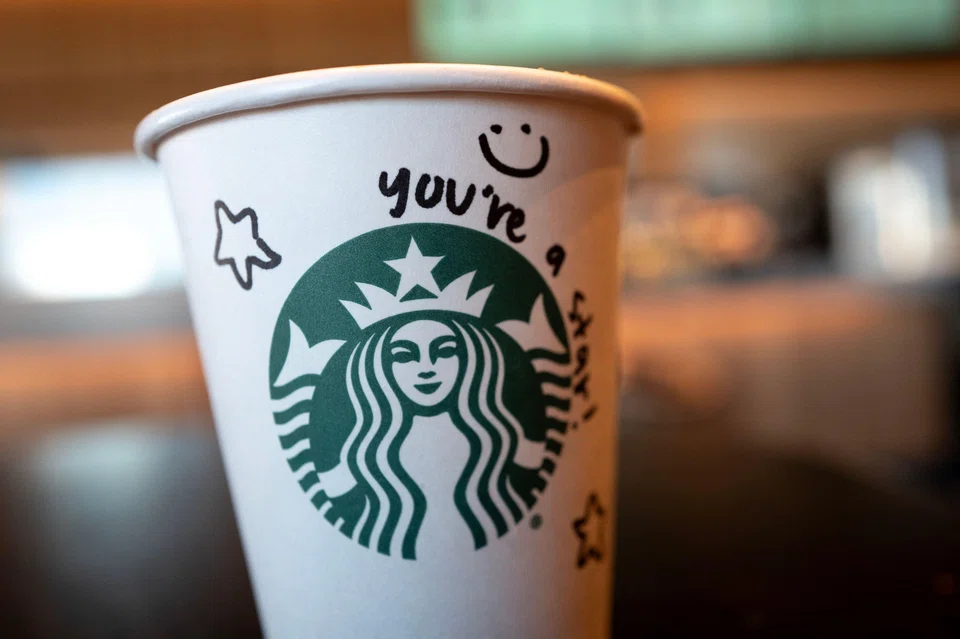
STARBUCKS baristas have a new job requirement.
In addition to remembering to make your latte with no foam or your cortado with oat milk, they must also write a little missive on your cup. It is a directive that comes straight from chief executive Brian Niccol, who says the handwritten notes foster “moments of connection” – part of his strategy to get more customers into stores to turn around the faltering coffee giant.
In a memo he sent out in January detailing the plan, he had some ideas for those not sure what to say. They could scribble an affirmation (“you’re amazing”), share well wishes (“seize the day”) or simply write a customer’s name or draw a smiley face.
The underlying message to employees is this: It is not enough to manufacture a product for customers; they must also manufacture a feeling. And if Niccol cannot motivate workers to do so organically, he will decree it by edict.
It is not just Starbucks that has made trumped-up enthusiasm an expectation. Most companies are not going as far as the Japanese supermarket chain using an artificial intelligence (AI) system to evaluate and standardise its employees’ smiles, but the trend is clear.
Those ending their remote work policies want butts back in seats – and they want employees to be happy about it; at Alphabet, returning Googlers were reminded that office time should be “not only productive but also fun”. At Tiffany & Co, executives required staffers to post and engage more with “Tiffany Joy”, an internal app designed to boost morale. No wonder employees mockingly gave the app a new nickname: “Forced Joy”.
That could just as easily be the moniker of the era we are entering. In the age of forced joy, employers are requiring positivity and passion because workers are not voluntarily producing a whole lot of either right now. In fact, they do not like their jobs much at all.
A recent Gallup poll found that employee engagement is at a 10-year low; only 39 per cent of workers feel that someone cares about them as a person at their company, down from 47 per cent in 2020.
The “Great Detachment”, as Gallup has called it, has left the rank and file looking for new jobs at the highest rate since 2015 – jobs they cannot get because of a stalled labour market. With power now back in the hands of employers, bosses are doing less cajoling, convincing and negotiating and more demanding. That has translated into executives thinking the solution to a disengaged workforce is sending out a memo insisting on more engagement.
To be fair, part of work has always been performance. Employees, especially those in the service sector, have long been required to project a certain emotion even when it is mismatched with how they truly feel. This is what sociologist Arlie Hochschild famously coined as emotional labour – “when seeming to ‘love the job’ becomes part of the job”, as she wrote in her 1983 book The Managed Heart.
You may recognise it from the cult-famous “pieces of flair” scene in the 1999 movie Office Space, where Jennifer Aniston’s character is criticised for failing to contribute to the “fun” atmosphere at the restaurant where she works because she is not wearing enough goofy pins on her uniform.
Or more recently, from Apple TV’s Severance, where the Macrodata Refinement team is forced to awkwardly groove out during a “Music Dance Experience”. At its most basic, emotional labour is that old classic: service with a smile.
When Hochschild’s book came out some 40 years ago, she surmised that about a third of all jobs required “substantial demands for emotional labour”. But by 2013, she estimated it had grown to about half.
Today, it is likely even higher. As “‘hard skills’ are taken over by robots, emotional labour is the human skill in otherwise digitised, AI-dominant, impersonal environments”, Rose Hackman, the author of Emotional Labour: The Invisible Work Shaping Our Lives and How to Claim Our Power, has written.
Niccol does seem to be steering Starbucks towards such a bifurcation. The same week the company’s cup-writing policy went into effect, it cut more than 1,000 corporate jobs and said it would outsource some of its technology work. You cannot contract out connecting with the customer.
But mandated engagement does not particularly work well either. The most fun Starbucks customers and employees actually seem to be having is poking fun at the policy on TikTok.
On Reddit, a customer posted that she hates the new policy because “these messages have less meaning” now that they are required. “It felt special before and now it doesn’t,” read one of the 143 comments in the replies. “Having customers WATCH us be extremely backed up and still having to write something on a cup is so embarrassing,” read another.
The online critics might be onto something. Happy and engaged employees are good for business. But so is creating an environment where workers can effectively do their jobs – and find their own sources of workplace joy. Companies might find if they invest in the latter, the former will organically follow, no faking it required.
TRENDING NOW

Once staunchly pro-China, Malaysian Chinese businesses are now distancing themselves from Beijing

Britain’s mansion tax shows the difficulty of targeting wealth

Three hats, one goal: How Ng Kian Swan runs sustainability at NUHS

COE review: The gap between luxury and mass-market cars isn’t the only one worth bridging

