Fragile US-China truce threatened by tensions over Iran
Trump warns of Venezuela-style change in Teheran. How will Beijing react?
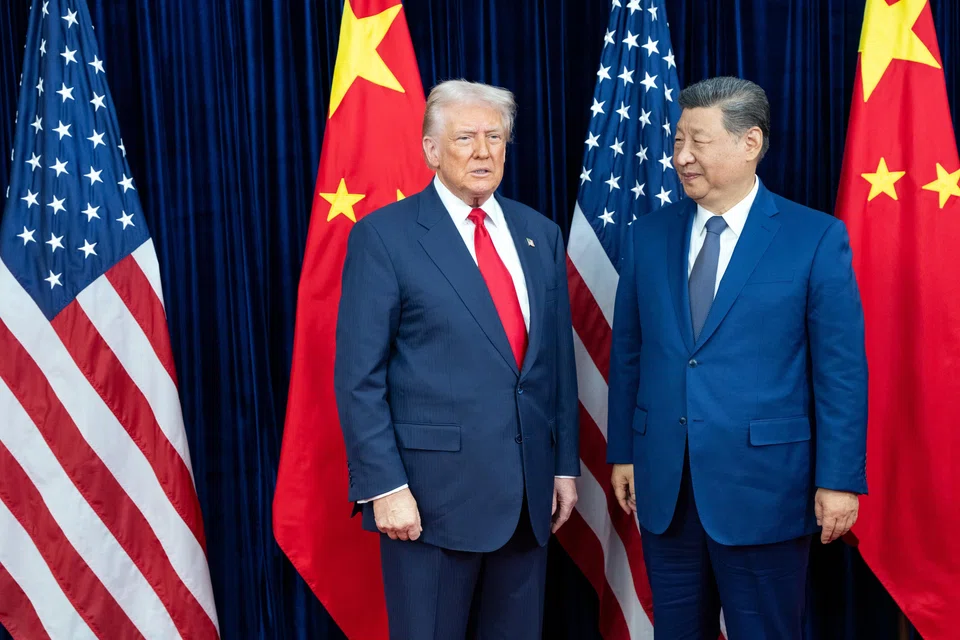
GEOECONOMICS has emerged as a central concept to explain the volatility and complexity of today’s global landscape. It highlights the use of tariffs, sanctions and wider financial measures as tools of statecraft – measures now increasingly paired with the threat of military action.
While these trends pre-date the second Trump administration, US President Donald Trump has personified them in 2025 and 2026, reshaping the global political economy.
Perhaps the most prominent example is Trump’s aggressive use of tariffs. Yale University Budget Lab researchers estimate the overall average effective US tariff rate for imports has jumped to some 16.9 per cent, the highest since the 1930s’ Great Depression, from roughly 2.4 per cent at the start of 2025. This is a huge, and still widely underappreciated, change.
Trump has threatened and imposed big tariffs for overtly political reasons. This includes his recent threat of at least 10 per cent duties on eight European nations over his desire to acquire Greenland – a threat only recently paused following the World Economic Forum.
Moreover, he doubled tariffs on India to 50 per cent last year, to penalise New Delhi’s surge in Russian energy purchases since Moscow’s invasion of Ukraine.
Intensifying US focus on Iran
Separately, Trump announced in early January 2026 a large secondary tariff on any country doing business with Iran “effective immediately”. This move was in response to Teheran’s crackdown on protestors against the regime who had taken to the streets.
On social media, Trump declared: “Any country doing business with the Islamic Republic of Iran will pay a tariff of 25 per cent on any and all business being done with the United States of America. This order is final and conclusive.”
Today, numerous foreign governments remain unclear on how the additional tariffs will work. This includes whether some or all countries will be targeted, and whether services or only goods would face higher duties.
However, military force now overshadows the economic threat. On Wednesday (Jan 28), Trump compared the military build-up around Iran to that surrounding Venezuela in recent months before the apprehension of ex-president Nicolas Maduro.
Trump warned: “Like with Venezuela, it (the fleet) is ready, willing and able to rapidly fulfil its mission with speed and violence, if necessary.” Oil prices rose after this threat, with Brent crude hitting US$68 a barrel.
The aircraft carrier, USS Abraham Lincoln, and its strike group are moving fast towards the Arabian Sea, joined by a second carrier strike group in the Mediterranean and a third heading to the region. Flight-monitoring data shows a significant redeployment of US F-15 fighter jets to Jordan.
Any potential military action aside, the impact of the new US economic measures could hit China hard. The escalation risks derailing the fragile US-China trade truce agreed in October 2025.
The accord saw Washington and Beijing pause new tariff hikes, with China suspending rare earth export controls and resuming major US soybean purchases. Wider, deeper disputes, including over industrial policy and technology transfer, were not addressed and continue to fester.
According to Bloomberg Economics, the average US tariff rate on Chinese goods dropped to 30.8 per cent from 40.8 per cent after the October accord. However, this would effectively be raised significantly by the new US Iranian-related duties.
Unsurprising, Beijing has slammed the measures as “illicit unilateral sanctions”. Liu Pengyu, spokesperson for the Chinese embassy in Washington, said “tariff wars and trade wars have no winners, and coercion and pressure cannot solve problems”. He asserted that Beijing would “take all necessary measures to safeguard its legitimate rights and interests”.
Wider economic implications
It is highly plausible that Trump’s move could spark retaliation from Beijing. Last year, China’s tit-for-tat measures on US imports saw some tariffs rise above 100 per cent.
Oil markets could face further volatility. Aside from any US military action on Iran, the risk of US interception of Iranian crude-laden tankers points towards a Venezuela-type scenario.
Such G2 tensions may only be intensified, raising even bigger questions over Trump’s planned trip to Beijing in April. In summer 2025, Beijing heavily criticised the US bombings of Iranian nuclear facilities.
One potential off-ramp for Trump might be to exempt China from the new Iran-related tariffs. This is possible, given that the US president has not yet subjected Beijing to the extra duties it imposed on New Delhi for Russian oil purchases. However, there is no big signal of a policy U-turn, at the time of writing.
China-Iran economic ties
Iran is one of the world’s top 10 oil producers. According to the energy tracking firm Kpler, Beijing is the primary purchaser of Iranian oil, securing 80 per cent of Iran’s crude exports in 2025.
Beyond energy, the United Nation’s Trade Intelligence and Negotiation Adviser asserts that a third of Iran’s about US$13 billion worth of goods exports in 2024 went to China. Moreover, around 40 per cent of Iran’s about US$9 billion of goods imports came from China in the same period.
Perhaps the biggest challenge in this agenda is its enforceability. According to the US Energy Information Administration and other authorities, Iran relies heavily on a “shadow fleet”, believed to generate more than US$40 billion in unreported revenue. This network evades detection via ship-to-ship transfers in South-east Asia or Arabian waters, relabelling oil origins and selling in Chinese renminbi.
Taken together, growing tensions over Iran highlight the fragility of the US-China truce, which could yet collapse in 2026. Even if Trump does not proceed with his tariff threat, the damage to diplomatic trust may complicate or even force a cancellation of the US president’s trip to Beijing in April.
The writer is an associate at LSE Ideas at the London School of Economics