

Frasers Hospitality Trust’s hit by sudden jump in Aussie tax rate serves as a cautionary tale
S-Reits may lose the capital support of strategic investors due to the limit on foreign individual ownership

THE news that Frasers Hospitality Trust’s (FHT) wholly owned Australian subsidiary, FHT Australia Trust, will be subject to a higher effective tax rate probably came as a rude shock to its unitholders.
The managers of the Singapore-listed real estate investment trust (S-Reit) in October disclosed that FHT Australia Trust no longer qualifies as a “managed investment trust” Down Under. As a result, it will face an effective tax rate of 37.5 per cent instead of the concessionary withholding tax rate of 15 per cent it previously enjoyed.
While the exact impact is expected to be announced only when FHT releases its financial results on Nov 7, the higher tax cost is estimated to reduce its distributable income by S$1.3 million for FY2024. For reference, that amounts to some 2.5 per cent of FHT’s distributable income in FY2023.
The Singapore-listed hospitality stapled group also has to recognise deferred tax liability to account for future capital gains tax that may become realised should any of the Australia properties held indirectly by that Australian unit be divested.
At the FHT level, the additional deferred tax liability to be recognised for FY2024 would amount to approximately S$22 million. This would translate to a 1.7 per cent reduction to FHT’s FY2023 reported net asset value per stapled security, for reference purposes.
The loss of FHT Australia Trust’s status as a managed investment trust arose due to a share-swapping deal between two substantial shareholders of Frasers Property – the sponsor of FHT – which resulted in a non-Australian-resident holding an effective interest of 10 per cent or more in the unit.
InterBev Investment and TCC Assets announced in July the swapping of shares in Frasers Property.
Following the completion of the share swap, TCC Assets’ effective stake in Frasers Property increased to approximately 86.89 per cent.
This increase resulted in the failure to continue to satisfy the condition that a foreign individual cannot hold an effective interest of more than 10 per cent in Frasers Hospitality Reit (which together with Frasers Hospitality Business Trust makes up FHT) and with an effective indirect interest of more than 10 per cent in FHT Australia Trust.
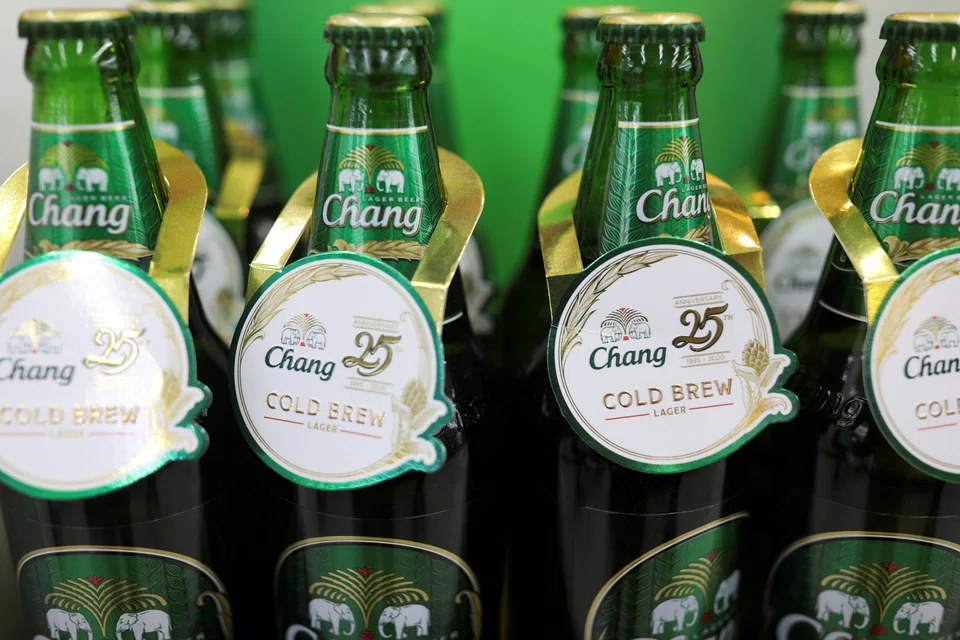
Thai Beverage ’s founder Charoen Sirivadhanabhakdi and the estate of the late Wanna Sirivadhanabhakdi are TCC Assets’ only shareholders, while InterBev Investment is a wholly owned subsidiary of Thai Beverage.
Bloomberg data as at Nov 5 indicated that TCC Assets holds a 25.67 per cent stake in FHT.
Importance of disclosures
The managers of FHT learnt about the share-swapping shortly after the announcement in July.
They provided the updates on the Australian unit’s tax burden and the estimated impact on FHT’s financials in October after the shares had been swapped in September, while highlighting that the ownership rule has always been a risk factor that has been flagged since FHT’s listing in 2014.
FHT’s Australian subsidiary had qualified as a managed investment trust since FHT’s initial public offering (IPO) except for in 2021, when two individuals whose indirect interests in the unit held through InterBev Investment and TCC Assets shot past 10 per cent after a rights issue by Frasers Property.
That episode in 2021 did not cause the stapled securityholders of FHT to be affected as its Australian subsidiary was loss-making. The unit’s managed investment trust status was also promptly restored when the two individuals’ holdings dipped below 10 per cent with TCC Assets selling shares to FHT’s strategic partner TCC Group Investments shortly after the rights issue.
Then and now, FHT said that the breach of the 10 per cent limit was beyond its control, as there are no stipulated limits on the number of FHT units an investor may own, and the managers have been monitoring the percentage of foreign individual shareholding.
But the managers could have flagged the risk to retail investors and substantial unitholders alike once they learnt of the proposed share-swapping, regardless of whether or not the exercise would eventually result in the holdings of the unitholders involved rise above 10 per cent.
Since it had happened before in 2021, albeit arising from a different corporate action, the breach would not have come as a total surprise to the managers.
Interestingly, the Frasers hospitality stapled group does not have a forfeiture mechanism, unlike its sister trust, Frasers Logistics & Commercial Trust (FLCT).
That mechanism of FLCT serves to preserve its managed investment trust status in Australia and will allow the trust to forfeit and sell the units owned by any non-Australian-resident investors over the 9.9 per cent limit.
But FLCT and FHT are not the only Reits that need to stick to a ownership limit for their Australian units in order to enjoy preferential tax rates.
Reits operating through companies with assets in the United States, such as office landlord Manulife US Reit ; retail-anchored United Hampshire US Reit ; and data centre pure-play Digital Core Reit all cap ownership at 9.8 per cent.
The limitation has caused their sponsors not being able to raise their interests in the Reit when their equity is needed to shore up the Reit’s balance sheet.
The amount of distribution that FHT and other Reits that are in such a situation can dish out is partly dependent on the action of individual investors; it is not something that the Reit managers could improve on unless the Reit has a forfeiture mechanism in place.
An FHT spokesperson commented that a forfeiture mechanism is typically put in place by an S-Reit where its portfolio comprises entirely US or Australian assets at the time of IPO, in its response to The Business Times queries. She added: “FLCT’s portfolio comprised entirely Australian assets at the time of IPO, while FHT’s Australia portfolio only made up 12 per cent of its assets at the time of IPO in 2014.”
For other S-Reits with a small proportion of US or Australia exposure, the spokesperson noted, a forfeiture mechanism could impact negatively on trading price. For instance, it could discourage investment in the units due to the uncertainty of forced sales, thus potentially reducing market liquidity by limiting the pool of potential investors as the foreign individual ownership approaches the 10 per cent threshold.
“The possibility of mandatory forfeiture could lead to pre-emptive selling by individual investors who may be reaching the 10 per cent foreign ownership threshold limit and may want to avoid the forfeiture mechanism being applied against them, thereby adding pressure to stapled security prices and introducing additional volatility. Notably, S-Reits may also lose the capital support of strategic investors due to the limit on foreign individual ownership,” she added.
For now, in the case of FHT, the ball is in the court of TCC Assets. It is in the same boat as minority unitholders, as it earns lower distributable income due to the higher tax rate.
But the episode serves as a cautionary tale to Reit aficionados, especially if they are now drawn to the asset class in anticipation of interest rate cuts.
TRENDING NOW

Once staunchly pro-China, Malaysian Chinese businesses are now distancing themselves from Beijing

Britain’s mansion tax shows the difficulty of targeting wealth

Three hats, one goal: How Ng Kian Swan runs sustainability at NUHS

COE review: The gap between luxury and mass-market cars isn’t the only one worth bridging

