In FTX soul-searching, don’t snuff Temasek’s ventures
 Add BT as a preferred source
DeeperDive is a beta AI feature. Refer to full articles for the facts.
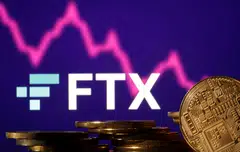
TEMASEK’S revelation that it will write down a US$275 million investment in collapsed cryptocurrency exchange FTX has prompted an internal review at the Singapore government-owned investment firm.
Deep self-examination is appropriate given the circumstances, and the outcome of the review could have important implications on how Temasek manages its share of Singapore’s reserves. As important as it is that the exercise leads to improvements in Temasek’s due diligence processes and risk assessment, there is also a need to avoid over-reaction and to preserve the firm’s ability to make risky bets.
FTX, which filed for bankruptcy protection in November, has turned out to be an astounding mess. John J Ray III, appointed to manage FTX following its bankruptcy, did not mince words when he described “a complete failure of corporate controls and … a complete absence of trustworthy financial information”.
The potential problems include FTX using customer funds for its own trading purposes, a lack of oversight and record keeping for expenses, personal loans to directors and questionable accounting policies, especially with regards to its balance sheet. The list is long.
Corporate malfeasance is not new, and is not always detectable. To ensure that, in its quest not to repeat its mistakes, Temasek does not throw out the proverbial baby with the bath water, it is therefore important that the review distinguishes between the red flags that Temasek should have reasonably seen and reacted to, and what are unfortunate manifestations of an acceptable amount of risk in early-stage private investments.
In a statement, Temasek has said that it spent eight months doing due diligence before investing in FTX, including reviewing audited financial statements that showed the company to be profitable.
Navigate Asia in
a new global order
Get the insights delivered to your inbox.
That provides little reassurance. Some aspects of FTX — such as its lack of a board of directors and its balance sheet’s heavy reliance on its own cryptocurrency — seem to be warning signs that should have been noticeable even without extreme levels of scrutiny. The question is whether Temasek failed to detect these problems after eight months of assessment, in which case the firm might need to improve its due diligence processes, or whether it saw the red flags but invested anyway, in which case the issue might be a need for better investment discipline.
There have been calls for Temasek to be more conservative, with arguments that the firm should not have been in the crypto space in the first place. That might not be a useful approach, because it stems from a mistaken assumption that FTX is reflective of Temasek’s overall risk appetite, when in reality it is only one slice of a much larger portfolio.
The problem is not that Temasek is in this space, but that Temasek may have failed to properly assess the merits and risks of this investment.

Should Temasek be dabbling in the venture capital and tech space? If that dabbling represents an acceptable amount of risk and potential returns at an acceptable price, why not?
For a long-term fund at Temasek’s scale, one of the most important tools for both returns and risk management is diversification. This means spreading the bets not just across geographies and industries, but also across different risk dimensions while staying within the firm’s mandate. Temasek and the government must be careful not to inadvertently blunt this tool.
Decoding Asia newsletter: your guide to navigating Asia in a new global order. Sign up here to get Decoding Asia newsletter. Delivered to your inbox. Free.
Copyright SPH Media. All rights reserved.