Fu Yu shows how articulating its plans well can revive investors’ interest

FU YU Corporation’s business update at the end of November, accompanied by a media briefing on the same day, was a positive surprise for the market.
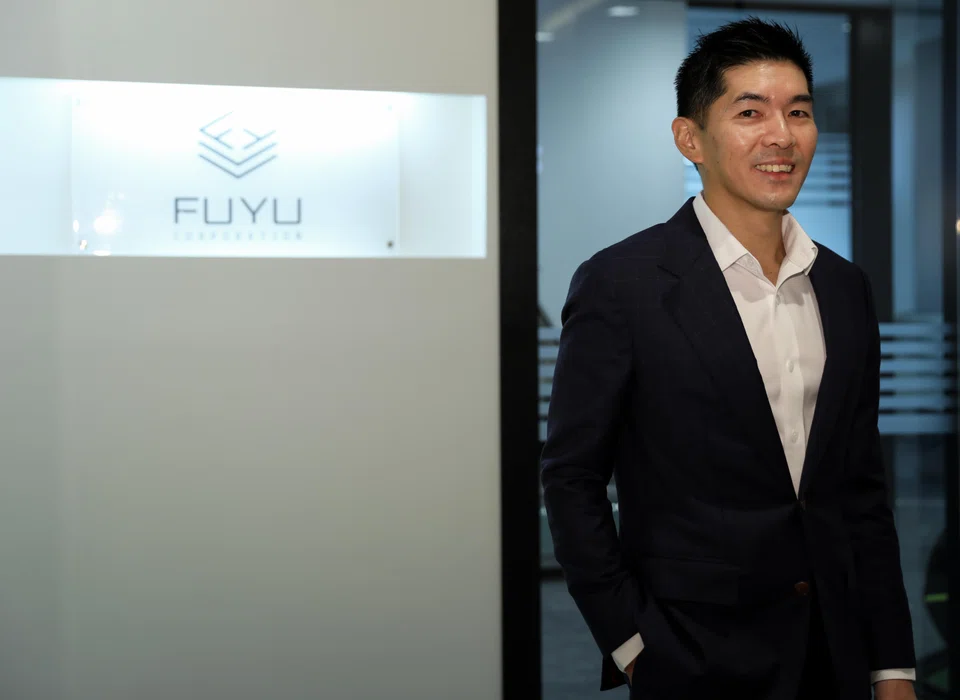
Under new chief executive David Seow, Fu Yu is implementing fresh initiatives to revitalise the company. Shareholders sent the stock up 3.3 per cent that same day.
It closed on Wednesday (Dec 13) at S$0.134, up 8.9 per cent since the announcement, giving the company a market capitalisation of S$101.4 million.
The market reaction offers a playbook for small-cap companies seeking to revive investor interest in their shares. A game plan, and the willingness to talk about it, is a good place to start.
One of Asia’s largest manufacturers of high-precision plastic parts and moulds, Fu Yu was incorporated in 1978 and made its debut on the mainboard of the Singapore Exchange (SGX) in 1995.
It has been a reliable performer, generating profits even during the pandemic years and dishing out regular dividends for close to a decade.
Still, the company was not innovating and growing as it could have. Over the past 10 years or so, its three co-founders – Ching Heng Yang, Tam Wai and Ho Nee Kit – had also sought to sell their shares and retire.
Shares of Fu Yu traded at as high as S$1.24 in 2004 – more than treble its initial public offering (IPO) price of S$0.40.
For most of its history as a listed company, however, the counter has traded significantly below this level, at an average of S$0.27.
From its IPO on Jun 14, 1995, up to the end of December 2020 – just before a new investor came on board – Fu Yu posted total returns of 34.2 per cent.
In comparison, the benchmark Straits Times Index generated total returns of 102 per cent over the same period.
Unveiling a new chapter
While there are many possible reasons for this undervaluation, the management’s reticence in public would not have helped.
Potential investors have had little opportunity to hear about – and buy into – Fu Yu’s growth story.
That may be changing. Fu Yu’s board was reconstituted in January 2021 following the sale of a 29.8 per cent stake in the company for S$58.3 million to fund management firm Pilgrim Partners Asia.
At a media conference explaining the company’s updated strategies, the new CEO Seow said the company needed a new direction or it would be a “sitting duck” just waiting for the market to recover.
Seow believes Fu Yu has not sufficiently reinvested its earnings for growth, and was focused on extracting value for shareholders instead.
He sees an opportunity for the company to be a market disruptor if it deploys its balance sheet well. Fu Yu had net cash of S$56.7 million as at Sep 30.
“Because Covid happened, there was that reconfiguration of supply chains. Suddenly, all the manufacturing lines, which (relied on) permanent relationships, were being challenged,” Seow said, adding that geopolitics has also motivated manufacturers to diversify their supply sources.
Seow plans for Fu Yu to focus on its core competencies in tooling by hiring talent, as well as purchasing new equipment and software. Its tools are used in moulds that produce plastic parts for its customers.
In an industry typically satisfied with running fully depreciated machines that are 20 to 40 years old, such investments would help distance the company from its competitors by the quality and precision of its products.
“If you make a great tool, your moulding is very easy because all your parts come up great with no defects,” Seow said.
The improvements in quality will also allow the company to produce more biomedical parts. The company aims to increase the proportion of revenue it makes from biomedical products from less than 10 per cent today to at least 50 per cent in three years.
Seow said the company will also be exploring mergers and acquisitions that could bring more expertise along the manufacturing process in-house, thus providing customers with a more attractive one-stop shop.
Manufacturing growth opportunities
Shares of Fu Yu remain distant from their historical peak, but the renewed interest in the stock is a positive sign.
For other small-cap stocks looking to generate similar interest in their counters, there are a few lessons to be extracted.
It is critical for a company to have well-thought-out plans, and equally critical for the company to have a spokesperson who can communicate these plans to analysts and the media.
Also, shareholders need a narrative they can follow and to which they can hold the company accountable.
Manufacturing may have a reputation as a staid business with limited growth opportunities, but a growth mindset in management can have a positive impact.
TRENDING NOW
MAS allocates S$1.45 billion to five asset managers in third EQDP batch: Chee Hong Tat
‘My grandfather’s legacy’: Sherman Kwek lays out three-year plan for CDL to drive returns
He built the Vingroup empire. Now South-east Asia’s richest man is handing some key roles to his sons
‘How many will survive?’: Bubble fears arise as China’s humanoid robotics face reality check