

The future of economic diplomacy lies beyond multilateral organisations
Bangkok’s IMF-World Bank meetings reveal how practical international cooperation is evolving
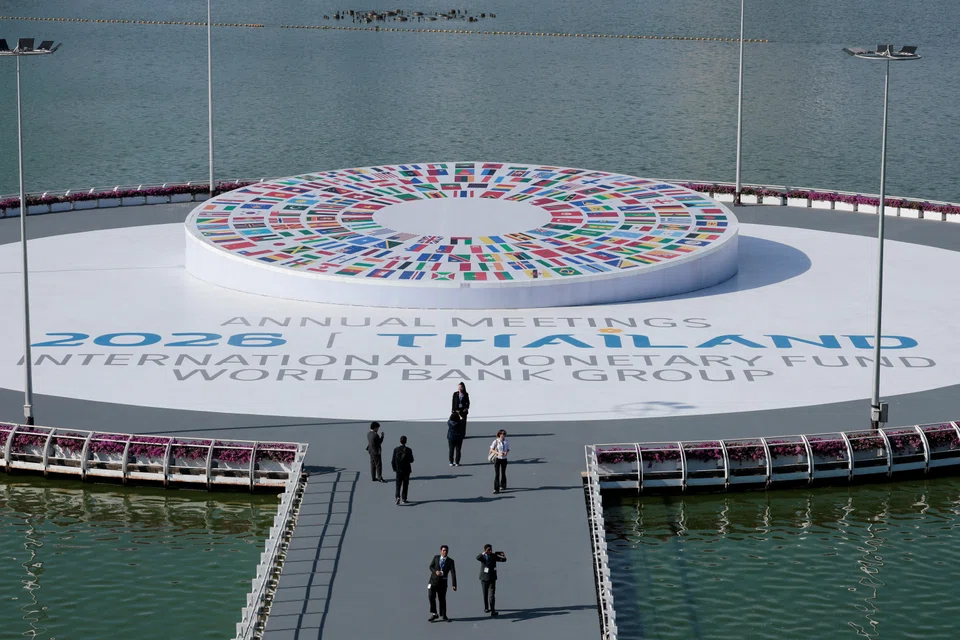
ONE of the most revealing discussions that I was invited to speak at during the International Monetary Fund (IMF)-World Bank annual meetings in Bangkok concerned something seemingly mundane: credit-risk data.
Convened by the Dutch and British governments, the asset-management company ILX and the Global Emerging Markets Risk Database, the gathering had policymakers, members of the senior management of the World Bank Group, development institutions, rating agencies and private-investment companies dive into the weeds of statistics.
The aim was to increase visibility of developing countries’ financial data, which should catalyse private-sector investment in innovative ways.
No grand declarations or ideological posturing. Just evidence, expertise and partnerships looking for practical pathways towards investment. Perhaps, this is what effective economic diplomacy increasingly looks like.
Diagnosis versus action
The IMF-World Bank annual meetings in Bangkok produced formidable analyses of debt, financial vulnerabilities, artificial intelligence and geopolitical fragmentation. It was long on reports, diagnosis and warnings about simultaneous transformations.
But substantive political action – either at national or international level – did not appear to match the intensity or speed of those transformations.
Once again, both the Development Committee and the International Monetary and Financial Committee issued a chair’s statement, instead of a consensus communique.
Multilateral gatherings were meant to reduce, not add to the uncertainty in the global operating environment. For example, it was the London G20 summit of 2009 that helped orchestrate a coordinated response to the global financial crisis.
Today, regulatory standards appear to be diverging and reducing interoperability in jurisdictions. Trade flows are affected not only by the increased incidence of tariffs, but also the confusion surrounding their announcements.
At a time when the world needs predictability, multilateral summits increasingly struggle to provide it. Fewer grand bargains are announced from the main stage.
But does this signal failure, or does it herald new forms of economic diplomacy that are not necessarily captured in leaders’ handshakes, formal communiques or photo-ops?
A different atmosphere
Even though no consensus communique was issued at Bangkok, the proceedings outlined a model that such summits could take in the future.
Having attended the Development Committee in April 2025 when the American delegation forcefully challenged the Bretton Woods institutions over their mandates, I was struck by Bangkok’s different atmosphere.
The discussions I witnessed were workmanlike, with less geopolitical grandstanding and greater attention to practical problems. Rather than rehearsing the moral righteousness of particular conflicts, participants focused on their economic consequences and possible remedies.
There was also a stronger sense of inclusion of emerging-market perspectives.
Perhaps, it matters that World Bank president Ajay Banga, born in India, and IMF managing director Kristalina Georgieva, from Bulgaria, bring viewpoints shaped outside the traditional Western economic establishment, notwithstanding the longstanding American and European conventions governing their appointments.
The institutions themselves are changing.
Banga reported that World Bank project preparation times had fallen from 19 to nine months. Private capital mobilisation reached US$112 billion in the latest financial year, although only around US$3 billion reached low-income countries.
Bangkok also featured a new World Bank philanthropy initiative, civil society engagement and numerous technical discussions. Senior officials seemed as eager to join “sideline meetings” with investors, businesses and civil society, as they were about the set-piece programme.
The power of informal diplomacy
Formal and structured diplomatic channels are increasingly complemented by creative alternatives.
It is noteworthy that a “curtain-raiser” to last week’s meetings was held in Singapore, where I also witnessed Georgieva join a roundtable breakfast with private-sector leaders.
In November 2025, I was invited to speak at a similar, privately convened global event in Singapore. At the time, I was helping Bangladesh’s negotiations with US President Donald Trump’s administration over reciprocal tariffs.
During an overnight virtual discussion with US trade officials, a Bangladeshi colleague wondered whether we might secure concessions resembling those reportedly offered to Switzerland and Guatemala. The conversation moved on.
The next morning, I found myself at a Singapore-convened table associated with the Future of Investment and Trade Partnership (FIT-P), sitting alongside trade negotiators from those countries. This gave me the opportunity to exchange perspectives and clarify publicly available information.
Guatemala’s arrangement offered an intriguing precedent: preferential US tariff treatment for products qualifying under rules that favoured American inputs.
Bangladesh subsequently negotiated a mechanism linking zero reciprocal tariffs to the use of American cotton, the first country in Asia and still the only country in South Asia to do so.
Singapore’s FIT-P and other convenings like it provide an international public good: a trusted meeting place for practical exchanges, without fanfare or the machinery of a formal multilateral summit.
From diagnosis to delivery
Traditional multilateral institutions can still matter profoundly at the national level.
During my time in Bangladesh’s interim government, the country was under an IMF programme. Negotiations were often tense and robust, particularly over the pace and sequencing of reforms.
Nevertheless, constructive engagements with the IMF and World Bank helped Bangladesh pursue exchange-rate reform, trade facilitation and financial stability, outperforming baseline scenarios.
Proactive outreach to private-sector banks, investors and ratings agencies also formed part of the economic diplomacy toolkit.
This illustrates a more general point: It is well within the power of national governments to build the governance, infrastructure, skills and investment conditions needed to withstand the headwinds of geopolitics and other disruptions.
We see this blueprint in action in Asean. Member states are bypassing slow-moving global frameworks to cooperate in agile, smaller sub-groups on critical areas such as energy connectivity, digital trade and cross-border payment interoperability.
The private sector is engaged in novel ways, contributing capital, technical know-how and implementation expertise.
Admittedly, these targeted sub-regional initiatives are not a silver bullet. They cannot substitute for necessary global coordination on sovereign debt, climate action or macro-financial stability. Nor should practical, ground-level progress excuse the lack of global leadership commensurate with today’s crises.
But economic diplomacy must evolve beyond formal negotiations, diplomatic notes and summit declarations. It must become more agile, technically informed, multi-sectoral and outcome-oriented, drawing on a wider range of actors, instruments and venues.
The Bangkok meetings may appear to have fallen short of the collective political leadership that today’s challenges demand. But at the same time, they have underscored the varied and evolving ways in which effective economic diplomacy must now be practised.
The writer is a visiting professor-in-practice at the London School of Economics, and an adjunct professor at the National University of Singapore. Between September 2024 and February 2026, he served as Bangladesh Special Envoy with Cabinet-equivalent rank.
TRENDING NOW

Philippine power giant First Gen rebuffs foreign offers, plans up to US$2.6 billion in expansion

Once staunchly pro-China, Malaysian Chinese businesses are now distancing themselves from Beijing

Nearly half of Singapore workers put in at least six unpaid hours a week: survey
Vietnam’s data-centre investment rush faces reality check on power and site constraints

