G20 shows climate challenges need emboldened leadership
IN 2015, the Paris climate deal was agreed at a time of – relative – geopolitical harmony, including between China and the United States. It is sometimes forgotten that one of the key developments that preceded that landmark agreement was months of intensive diplomacy between Beijing and Washington – culminating in a bilateral climate pact in 2014.
The shared global leadership displayed then is, sadly, largely lacking on the world stage today, but must now be rejuvenated, at least on this fundamental issue. As we move into what United Nations (UN) Secretary-General Antonio Guterres has called the age of “global boiling”, history will not forgive the failure to show greater cooperation.
This is especially since so many areas of the globe suffer from climate impacts. In recent weeks, for instance, parts of China including Beijing have been battered by the heaviest rain in 140 years, while the country also recorded its hottest ever temperature at 52 deg C, amid wider heatwaves which also impacted Europe and North America.
One model that has been proposed is a type of “wartime leadership” to concentrate minds. This would see a determined focus on the core objective – of tackling climate change – forging a sense of greater national and global unity, with the private sector key to a positive outcome. One example here of what success looks like is how the Covid pandemic drove discovery and development of vaccines at scale, at fast speed.
One of the key challenges to forging this sense of unity today is the darker geopolitical landscape compared to 2015, not just because of Russia’s invasion of Ukraine. For instance, tensions are significantly higher, too, between China and the West. This is greatly complicating the pathway to a step change in climate change leadership.
The spike in geopolitical tensions has been in full view at the recent Group of 20 (G20) meetings of environmental ministers, where there had been high hopes for greater accord, despite geopolitical disagreements. Collectively, the G20 nations account for some 80 per cent of climate emissions.
Yet, while there is no better forum, in theory, to try to push forward this agenda, the results have been pitiful so far this year. As the world suffers the hottest temperatures on record, the G20 nations have in 2023 made virtually no progress on climate policy fundamentals.
To be sure, the G20 meeting of environment ministers did issue a long outcome document committing to environmentally sustainable and inclusive economic growth, such as reversing land degradation, accelerating ecosystem restoration, halting biodiversity loss, and promoting a resilient blue economy. However, there was no breakthrough on hugely scaling up renewable energy use, or reaching an agreement on phasing out fossil fuels, especially coal.
This has prompted exasperation by some G20 ministers, including European Union environment commissioner Virginijus Sinkevicius. “We simply are nowhere,” he said, adding that “the glass is... certainly empty when we look at G20 commitments to address climate change”.
Sinkevicius also said that some delegations had even tried to row back previous climate pledges. He said: “We cannot be driven by the lowest common denominator or by narrow national interests. We cannot allow the pace of change to be set by the slowest movers in the room.”
It is not just ministers, but also scientific experts such as Peter Newman, a member of the UN’s Intergovernmental Panel on Climate Change, who are critical. He said that humanity is facing a critical period where “we’re facing death and seeing that climate change is not an idea just of science. It is real, and it hurts”, with a growing prospect of populations “baking in an oven”.
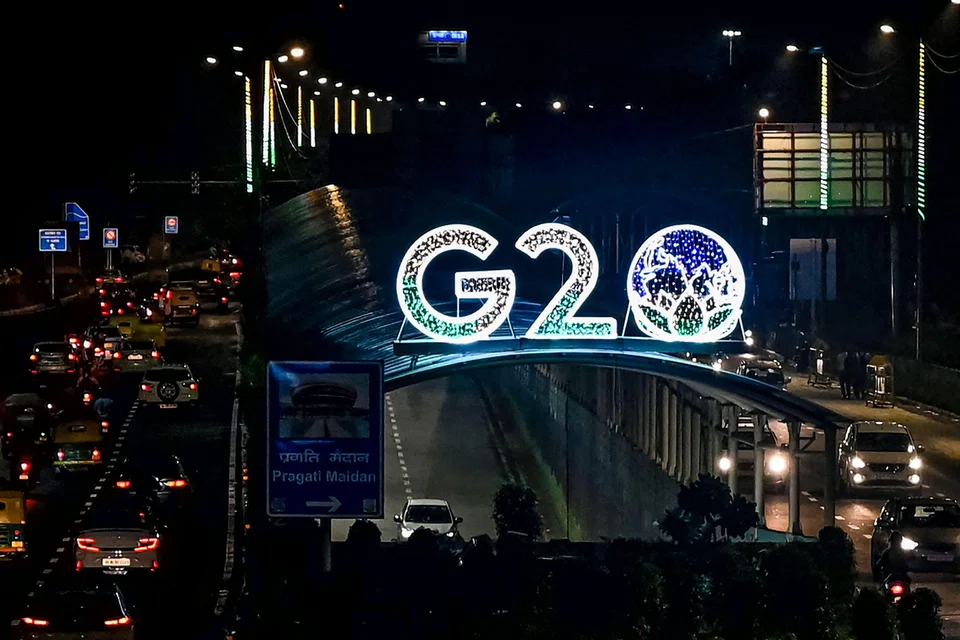
The lack of progress on this issue is also frustrating Indian Prime Minister Narendra Modi, who still has high hopes for this year’s G20 summit, despite it taking place amid the most unpredictable global landscape in years, if not decades. In total, India is holding more than 200 meetings across some 50 cities involving ministers, officials and civil society.
The pinnacle of this is next month’s leadership summit in New Delhi. This will be attended by some 30 heads of state and government, from both G20 members and invited countries such as Bangladesh, Egypt, Mauritius, Netherlands, Nigeria, Oman, Singapore, Spain and the United Arab Emirates, plus international organisations such as the UN, World Health Organization, World Bank and the International Monetary Fund.
Amid the significant international divisions of the moment, Modi is seeking to navigate his G20 agenda with his stance that geopolitical tensions – including over Ukraine – must be resolved through dialogue and diplomacy. He has called for a “depoliticisation of the global supply of food, fertilisers and medical products, so that geopolitical tensions do not lead to humanitarian crises”. Moreover, he has called for international cooperation to deal with global issues, arguing that the challenges of “climate change, terrorism, and pandemics can be solved not by fighting each other, but only by acting together”.
With India deciding two of its four focus themes at the G20 will be green development and sustainable development (alongside women’s empowerment and technological transformation), Modi must now bang heads together in coming weeks to get movement on climate issues. He is well aware that in the last decade and a half, while the G20 was once widely seen to have seized the mantle from the Group of Seven as the premier forum for international cooperation and global governance, it has failed so far to realise the full scale of the ambition some have thrust upon it. In part, this is because it has no formal mechanisms to ensure enforcement of agreements by world leaders.
Modi must therefore try to stamp his personal mark as host of the G20, not least given that it may impact his re-election next year. As a savvy politician, he is aware of the prestige that the G20 enjoys.
Moreover, he is keen to buttress his government’s credentials as a green leader. Here he has flagged that India is one of the top five countries in the world, in terms of installed renewable energy capacity, plus it has met its installed electric capacity from non-fossil fuel sources, nine years ahead of the target of 2030.
All of this highlights why the September leadership summit could therefore be one of the most unpredictable G20s. While it could collapse into rancour, there is an outside possibility significant agreements could be made, including on climate.
With Modi under pressure, he will try above all else to exceed expectations, outcomes-wise. However, whether he does this will depend significantly on whether G20 geopolitical divisions ameliorate, or grow, in the weeks ahead.
The writer is an associate at LSE IDEAS at the London School of Economics
TRENDING NOW
‘Not trying to solve world hunger’: GoTo takes pragmatic approach to AI
He built the Vingroup empire. Now South-east Asia’s richest man is handing some key roles to his sons
Malaysian developer Eco World tops bids for Sin Ming area housing plot with S$1,612 psf ppr offer
Singapore’s new data centres must use renewables. Can they overcome the hurdles?