

G7 economic agenda emerges in face of geopolitical gale
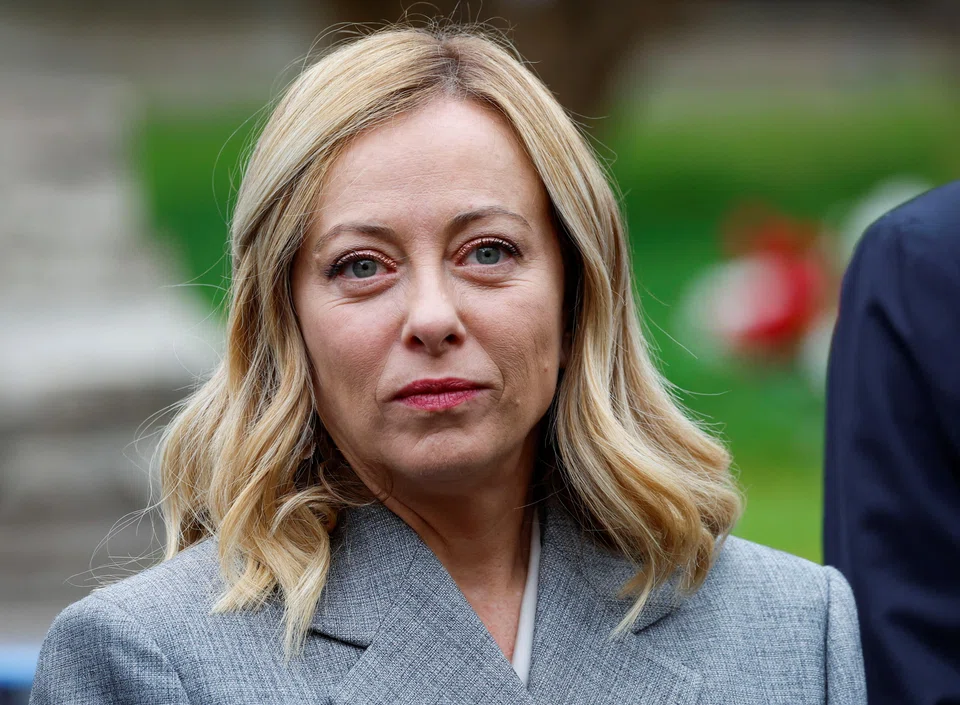
THE Italian-chaired G7 in 2024 is likely to be dominated by the geopolitical gale that is blowing from the Middle East and Europe. Yet, the outlines of a wider economic agenda, including energy security and artificial intelligence (AI), have become much clearer in January.
Prime Minister Giorgia Meloni has said that “the (Global) South of the world will be central” to Italy’s G7 presidency due to its economic, commercial and cultural importance. To this end, Meloni is likely to ensure that the Western club includes a wider circle of nations in this year’s summitry, including Brics members India, Brazil and South Africa.
Reflecting the focus on the Global South, one defining priority of Italy’s chairing of the event will be a new Africa-focused energy security and development plan which Rome wants Western partners to embrace. Meloni is seeking the so-called Mattei scheme to be integrated into a broader “Marshall Plan” for Africa. Named after Italian energy firm Eni’s founder, Enrico Mattei, the goal is to turn Italy into a major hub distributing energy from Africa to Europe, especially gas, potentially laying the ground for wider cooperation in other sectors.
A key part of the ambition here is promoting European energy security. In the two years since Russia’s invasion of Ukraine, Italy has been in the vanguard of the 25 energy deals with Africa. To put this more-than-two-dozen total into context, it represents around one-fifth of the total energy agreements (122) so far signed by Europe since February 2022, according to the European Council on Foreign Relations think tank’s Energy Deals Tracker.
Italy has signed 11 of these agreements with African nations including Angola, Algeria, Benin, the Democratic Republic of Congo, Egypt, Libya and Mozambique. All of these deals are natural-gas focused, with the exception of one Italian hydrogen deal with Algeria and a mixed-energy pact with Angola.
The other European energy deals with Africa in the last two years are Germany’s five agreements with Algeria (hydrogen); two with Egypt (hydrogen and natural gas); and one each with Namibia (hydrogen) and South Africa (hydrogen). Brussels has also signed five agreements collectively on behalf of the European Union – one each with Algeria (natural gas), Morocco (renewables) and Namibia (hydrogen); and two with Egypt (natural gas and hydrogen). Finally, France has signed two deals with Algeria (both natural gas); while Spain and Slovenia have agreed one each with Algeria (both natural gas).
Important as this energy security agenda is, however, the goal of Italy’s Mattei plan is broader. The goal is also to boost African growth to help stabilise the continent and reduce migration through equitable energy partnerships and wider cooperation. Meloni said recently that “what needs to be done in Africa is not charity; what needs to be done is to build cooperation and serious strategic relationships as equals, not predators”. She has emphasised the need “to defend the right not to have to emigrate... and this is done with investments and a strategy”.
The reason Meloni is putting such G7 priority on this is her domestic electoral promise to stop massive migration flows to Italy. In 2023, the path from North Africa across the central Mediterranean to Italy became Europe’s busiest migration route.
Data from Italy’s Interior Ministry highlights that migrant arrivals in Italy surged 50 per cent in 2023 from the previous year. Some 155,750 migrants reached the nation last year, compared with 103,850 in 2022.
A second plank of Italy’s G7 economic agenda is centred on AI and inequality. Meloni says that she wants to focus on creating “ethical guard rails” for the development of the technology, including a potential steering committee to ensure greater G7 coordination on AI.
Yet, despite the importance of this economic agenda for Meloni, geopolitics will inevitably be a massive focus too. In recent years, the G7 has assumed a bigger role as a global geopolitical lynchpin, and this has only increased since Russia’s invasion of Ukraine.
As well as this year’s G7 super-priority of Ukraine, a second key focus for the Italian government is the conflict in Israel and the wider Middle East. This includes the growing threat to commercial shipping in the Red Sea from Houthi attacks.
In recent years too, issues such as the geopolitics of the South China Sea have been on the G7 agenda.
Plus, the issue of economic coercion which the Western club has asserted “undermines the policies and positions of G7 members as well as partners around the world”. For instance, when Lithuania allowed Taiwan to open a representative office in the capital Vilnius in 2021, it was subjected to a Chinese ban on exports.
Last year, the G7 announced a new economic coercion toolkit to “increase collective assessment, preparedness, deterrence and response”. This includes a “coordination platform” to help nations assist each other by increasing trade or funding to any country which is targeted by other nations.
The focus on these topics in recent years has prompted strong objections from China which asserts that the G7 should spend its time on its founding mandate of global economic cooperation. As this reaction indicates, the Western club’s involvement in its geopolitical dialogues has met with significant international criticism from time to time. Nevertheless, Italy will not shy from this agenda.
In this context, it is sometimes asserted, especially by developing countries, that the G7 lacks the legitimacy of the United Nations to engage in these geopolitical and security issues, and/or is a historical artefact, given the rise of powers such as the Brics bloc.
However, it is not the case that the international security role of the G7 is new.
The G7 helped coordinate Western strategy towards the then Soviet Union, for instance. Its capacity for action here was shown when it played an important role in convincing Moscow to pull out the remnants of the Red Army from the Baltic states.
There are many international sceptics who wonder whether the Italian G7 presidency will produce any meaningful outcomes this year.
However, the Western club has previously been at its best in times of crisis, tackling the big issues of the moment. Indeed, the very fact that it was founded in 1975 in the aftermath of geopolitical and economic shocks when Washington had pulled out of the Gold Standard underlines that it is potentially fit for purpose for today’s turbulence.
Taken together, this is why geopolitics will dominate the Italian-hosted G7, despite the emphasis of late on economics too. The stress on international security may only grow if events in Ukraine and the Middle East escalate further.
The writer is an associate at LSE IDEAS at the London School of Economics
TRENDING NOW

NEA identifies 7 firms responsible for haze fires, notices issued urging action: Grace Fu
DBS remains analysts’ pick ahead of Q3 earnings after Singapore banks’ share slump
High Court rules against Julius Baer’s Singapore trust arm in US$50 million family trust dispute

Could stablecoins be the future of money?

