G7 summit opens door to Asia-Pacific and businesses
Staying relevant in a changing world means incorporating more voices
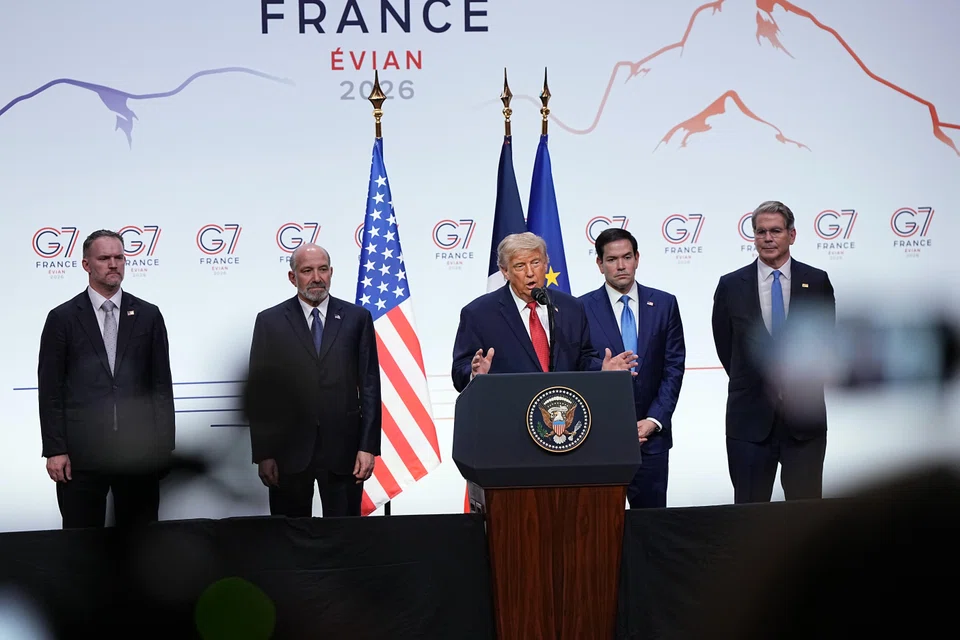
THE G7 was formed in 1975 as a primarily political forum comprising the West. However, the G7 leadership summit, held in Evian, France, from Jun 15 to 17, showed how much voices of the business community and from the Asia-Pacific are increasingly growing in volume in the club’s discussions.
The G7 now has a counterpart, known as the Business 7 (B7), which represents the commercial community through policy proposals and recommendations.
One example is the 28-page communique – which emphasised economic security and collaboration – issued in early June to G7 political leaders.
This is a significant departure from the earlier phases of the G7, when business input was much more informal and ad hoc.
The B7’s structure mirrors that of the G7, with a rotating presidency for 12 months. In 2026, it is hosted by France’s Medef organisation, which is the country’s largest employer federation, representing over 750,000 firms. It will pass the seat to the US Chamber of Commerce in 2027, when the country will also take over the running of the G7.
These major business organisations host B7 activities and work with CEOs and wider leaders to drive agendas that focus on economic growth and innovation globally.
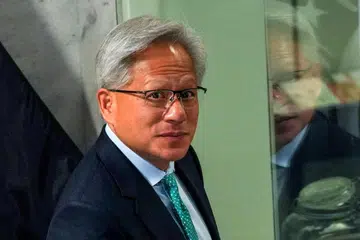
Another sign of the G7’s growing closeness to the business world was the presence of leaders of artificial intelligence firms at the summit, such as OpenAI’s Sam Altman, Anthropic’s Dario Amodei and Meta’s Alexandr Wang.
There, the discussion centred on how the G7 can cooperate to manage AI, such as by creating a “trusted partners” scheme granting US allies access to advanced AI models – a notable topic given the Trump administration’s decision in June to place export controls on Anthropic’s Fable 5 and Mythos 5 frontier models.
Asia-Pacific expands G7 influence
Joining the chorus of business voices at the G7 summit is that of the vast Asia-Pacific region too, a development highlighted by India’s presence at the event.
Canadian Prime Minister Mark Carney said that New Delhi’s inclusion as a guest for over half a decade is “recognition that the G7, if it ever did run the world, no longer runs the world or pretends to”.
The economic data backs up Carney’s case. The G7’s share of global gross domestic product peaked in 1995 at around 63 per cent. Today, that figure is 44 per cent.
The rise of emerging and middle-income markets in the Asia-Pacific largely account for the G7’s declining share of global GDP over that period.
It is no surprise, then, that the region’s presence is increasingly felt at G7 meetings.
First, Japan – the only Asia-Pacific nation that is formally part of the group – has been taking a more active role in setting agendas.
At Evian, Japanese Prime Minister Sanae Takaichi introduced a series of initiatives, such as the Partnership on Wide Energy and Resources Resilience Asia.
Launched in the aftermath of the Iran crisis, this is a proposed policy framework for Japan to provide financial support to Asia to procure energy amid supply disruption and crises.
A growing number of Asia-Pacific countries have also been invited to attend G7 meetings. This includes South Korea and Australia – both of which have growing security and economic relationships with the West. Canberra, for instance, is part of the Quadrennial Security Dialogue, which also comprises the US, Japan and India.
Carney and other G7 leaders seem to be increasingly convinced that the participation of these Asia-Pacific powers, along with others such as Brazil, can provide broader perspectives in finding solutions to global challenges.
The Canadian prime minister has even proposed that an expanded G7 grouping could help realise a new world order of greater cooperation among the middle powers, an idea that he outlined in a speech at January’s World Economic Forum in Davos, Switzerland.
US-Iran deal shifts the mood
The 2026 G7 summit was more productive than was expected by pundits. This was partly thanks to French President Emmanuel Macron’s skilful handling of US President Donald Trump.
Macron not only delayed the start of the big event to Jun 15 so that Trump could celebrate his 80th birthday in Washington the day before, he also hosted a private, post-summit dinner with the US president at the Palace of Versailles on Jun 17.
That was to ensure the US president did not leave the event early – as he had done several times, including at Canada’s G7 in 2025.
However, the bigger factor driving positive atmospherics at the summit was the announcement on Jun 15 of the US-Iran memorandum of understanding (MOU), and Trump’s signing of the document on Jun 17 at the Palace of Versailles.
Vague as this framework appears to be in trying to reach a permanent peace deal over the next 60 days of extended ceasefire, it helped to shift the mood in Evian, moderating Trump’s frustration with US allies over what he perceives as their lack of support for its military action in Iran.
The relatively positive diplomatic atmosphere, which could also set the tone for the crucial Nato summit in Turkey from Jul 7 to 8, was conducive in securing several key agendas regarding business and Asia-Pacific interests.
For example, the G7 declared that it will cooperate further in tackling the reliance on external supply chains for critical minerals, with the headline goal of reducing dependence on any one source for rare earths and permanent magnets to below 60 per cent by 2030, and an ultimate goal of 50 per cent “as soon as possible”.
Taken together, the 2026 G7 summit surpassed the modest expectations that had been set for it, especially when viewed from the perspective of businesses and most Asia-Pacific countries.
The writer is an associate at LSE Ideas at the London School of Economics