

Galloping across the digital bridge: rural Asia’s ‘fire horse’ transformation
The momentum behind the region’s digital bridge is now unmistakable
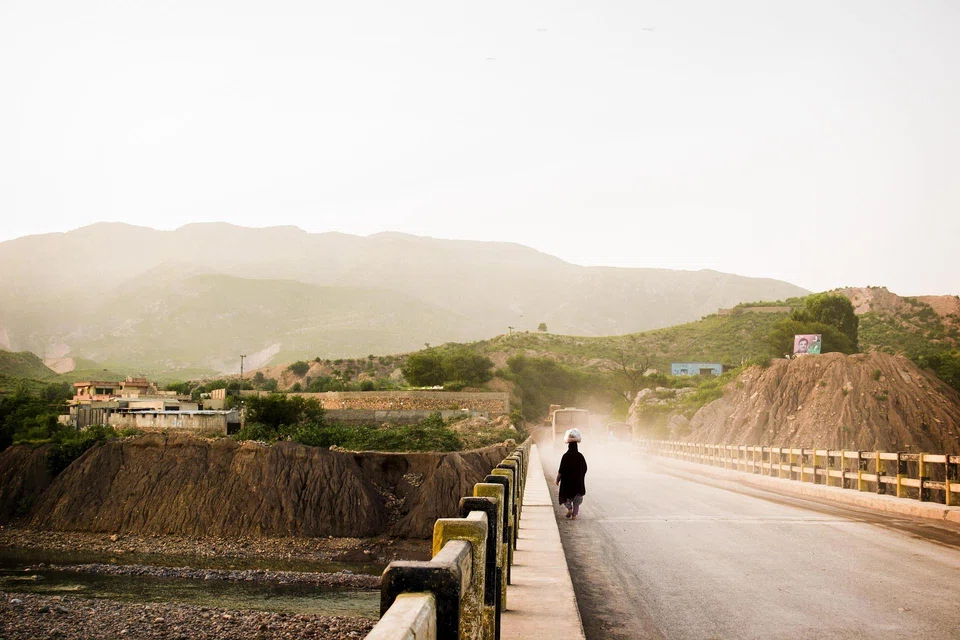
FOR years, the prevailing story about rural Asia was one of a stubborn digital divide, with the region’s remote villages seemingly stuck far behind the glittering megacities. That story is being rewritten.
Across Asia’s hinterlands, a digital bridge is rapidly connecting rural communities in ways few imagined possible. High-speed Internet cables now reach mountain hamlets, and once-isolated islands now have cell towers powered by solar energy.
The on-ground impact is visible: farmers are livestreaming their harvests to urban buyers, village doctors are consulting specialists via telemedicine, and students in remote towns are attending virtual lessons from top teachers.
Rural Asia is leaping ahead.
This transformation matters for long-term investors. In time, rural Asia will represent more than just vote banks and passive subjects of government policy. As the largest underserved market in the world, it represents scalable profit pools across industries, from healthcare to media and consumer durables.
Moreover, it will give rise to large hubs that power tech and commerce, attracting investments in data centres, distribution centres and manufacturing sites for domestic and international companies alike.
As with any structural theme, however, selectivity will determine outcomes.
Speed, independence and a pioneering spirit
Driving this transformation is a spirit akin to the “fire horse”, a combination of the fire element and horse sign of the Chinese zodiac symbolising explosive speed, independence and bold innovation. Occurring once every 60 years, the Year of the Fire Horse heralds untamed progress that breaks with convention.
In much the same way, rural Asia’s digital revolution is galloping forward with unbridled energy. Communities that had only basic connectivity a decade ago now use 5G networks, mobile payments and live video platforms daily – often thanks to local entrepreneurs charting their own course rather than following a top-down plan.
Rather than being latecomers to innovation, rural Asians often leapfrog intermediate technologies to adopt the cutting edge. The assumption that progress flows unidirectionally from cities to villages is being overturned.
The message for investors is not to pursue speed for its own sake, but to recognise that structural momentum has become durable and increasingly irreversible. Fast-moving markets in rural Asia favour companies that enable transformation rather than merely benefit from it, rewarding those that combine growth with defensible economics. Decisiveness matters – but discipline on business quality, governance and valuation matters more.
Here are four snapshots from the ground, illustrating the scale of this rural digital leap:
- Village livestreamers as e-commerce entrepreneurs: In China, so-called “Taobao villages” have turned hamlets into online retail hubs. Farmers and artisans use platforms such as Douyin and Kuaishou to sell produce and handicrafts directly to consumers, bypassing traditional middlemen and generating billions of dollars in annual sales.
- Smart farming with artificial intelligence (AI) and drones: In India, initiatives such as Telangana’s Saagu Baagu (“Grow Better”) send AI-generated crop advice to farmers via basic mobile phones, boosting yields in a single season. Similar tools are now used across Vietnam, Bangladesh and Indonesia, while South Korea promotes robot-equipped “smart farms” to offset an ageing rural workforce.
- Healthcare beyond distance: Drones that once delivered Covid-19 vaccines now transport medical samples and supplies to remote clinics, while telemedicine connects rural patients to city specialists without costly travel.
- Education without walls: Students in rural China attend live classes taught by teachers in Beijing, while simple tools such as WhatsApp supplement schooling across South Asia. In parts of South Korea, elderly villagers learn smartphone literacy through tablet-based learning programmes.
Innovation is emerging everywhere. This proliferation, however, requires selectivity and discernment. Copycat models and businesses reliant on perpetual capital do not scale in urban settings – and will not compound sustainably in rural end-markets either. The winners will be those with scale advantages, clear unit economics and business models that become more profitable as adoption deepens.
The world’s largest underserved market awakens
The digital momentum is only growing. The next half-billion Internet users will mostly come from Asia’s villages and small towns in the next few years, and they are not coming online just to scroll social media – they are entering the marketplace.
A vegetable vendor in rural India accepts QR payments. A family in Indonesia secures micro-loans through an app using farming data. Millions of households are beginning to shop online, access telehealth and stream education.
For companies and investors, the appeal of this emerging market is not just its size but its resilience. Many services spreading through rural Asia address basic, perennial needs – food, finance, health and education – which people prioritise in any economic climate.
Unlike the saturated urban market, where growth often means selling consumers the next luxury or convenience, growth in rural areas comes from providing essentials to those accessing them for the first time. This represents both a high-growth and a steady, defensive opportunity – the kind that often commands premium valuations for extended periods.
Where value ultimately accrues will differ by industry. In many cases, the most durable economics may sit with the enablers – connectivity and infrastructure providers, platforms that embed themselves into daily workflows, and service models that can scale with low incremental cost.
The key is to distinguish genuine compounding from adoption that remains reliant on subsidies.
Governments see this potential too. From China’s Digital Village initiative to India’s massive rural broadband and digital payments push, public policies are actively supporting rural tech adoption – further lowering the risk and cost for companies reaching out to these new users.
Adding to the opportunity, there is already a shift towards premiumisation in some end-markets. For example, in Bihar (eastern India), the recent electrification of the state is driving consumer demand for higher-end consumer durables as incomes rise.
Of course, policy tailwinds and improving incomes do not guarantee shareholder returns – competition, regulation and capital intensity still determine who benefits from attractive economics.
A new frontier – and a shared journey
We are witnessing the opening of a new growth frontier that could shape Asia’s economy for decades. Closing the digital divide is more than a matter of equity; it is about unlocking productivity and creativity on a massive scale.
When rural communities can fully participate in the modern economy, the whole system becomes more balanced and resilient. Fewer young people feel forced to migrate to overcrowded cities if they can find opportunity in their hometowns, easing urban strains and making development more sustainable.
This transformation is also a shared journey. Governments are laying the groundwork – from broadband cables to supportive regulations – and companies are designing products for these newfound users.
Most importantly, rural Asians themselves are active protagonists. Their enthusiasm and ingenuity in adopting technology have caught many outsiders by surprise. The efforts that thrive are invariably those that empower local people rather than sideline them – whether it is training villagers to use new apps or leveraging existing community networks to spread digital literacy.
The lesson for anyone looking to engage this market is simple: work with the grain of local culture and needs, not against it.
For long-term investors, alignment matters: when adoption is locally embedded, and supported by infrastructure and policy, demand becomes stickier – and the opportunity to compound becomes more durable.
The momentum behind Asia’s digital bridge is now unmistakable – and likely unstoppable. Changes that once took generations are happening in a year or two.
The Year of the Fire Horse comes only once every 60 years, and the transformative energy it represents is arriving in Asia’s villages right on schedule.
The writer is a portfolio manager at M&G Investments in Singapore






