

The geoeconomic limits of Singapore’s new gold vault
Washington can penalise banks for transactions covered by US sanctions, even if the metal never leaves the hub
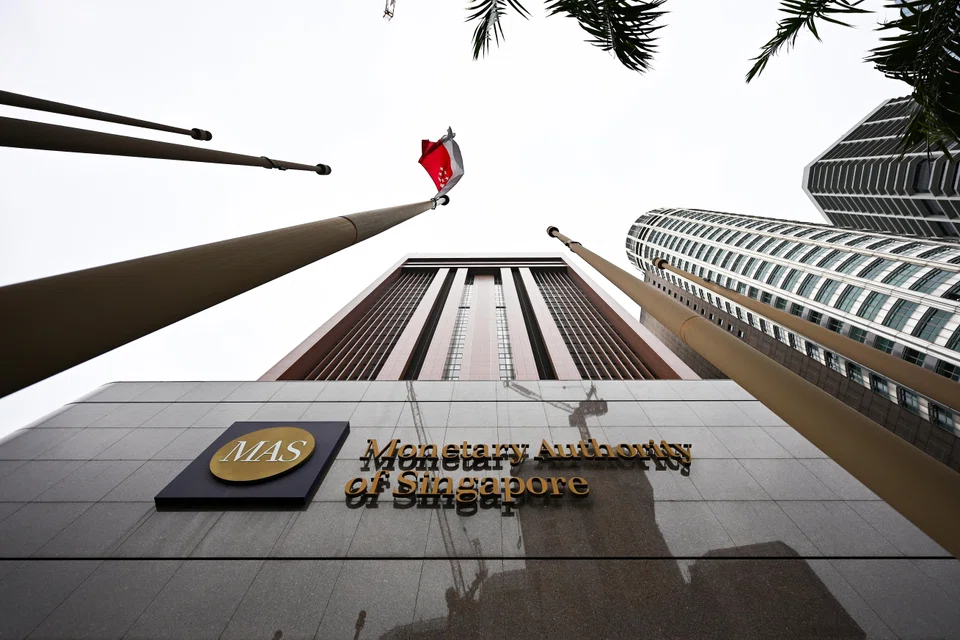
[SINGAPORE] The Monetary Authority of Singapore (MAS) recently launched a gold custody service for foreign central banks at its national currency vault, which can hold up to 500 tonnes of the precious metal.
The service gives central banks another option for keeping some of their gold outside the traditional Western centres.
This move reflects a changed global landscape, in which gold has become a geoeconomic asset for central banks. Unlike a foreign government bond, it is no one’s liability, so its value does not depend on another government’s promise to repay.
The 2022 freeze on Russian central bank assets held in Western jurisdictions showed that a country could lose access to reserves it still owned. That has made some central banks wary of relying heavily on Western reserve assets.
Concerns about US fiscal deficits have given them a further reason to diversify away from the greenback.
Central banks are buying more gold, and some are rethinking where they keep it. The World Gold Council (WGC) estimates that it and other official institutions bought a net 675 tonnes in the first nine months of 2026.
An International Monetary Fund working paper found that central banks tend to raise the share of gold in their reserves when their countries face financial sanctions.
Even among central banks not under sanctions, 10 per cent of those that answered questions on where they store gold in the WGC’s 2026 survey said they had spread their gold across more overseas locations in the previous year.
Singapore itself keeps its gold in several places, and the government told Parliament in February 2026 that its gold reserves were diversified across geographies to preserve access and resilience in the event of geopolitical and economic shocks.
Singapore’s value proposition
MAS now offers that kind of diversification to other reserve managers.
It holds gold on an allocated basis, recording the bars that belong to each customer, and can transfer gold between customer accounts without actually moving the metal.
A central bank that wants to sell its gold or borrow against it must arrange this separately with a bullion bank.
Beyond storage, Singapore wants gold held here to be easy to trade. While Asia accounts for roughly 70 per cent of annual consumer gold demand, much of the trading still takes place in London and New York.
The Singapore Exchange and six banks are building a local gold clearing system, and MAS said industry testing is complete, with live trading expected to begin in the first quarter of 2027.
Singapore has previously used its time zone to expand its role as a financial centre.
In 1968, it established the Asian Dollar Market so that banks could take deposits and make loans in US dollars during Asian hours, bridging the gap between the closing and opening of business in America and Europe, respectively.
Tax incentives and rules separating offshore from domestic banking helped that market grow.
However, a white paper published by DBS on Nov 10 suggests that convenient trading hours alone will not be decisive.
When choosing a gold hub, financial institutions rated market liquidity, regulatory clarity, clearing and custody infrastructure, and cost efficiency above time-zone alignment and proximity.
Half of the asset managers and banks surveyed said state-backed gold infrastructure had increased their interest in Asian hubs, although only a quarter were actively evaluating the region’s hubs for storing official gold.
The report also highlighted legal stability and political neutrality as important considerations when choosing a new storage location.
These political factors matter in the competition with Hong Kong, which began testing its gold-clearing system in July and launched the first phase of Delivery Connect with the Shanghai Gold Exchange.
Though Hong Kong has a separate legal system, China’s central government is responsible for its foreign affairs.
For reserve managers concerned about the rivalry between Beijing and Washington, Singapore’s independent foreign policy adds to the case for spreading gold holdings across both jurisdictions.
Limits to protection
Yet, keeping gold safe is not the same as being able to use it.
To sell its gold or borrow against it, a central bank generally relies on bullion banks, and many of those banks depend on access to the US financial system.
These banks could refuse to deal with a central bank that Washington has placed under sanctions, no matter how safe its gold is in Singapore’s vault.
That is Singapore’s custody paradox, and other financial centres whose banks have operations in the US face it too.
For central banks concerned about Western sanctions, London carries an additional risk, since Britain blocked access to Russian central bank reserves alongside the US and the EU.
While Singapore makes its own decisions on sanctions, that does not mean it will never act against a depositor’s government.
In 2022, it chose to restrict dealings with certain Russian banks – a rare instance of Singapore imposing sanctions without a binding United Nations’ Security Council decision.
While other countries’ unilateral sanctions do not automatically apply in Singapore, a bullion bank operating here may still refuse a transaction that is lawful under Singapore law because it could put the bank’s access to the US financial system at risk.
To be specific, under US secondary sanctions relating to Russia, a foreign bank that facilitates a significant transaction involving Russia’s military-industrial base can lose its US correspondent accounts, which allow it to make payments through American banks.
US rules define that base to include all individuals and entities blocked under Executive Order 14024, and they apply to transactions in other currencies too.
The US Treasury also warns that gold dealings materially supporting persons blocked under that order can be sanctionable.
Central banks hold reserves so that they can obtain foreign currency when they need it, for instance to defend their exchange rate or meet foreign debt payments.
Gold in Singapore’s vault can serve that purpose when banks are willing to buy it or lend against it.
Washington, meanwhile, can penalise banks for transactions covered by US sanctions, even though the gold never leaves Singapore.
In short, moving gold to a new vault does not move the choke point.
Protecting Singapore’s reputation
MAS should state clearly how any sanction that Singapore imposes after a central bank has placed gold in the vault would affect withdrawals and transfers.
That is the part of the risk that Singapore controls.
However, it cannot guarantee that banks will deal with a foreign central bank under sanctions, so prospective customers should also examine the sanctions policies of the bullion banks they would rely on, not just the terms of custody.
Singapore’s reputation as a trusted financial hub depends on how it handles these risks.
Speaking about illicit money at the Bloomberg New Economy Forum in 2025, Prime Minister Lawrence Wong said the authorities were “determined to protect our reputation, because that is what keeps Singapore going”.
The same concern should guide gold custody, so that Singapore welcomes legitimate diversification without letting its services be used to evade applicable sanctions.
The Asian Dollar Market helped establish Singapore as an international financial centre long before secondary sanctions became a routine tool of US foreign policy.
Building a gold custody business is more complex in today’s geopolitically contested world, in which Washington can penalise foreign banks for transactions covered by those sanctions.
The writer is Yong Pung How Professor at the Lee Kuan Yew School of Public Policy, National University of Singapore. He writes on international economics and geoeconomics.
This essay is part of New Global Order, which explores how the changing world landscape is reshaping business, politics and beyond.
TRENDING NOW

South-east Asia has lost Nvidia’s best salesman

Higher rates, weaker spending: Is the Philippines entering stagflation?

Who is Leo KoGuan, the Singapore-based billionaire backing Nvidia’s Jensen Huang?

Demand, tech capabilities position Apac and AI as Skyscanner’s next growth frontiers: CEO Bryan Batista

