Geoeconomics, not just geopolitics, fuels the Greenland dispute
With mineral reserves valued at around US$186 billion, the island offers more than a security buffer
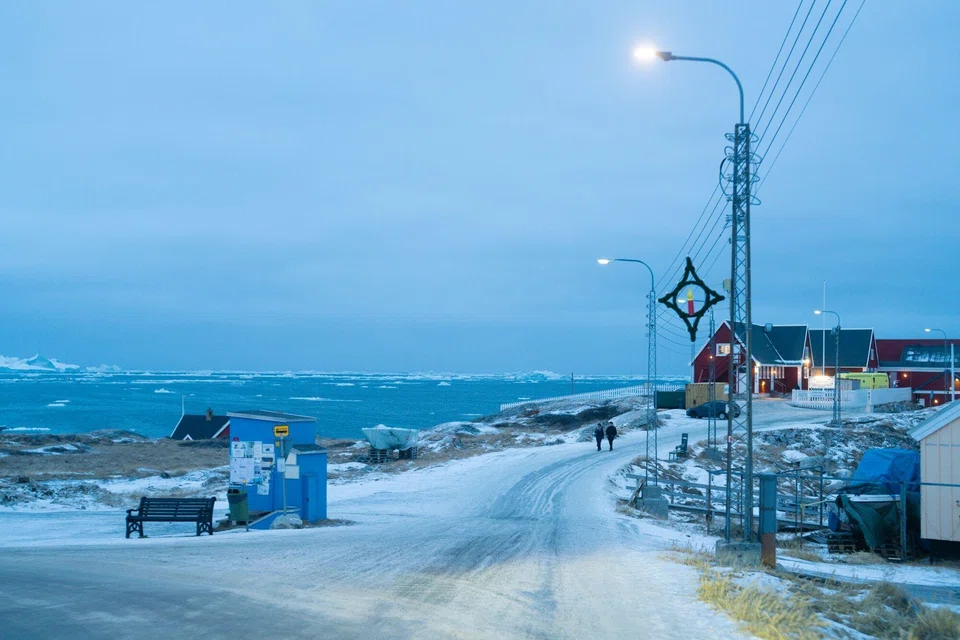
THE US-driven debate over the future of Greenland has recently been framed largely in defence-related terms. However, it is geoeconomics, not only geopolitics, at the heart of the public dispute given the island’s vast critical mineral deposits and strategic location.
On Wednesday (Jan 14), the diplomatic friction came to a head. Greenland’s Foreign Minister Vivian Motzfeldt and Danish Foreign Minister Lars Lokke Rasmussen met US Vice-President JD Vance and Secretary of State Marco Rubio in Washington, DC.
Rasmussen described the session as “frank but constructive”, but noted a “fundamental disagreement” over Greenland persists. The nations announced a new working group to discuss potential ways forward.
In recent weeks, multiple European leaders have expressed concern over US President Donald Trump’s rhetoric, including threats to take military control of Greenland. This has coincided with his administration’s new US security strategy, released in November, which puts greater emphasis on securing Washington’s interests in the Western hemisphere.
Trump’s interest is not new. In 2019, he said during his first term that he wanted to buy Greenland, and the US opened a consulate there in 2020. In late December last year, he asserted: “Right now, Greenland is covered with Russian and Chinese ships all over the place. We need Greenland from the standpoint of national security”.
This claim has been dismissed by multiple European politicians, and appears unsupported by publicly available evidence. Nevertheless, Beijing and Moscow unquestionably have a keen interest in Greenland.
Russia has a series of military bases in the Arctic and seeks to expand its influence. China previously proposed building new airports and mining facilities in Greenland in 2018, but eventually withdrew.
Beijing’s interest is also related to the new North Atlantic shipping lanes opening due to melting ice caps. This move significantly reduces maritime trade transportation times compared to lanes through the Suez or Panama canals.
Asian interest extends beyond China. Singapore, Japan, South Korea and India were granted permanent observer status in the Arctic Council in 2013, strengthening collaboration with Arctic states to access new opportunities, including economic ones. All but India have appointed official Arctic ambassadors or envoys, and most have released White Papers that articulate their regional policies.
Since 2016, China, Japan and South Korea have convened the Trilateral High-Level Dialogue on the Arctic. It emerged from the Joint Declaration for Peace and Cooperation in Northeast Asia issued in 2015, and other Asian nations could join the forum in the future.
Greenland’s growing allure
While Trump is concerned by China and Russia from a security perspective, his recent commentary has omitted mentions of its resource wealth. Yet, as think tanks such as the Center for Strategic and International Studies have highlighted, a defining feature of Trump’s second presidency is the push to secure greater US access to critical minerals and other resources.
Greenland, which is currently about 80 per cent ice-capped, is almost 2.17 million sq km in size. It boasts the world’s northernmost territory, the closest land to the North Pole.
The growing geoeconomic focus on the Arctic stems largely from melting ice caps exposing unclaimed ocean and lands. This has sparked a modern “gold rush” over natural resources, including zinc, copper, iron ore and rare earths.
This year alone, equities for some companies operating in Greenland have surged. The share price of Australian rare earth miner Energy Transition Minerals, currently developing a project in Kvanefjeld, has grown around 80 per cent recently.
Historical context
Denmark, an EU and Nato member, has controlled Greenland for roughly 300 years. In 1916, the US formally recognised Denmark’s interests in the island in exchange for the Danish West Indies (now the US Virgin Islands). In recent decades, the territory – with a population of about 57,000 – has gained greater autonomy. Today, Denmark retains powers over defence and foreign policy, monetary policy and justice.
Last week, leaders of all five political parties in Greenland’s Parliament said in a joint statement: “We do not want to be Americans, we do not want to be Danes, we want to be Greenlanders.”
Trump is not the first to attempt a purchase. In 1867, then-secretary of state William Seward floated the idea. In 1946, then-president Harry Truman offered US$100 million in gold, which Denmark rejected.
Militarily, the US has deep roots in Greenland. In 1943, the US opened Thule Air Base (now Pituffik Space Base). During the Cold War, some 10,000 US troops were stationed there, and the US retains options to increase its military presence, as long as it consults Denmark and Greenland.
Economically, the stakes have risen: the American Action Forum think tank estimated the value of Greenland’s mineral reserves alone at around US$186 billion.
While the public debate tends to focus on US military action or a purchase of Greenland, there are other pathways forward. For instance, a Compact of Free Association could mirror agreements that the US has with some Pacific island nations.
Europe’s next steps
Amid concerns over US intentions in Greenland, a growing number of European leaders believe a collective effort is needed to work with the Trump team and keep the Arctic safe for Western interests.
Some countries, including the UK and Germany, are debating sending more military assets to the region, as Denmark is doing. This is not incompatible with allowing the US to expand its own military base. Moreover, European countries are building commercial interests to reduce its reliance on China.
In 2024, European Commission President Ursula von der Leyen opened the EU’s first office in Greenland and signed a strategic partnership to develop sustainable raw materials. This could evolve into a Green Alliance-style arrangement, similar to EU agreements with Japan, Canada and Norway.
Crucially, more than two-thirds (25 of 34) of critical raw materials identified by the European Commission as strategically important for the bloc’s green transition are located in or around Greenland.
The writer is an associate at LSE IDEAS at the London School of Economics