

Geopolitical gyrations needed to deliver on net zero
IN THE journey to net zero in the decades ahead, much focus is placed on economics and technology in the energy transition and tackling climate change. However, in a landmark report released this week, the International Energy Agency (IEA) rightly highlights the colossal challenge of geopolitics in an increasingly divided world.
In an otherwise upbeat study – much more so than an earlier one this month by the United Nations (UN) – the IEA points to the need for much stronger international cooperation.
This is especially for the United States and China, which need to disentangle climate diplomacy from geopolitics, given the epic scale of the climate-change challenge.
It is sometimes forgotten that a precursor to the Paris Agreement in 2015 was a bilateral climate deal between Beijing and Washington in 2014. This deal was struck when relations between then-US president Barack Obama and his Chinese counterpart Xi Jinping were relatively genial, despite periodic tensions, in a stark contrast to the state of bilateral ties today.
To be sure, current US climate envoy John Kerry has a long and apparently warm relationship with Chinese counterpart Xie Zhenhua. However, it is highly uncertain whether the two have the political space to try to forge a deal – as ambitious as the one almost a decade ago – in the remainder of President Joe Biden’s term of office.
Major world powers are not the only problem; many other countries are not aligned with the IEA on the energy transition.
Earlier this month, Organization of the Petroleum Exporting Countries Secretary-General Haitham Al Ghais said that halting investment in new oil and gas projects would set up the global energy system to fail “spectacularly”.
He argued it would “lead to energy chaos on a potentially unprecedented scale, with dire consequences for economies and billions of people across the world”.
Still optimistic
These huge political questions aside, the IEA report sounds an otherwise optimistic note in a debate that is usually unremittingly bleak. For instance, in a stocktake of global efforts to limit warming, the UN warned earlier this month that the world is far off-track and remains headed for a temperature rise of up to 2.6 deg C.
In contrast, the IEA delivered a rare ray of optimism in its finding that a small “window of opportunity” remains for achieving the Paris Agreement’s target – thanks to remarkable growth in clean energy.
Temperatures have hit record levels in much of the world, with global averages around 1.1 deg C higher than the pre-industrial average. The Paris treaty aims to prevent this from reaching 1.5 deg C above the pre-industrial average.
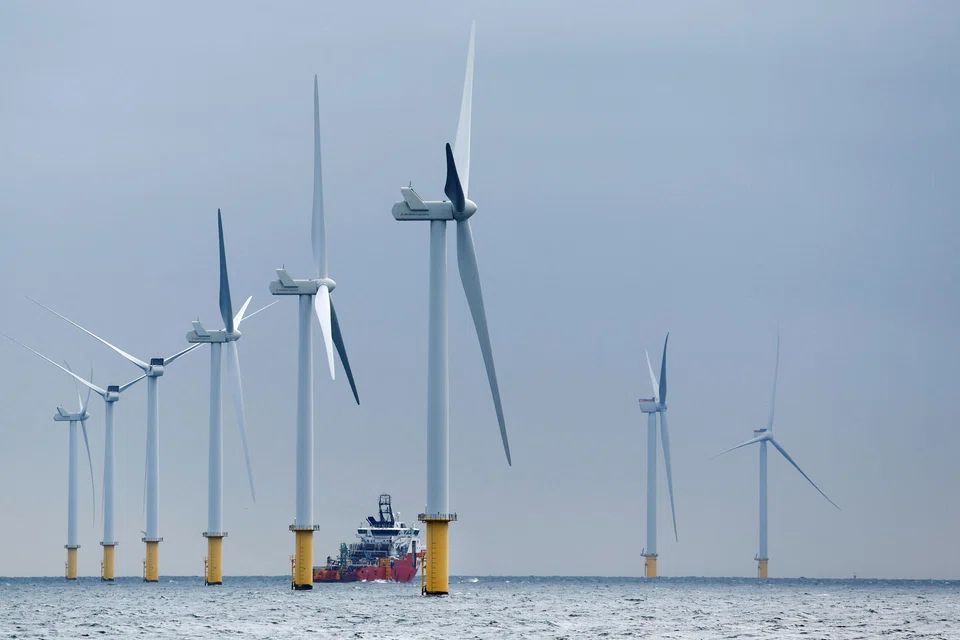
The IEA asserts that solar power capacity and electric cars are set to provide a third of the required emissions reductions between now and 2030. Meanwhile, innovation has opened new possibilities and lowered costs.
A comparison to the IEA’s 2021 report shows how much progress has been made. In the previous report, technologies not yet available on the market were assumed to account for half of future emissions decreases. This has now fallen to 35 per cent – a testament to the pace at which renewable technologies have developed.
Nonetheless, the IEA highlights that even stronger measures will be required in the second half of the 2020s to deliver on the 1.5 deg C target.
It warns of the negative impact of increased fossil fuel investments and what it calls “stubbornly high emissions” after the pandemic economic rebound, and the energy crisis driven by the Ukraine war.
Among the measures needed, according to the IEA, are a tripling of renewable power capacity; a big increase in the use of electric cars and heat pumps; a 75 per cent reduction of methane in the energy sector; and a doubling of the annual rate of energy-efficiency enhancement.
Reading the road map
The IEA’s report sets out a net-zero road map, charting potential pathways for this agenda. For advanced, industrialised economies, the IEA calls on as many as possible to deliver net zero by 2045 rather than 2050, to provide a larger window for developing countries to make their transition after 2050.
But this call for advanced economies to do more is politically sensitive, especially as leaders such as UK Prime Minister Rishi Sunak seek to slow their energy transitions.
The IEA also singles out China, calling on it to make a net-zero deadline of 2050, unlike other developing countries. It projects that the emerging-market giant will account for some 45 per cent of emissions from existing fossil-fuel assets between 2023 and 2050.
Meanwhile, new fossil-fuel development is incompatible with the 1.5 deg C target, and clean-energy investment must rise accordingly: from about US$1.8 trillion this year to US$4.5 trillion annually by the early 2030s, says the IEA.
While advanced nations are driving this energy transition, the IEA points to the need for developing countries to join in further. For this, some US$45 billion must be invested in providing access to modern sources of energy. To put this number in context, it represents about 1 per cent of aggregate annual global energy investment.
With momentum growing behind key global targets such as tripling renewable capacity, the COP28 climate summit in Dubai is a pivotal moment, asserts the IEA, calling on nations to commit to higher ambitions in the half-decade ahead.
Yet as the world faces this historic tipping point, geopolitics could get in the way. The next steps on the net-zero agenda will be even harder, requiring remarkable and enlightened diplomacy to navigate the political challenges ahead.
The writer is an associate at LSE IDEAS at the London School of Economics
TRENDING NOW
Singapore expects all parties to honour commitments, says PM Wong after Indonesia cuts gas exports
Gas Supply may pursue remedies if contract breached following Indonesia’s export cuts: Tan See Leng

SoftBank’s Son plans US$50 billion Malaysia tech outlay: Anwar Ibrahim

Is Manila Asia’s new dining hot spot?

