Getting supply chain resilience right in S-E Asia
LEADERS of multinational companies face unprecedented uncertainty in shaping their supply-chain strategies and reconfiguring their companies’ network footprints in response to global geopolitical upheaval.
The dynamics between manufacturing powerhouse China and several major trading partners have accelerated pre-existing production shifts. Technology and relative labour costs are changing, and Covid-19 demonstrated the need for more resilient supply chains, at a time when geopolitical tensions have created more complex considerations for global trade partners.
In addition, CEOs must assess how to establish an environmental, social and governance (ESG)-compliant supply base, while identifying which geographical location will be the engine of economic growth in the coming years. These complex considerations are why over 90 per cent of global manufacturers intend to redesign their supply footprints in the next five years according to a survey by the Boston Consulting Group (BCG).
Resilient companies are two times as likely to outperform non-resilient peers in long-term total shareholder return performance. What’s more, a successful footprint transformation can improve companies’ resilience and sustainability and cut their global manufacturing and supply-chain costs by 20 per cent to 50 per cent. South-east Asia has emerged as an attractive location in this evolving landscape, as companies look to manage supply costs and mitigate risks.
South-east Asia: A new manufacturing epicentre
Attractive domestic markets, supportive policy measures, shifting geopolitical dynamics, and relative strategic neutrality as a non-aligned global player have made South-east Asia an attractive location for companies looking to de-risk supply chains.
Adding to this attractive proposition is the compelling cost-competitiveness of the region’s manufacturing landscape. BCG’s proprietary Global Manufacturing Cost Comparison Model assesses that baseline manufacturing costs in South-east Asia are now up to 15 per cent lower than in China – even before applying potential logistics and tariff costs – in a region boasting large volumes of skilled, low-cost labour. South-east Asia has already benefited from significant shifts away from China, with exports to the United States soaring by 65 per cent from 2018 to 2022, while US goods imports from China declined by 10 per cent.
Domestic consumption in South-east Asia is projected to reach US$4 trillion by 2031. Rapid regional growth has also fashioned a large domestic market, with a gross domestic product (GDP) of US$3.6 trillion in 2022, with the share of middle- and high-income households on track to reach 84 per cent of households by 2031.
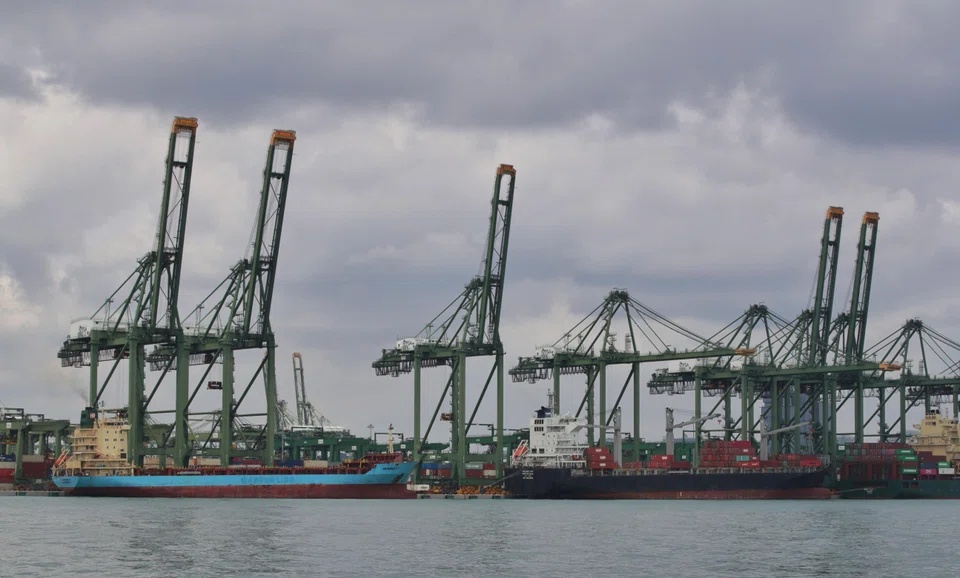
Regionally, the Association of Southeast Asian Nations (Asean) has implemented a range of supportive policies in recent years, with measures to enhance the free flow of goods and services among member states. The expansion and modernisation of ports has been complemented by investment in energy, transport and digital infrastructure. The Asean highway network, Singapore-Kunming rail project, and Indonesia-Malaysia-Thailand Growth Triangle are all examples of this evolving ecosystem. These initiatives align with the wider Asean Economic Community Blueprint, which looks to embed a deeply integrated and mutually beneficial regional economy with seamless movement of goods and people.
Major trade agreements such as the Regional Comprehensive Economic Partnership and Comprehensive and Progressive Agreement for Trans-Pacific Partnership mean that the region has competitive trade access with countries that together account for at least 40 per cent of global GDP.
Globally, the value-add of South-east Asia’s manufacturing industry will double from US$748 billion in 2022 to US$1.4 trillion by 2028. The projected compound annual growth rate of 11 per cent puts South-east Asia at the forefront of global manufacturing growth, outpacing competitors India (8.4 per cent), China (3.6 per cent), and Mexico (3.3 per cent). According to BCG’s proprietary Global Trade Model, South-east Asia’s exports will grow by nearly 90 per cent, reaching US$3.2 trillion by 2031.
The region is poised to capture value from increasingly dynamic global manufacturing shifts, a landscape explored in detail in BCG’s recent report Harnessing the Tectonic Shifts in Global Manufacturing.
There is no ‘average’ in Asean
South-east Asia’s manufacturing market is dominated by six key countries, with unique considerations as to the opportunities they present. Indonesia, Malaysia, the Philippines, Singapore, Thailand, and Vietnam boast diverse manufacturing opportunities across a broad range of industries, with attractive benefits for companies.
These opportunities must be balanced against nuanced local considerations, including the maturity of local infrastructure, uneven logistics environment, labour availability and retention, bureaucratic barriers, and also rising local costs and cost-of-living factors. Companies need to reflect on the complexities of entering and operating to ensure a successful South-east Asian supply-chain transition. They need to understand how global trade flows will evolve over the next decade, sector by sector, and how this may shift competitive advantages over rivals.
Benchmarking costs across different countries and regions is also essential. This includes understanding the impact of key components such as regional differences in wage rates, labour productivity, operating overheads, tariffs, taxes and more. Even within individual countries, companies need to analyse the most attractive region or location based on the availability of local talent, supply base, government incentives, infrastructure and more. This is a vibrant, high-growth but diverse region, which creates complex, competitive considerations. Companies must also prepare to navigate a fragmented business ecosystem heavily reliant on the power of relationships and local partnerships.
South-east Asia remains a compelling and attractive destination for supply-chain relocation, thanks to persistent geopolitical trends, regional policy measures, and a growing domestic market. While the regional opportunity is ripe, understanding the local context is vital in realising this opportunity. Those who tread this path successfully are poised to position themselves at an exciting, new heart of global manufacturing potential.
The writers are managing directors with Boston Consulting Group (BCG). Kazutoshi Tominaga is also a senior partner of the firm, and Hitesh Tak is a partner. The writers would like to thank Michael McAdoo (partner and director, Global Trade & Investment, BCG) for contributing his insights to this article.