Global climate action faces decisive days
The upcoming COP29 and G20 leadership summit will shape the all-important context for all countries submitting new national targets to cut emissions of GHGs in the coming months
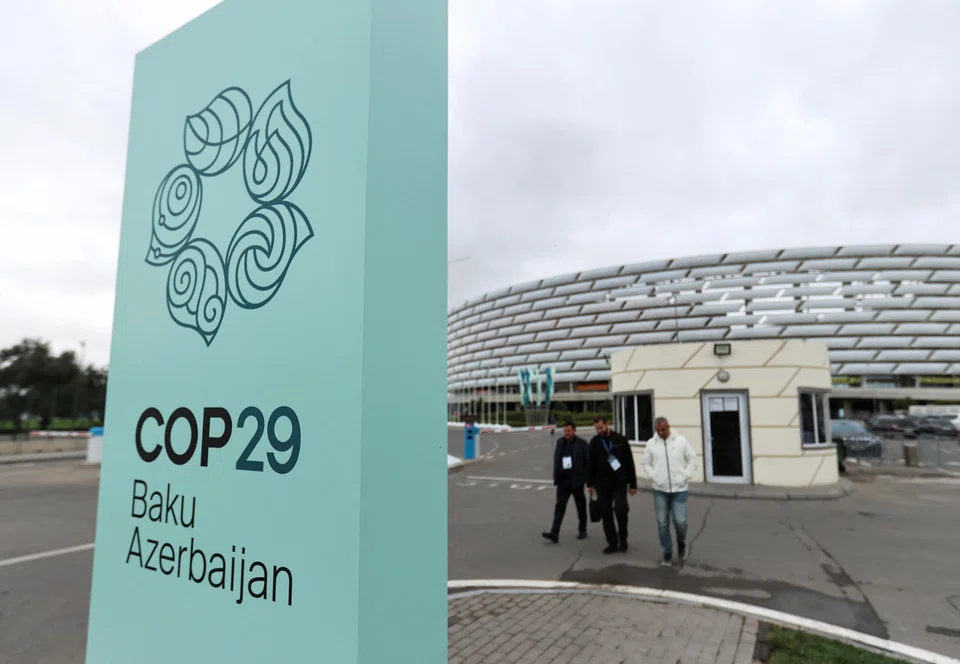
IT IS a truism that every month, let alone year, is key in the fight against climate change. However, the next few weeks ahead of the COP29 climate summit in Azerbaijan and G20 leadership summit in Brazil will do much more than most, to determine the remaining success or failure of the landmark 2015 Paris climate agreement.
The reasons these events are so important is that they will shape the all-important context for all countries submitting new national targets to cut emissions of greenhouse gases in the coming months, ahead of COP30 in Brazil in November 2025.
This process will be critical, as there is a need for many countries to put forward much greater ambition in this round of proposed emission reduction goals, if the world is going to get anywhere close to meeting the Paris goals. Indeed, this procedure might be the last, best chance to get on a trajectory that is compliant with the ambition set out in 2015.
The challenges of a big reset of the kind needed were shown in September at the United Nations General Assembly’s “high level” meetings, sometimes called the Super Bowl of global diplomacy. Geopolitical issues like the Ukraine and Gaza wars topped the agenda, despite the high profile of climate diplomacy in New York.
Bolstering the show of world leadership at the UN was the annual Climate Week in New York. This has become one of the largest events globally for climate reform, taking place with politicians, business and non-governmental organisations, with celebrities joining the action, including the UK’s Prince Harry and Hollywood personalities such as Matt Damon and Meryl Streep.
Yet, despite it all, only modest momentum was achieved ahead of COP29 in Baku, Azerbaijan, which will take place from Nov 11 to 22. This will be followed by the G20 leadership summit in Rio de Janeiro, Brazil, from Nov 18 to 19.
The reason for the urgency is growing by the day.
In the last half decade, global carbon dioxide emissions from the burning of fossil fuels has increased by about 2 per cent, according to the Global Carbon Project. However, while this growth of emissions has slowed compared to previous decades, and may peak soon, it is a long distance from the more than 40 per cent reduction believed to be needed to keep warming below 1.5 degrees Celsius above pre-industrial levels.
To try to break the log jam, one centrepiece of the current climate dialogues are plans to generate trillions of dollars to help developing countries shift from fossil fuels. Such poorer nations, where more than fourth-fifths of the globe’s population live, assert they need more financial help for this energy transition.
In 2009, the industrialised world set a goal of US$100 billion a year in climate finance to help the Global South, but did not reach that target until 2022, many years late. One COP29 priority in Azerbaijan is to agree on a new ambition for financial aid, but there are big differences on how large this package should be, and how it should be paid.
Earlier this year, UN climate chief Simon Stiell said the annual financial need is around US$2.4 trillion. That is around 2 per cent of global gross domestic product.
One of the ways the UN is attempting to move this debate forward is a new UN blueprint (Pact for the Future) to address climate change and other global challenges which was agreed last month. This includes governance reforms of the UN and global financial institutions, such as the International Monetary Fund and World Bank.
The other game-changing event that could make or break the next few weeks is the outcome of America’s Nov 5 presidential election. As the world’s largest historical emitter and second-largest current emitter behind China, the US is crucial to future climate action.
One of the massive dividing lines between ex-president Donald Trump and current Vice-President Kamala Harris is on the Paris climate treaty. In his 2017 to 2021 presidency, Trump set in motion US withdrawal from the agreement – which has a four-year “sunset” timetable – which the Biden-Harris administration rescinded, upon taking office in 2021.
With Trump likely to try to leave the Paris deal again in 2025, if he wins, the ballot outcome will have a monumental impact on global environmental efforts in the second half of the 2020s. If Harris wins, there will be a renewed jolt of optimism in the battle to tackle climate change.
As the UN itself has concluded, the commitments by countries made in Paris, important as they are, are not yet remotely sufficient to limit global average temperature rise to 2 deg C, let alone 1.5 deg C. So, rather than Paris being the end of the process, it is the beginning of a much longer journey.
However, should Trump prevail again, the current pessimism about addressing global warming will intensify. There even remains a possibility that the Paris treaty itself will wither.
Yet, in the event of another Trump term, the most likely response of several other powerful nations and blocs will be twofold.
First, to try to keep the edifice of Paris “alive” for four more years until Trump’s successor is in place as he would be constitutionally barred from a third term. And second, continue encouraging change in US cities and states where much positive movement is happening.
It is not just many liberal and centrist politicians who favour remaining in the Paris accord, but also much of the nation’s business community. Many US multinationals assert that it is better for the country to keep a seat at the table, and influence an accord that big US-headquartered businesses may ultimately have to abide by anyway.
So Paris may – potentially – withstand US withdrawal under any second Trump administration. The reason for this is not just that the deal retains significant support across the world, including from China and Europe. It also has a flexible, “bottom-up” approach – compared to the previous Kyoto Protocol – and this provides resilience.
This decentralised architecture contrasts with the more rigid “top-down” Kyoto framework. While Kyoto worked in 1997 for 37 developed countries and the EU states which agreed to it, a different way of working was needed in Paris for more than 170 diverse developing and developed states.
This underlines that – whether Trump or Harris wins on Nov 5 – the best way to tackle climate change is an increasingly bottom-up approach, with nations meeting targets in innovative ways. Damaging as Trump trying to pull out of Paris again would be, the deal could still at COP29 and 30 provide a foundation for future global sustainability.
The writer is an associate at LSE IDEAS at the London School of Economics