The global race for talent is about systems, not geography
As AI reshapes the skills landscape and global competition for financial talent increases, the risk of clinging to traditional talent acquisiton models is clear
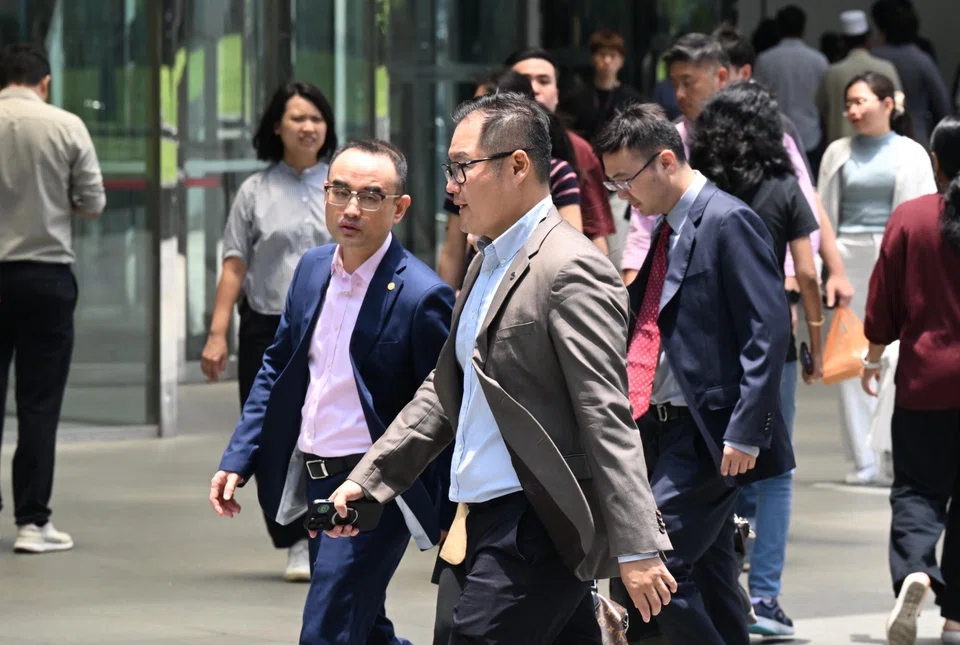
SINGAPORE’S financial sector is growing fast. Hedge fund assets under management in the Republic grew 37 per cent last year to just over S$6 trillion, according to the Singapore Asset Management Survey 2024. Employment in the financial sector increased by 4,800 in 2023, with senior roles held by Singaporeans trebling over a seven-year period, said Deputy Prime Minister Gan Kim Yong in a speech on Sep 13, 2024.
However, this expansion poses a pressing question. How will the industry’s ability to find and develop talent keep up the pace?
Traditional talent acquisition remains stubbornly linear, relying on familiar credentials and established recruitment channels. This approach assumes that good people are rare and that the best talent comes from predictable places.
What is needed instead is an exponential approach to talent discovery – one that recognises that exceptional ability is abundant but often overlooked, and that the key to finding it lies in building the biggest magnet for talent, casting wider nets and creating systems that can identify potential wherever it exists.
As artificial intelligence (AI) reshapes the skills landscape and global competition for financial talent increases, the risk of clinging to linear models is clear. They too often miss out unconventional candidates who may lack typical credentials, but possess the raw analytical talent that the industry needs.
Moreover, the sheer speed of technological change means that even well-designed talent discovery programmes risk becoming outdated before they fully mature. Continuous reinvention and reinvestment in human capital development is essential to remain competitive in this landscape.
Singapore as a talent magnet
Singapore has pursued deliberate policy choices and strategies tailored to become a magnet for talent for different industries. Its sustained investments in AI research, partnerships between universities and industry, and streamlined visa processes for skilled professionals have created powerful network effects, attracting more talent and opportunity.
However, to maintain its position as a leading talent hub, the country will need to keep deepening its investment in skills and education while ensuring access to global expertise. Programmes such as SkillsFuture continue to create new pathways for mid-career professionals to pivot to emerging fields, while the National AI Strategy 2.0 is shaping an AI-fluent workforce.
Coupled with the steady rise of the National University of Singapore (NUS) and Nanyang Technological University in global rankings, these efforts provide Singapore with a strong foundation – but sustaining that edge will require countering pressures such as rising living costs and competition from hubs such as Hong Kong and Dubai, and adjusting quickly to keep talent flowing in.
Industry’s role in shaping the next generation
Just as Singapore’s government created a network of policies to attract global talent, companies must build internal ecosystems to nurture it. Companies need to find ways to harness that special combination of creativity, curiosity and skill, wherever it exists, and build work environments that retain an evolving workforce over time.
At WorldQuant, for instance, our annual International Quant Championship (IQC) draws tens of thousands of participants worldwide, and Singaporean students have consistently ranked among the top, with NUS ranked second in the IQC Global University Leaderboard.
Indeed, talent is borderless, and Singapore’s ecosystem equips graduates to compete globally. But the larger lesson is not about any single company or contest; it is that talent can be found anywhere. The real test is whether systems can spot it early, give it room to grow and help it scale.
Companies should develop organising principles designed to accelerate all three, linked by a common philosophy of trusting in talent. One strategy: A global network of semi-autonomous offices helps to balance local decision-making and central direction, allowing leaders on the ground to make informed choices as well as find and develop talented individuals.
Similarly, companies that provide the autonomy and focus needed for deep, creative work, and rely less on tracking attendance, for example, will often have an advantage in attracting the curious and motivated people they need to excel in competitive industries. Teams generally respond well to this freedom. When people are not constrained by traditional coordination structures, they are more likely to find new ways of thinking and bonding over ideas rather than shared physical spaces.
The race ahead
While Singapore faces competition from other financial centres, few provide the same access to diverse ways of thinking and points of view, strengthening the quantity and quality of new ideas available to businesses. It is a result of policy action meeting policy goals, across different agencies – a solid foundation for long-term talent attraction and growth.
However, sustaining competitiveness cannot rest on the government alone. Companies face their own policy choices: maintain linear hiring practices and compete for a shrinking pool of traditional candidates or build systems that can discover and attract exceptional ability wherever it exists.
The businesses, and financial centres, that truly internalise this idea may find themselves with an advantage in the race for talent.
The writer is the chief executive officer and founder of WorldQuant