Global South grows in political potency
THE concept of the “Global South” dates back to the 20th century, yet the term’s usage has grown significantly since then, including in the 2020s following Russia’s invasion of Ukraine.
Politically, many of the developing countries of the South do not perceive the Ukraine conflict in the same stark moral terms as much of the West, and are therefore ostensibly unaligned in public. For many countries in Africa, Asia, the Middle East and Latin America, such non-alignment has significant appeal. A wide number depend heavily on trade, aid, investment and/ or weaponry from both Western powers and from China, if not also from Russia.
Economically, one of the consequences of Moscow’s invasion, plus also the pandemic, has been the stunting of growth in many of these nations, too. It is in this hugely dynamic context that moves are afoot to bring greater organisational identity to the South. To be sure, there have long been forums such as the G77, which is a coalition of well over 100 developing countries, designed to promote collective economic interests and create an enhanced joint negotiating capacity in the United Nations.
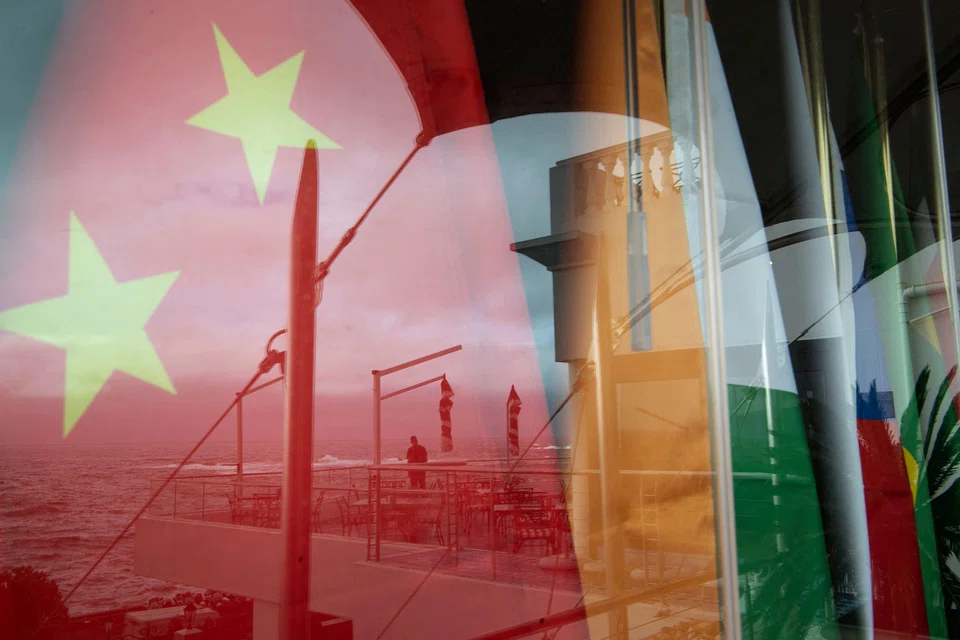
However, in the aftermath of the Ukraine conflict, moves are also being expedited to expand the prestigious Brics club, which comprises Brazil, Russia, India, China and South Africa. With the latest Brics summit in the second half of August in South Africa, the five-nation bloc plans to announce its expansion following some 22 formal requests and over 20 informal ones from other developing countries in recent times, including reportedly Saudi Arabia, the United Arab Emirates, Indonesia, Bangladesh, Argentina, Egypt, Iran, Cuba and Kazakhstan.
While the Brics countries appear aligned on the group’s expansion, in principle, there are in fact competing agendas on this core issue within the bloc. On one pole, India wants strict rules on how and when other nations could move closer to the group without formally enlarging it. Meanwhile, Brazilian President Luiz Inacio Lula da Silva is reportedly cautious too, given the possibility of alienating the United States and European Union.
Of the five nations, it is China that potentially favours the most rapid expansion of the bloc, partly for geopolitical reasons. Its goal is that an enlarged Brics becomes a Beijing-friendly hub. China therefore sees itself as the leader of the bigger group, and the emphasis it is placing on energy and food security in its recent peace plan position paper on Ukraine is aimed, in part, at developing countries feeling the impact of the war’s negative economic effects.
While the origins of some other recent emerging market forums such as the Shanghai Cooperation Organisation (SCO) lies in defence and security, it is economics that drove the formation of the Brics bloc, reflecting the fact that the five powers now account for around a quarter of global gross domestic product (GDP) and over 15 per cent of world trade. In their first decade of partnership, the bloc became a more cohesive force with a strong desire to advance their development strategies by coordinating macroeconomic policy.
Yet, while the bloc was originally formed for its economic potential, it has also seen political cooperation rise to the fore. This growing political bent is exemplified by this year’s South African presidency of the club of emerging market powers, with the emphasis on expansion which, it is presumed, will allow Brics to better promote their interests abroad, strengthening positions which are sometimes ignored by Western colleagues.
This underlines the hunger of the bloc to become even bigger political players, raising fears in some quarters that Brics could, ultimately, become a unified anti-Western alliance. However, this is most unlikely in the immediate future.
This not least given differences between China and India, including over border issues which can adversely impact relations between the two. This has been one driver of the so-called anti-China Quad of powers comprising India, the United States, Japan and Australia.
At the same time that Brics are stepping up their political cooperation, there is some growing scepticism of the relevance of the group as an economic club, given the diverging long-term economic trajectory of the five nations. This has seen generally robust economic performance in China and India over the past decade, contrasting with disappointing results in Brazil, Russia and South Africa.
The result is that the group is now unevenly balanced. China’s output of US$19 trillion in 2023 will be around 50 times that of South Africa’s.
Yet, with Brics already accounting for around a quarter of global GDP, up by over 10 percentage points from around a decade ago, their overall growth is already having a major global impact, despite their diverging fortunes. Data showed that, beginning in around 2020, the Brics as a whole now contribute more towards global GDP than the G7 industrialised nations do, in terms of so-called purchasing power parity. The five developing countries are projected to further extend their lead over the seven industrialised ones in the rest of this decade, even before any expansion of the Brics.
Remarkable and historic as that data is, World Bank research also showed another extraordinary conclusion. That is, for the first time in some two centuries, overall global income inequality appears to be declining, driven by Brics, specifically the collective economic growth and very large populations of India and China.
At the same time, however, there is an opposing force: growing income inequality within many countries. This has assumed growing political salience, helping fuel populist, nationalist politicians including Brazil’s former president Jair Bolsonaro.
These countervailing pressures are pushing against each other. While the net global trend for the past two centuries has been towards greater overall income inequality, there is growing evidence in the last two-and-a-half decades that the “positive effect” of growing income equality between countries, spurred by China and India, is superseding the “negative effect” from increasing inequality within nations.
Especially post-pandemic, it is unclear whether the bloc and wider development of the Global South has enough momentum to keep driving forwards a more equitable world order. So this will therefore be one of the major agenda items at the upcoming summit in Johannesburg.
While the coherence of the Brics as an economic club is therefore increasingly questioned, the group has helped drive, alongside the wider South, what appears likely to be the first period of sustained movement towards greater global income equality for centuries. Yet, the fragile process could yet go into reverse, post-pandemic, especially if growth in China and India plateaus significantly.
The writer is an associate at LSE IDEAS at the London School of Economics