Go bold or go bust: Are the best days over for Singapore’s economy?
The country must make bold moves to define its next chapter of growth, or risk being left behind
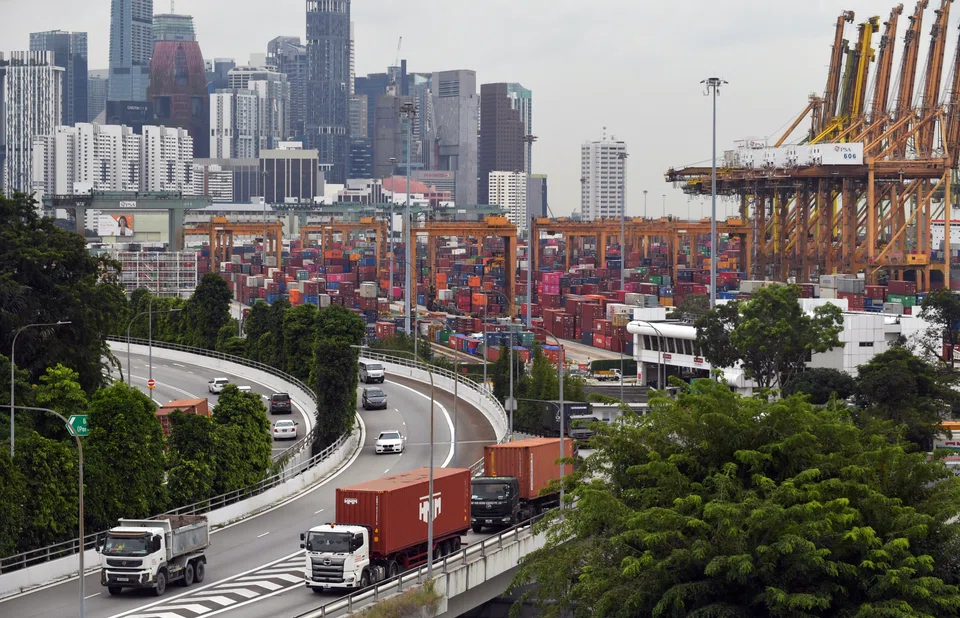
SINGAPORE’S rise from a poor nation to a global hub in one generation is a modern-day success story. Our gross domestic product grew forty-fivefold and per capita income twenty-fivefold by pivoting our economic strategies: export-led in the 1960s, capital-intensive in the 1980s, and knowledge-based in the 2000s.
We now stand on the cusp of another pivot. We either drift into slow, mature growth, or leap onto the next “S-curve”. Geo-economic contestations, climate change and macroeconomic uncertainty demand a new way of thinking. Rapid technological advancements present opportunities – if we can seize them – to overcome our immutable constraints in land, manpower and carbon.
At the Global-City Singapore: SG60 and Beyond-themed conference organised by the Institute of Policy Studies and Singapore Business Federation in July, Prime Minister Lawrence Wong called for “big, bold moves”.
That task now rests on the Economic Strategy Review (ESR) committee. This time, we cannot be quick followers – we must be pathfinders. Five bold moves could define the next chapter of our economic growth story.
1. Overcome resource constraints through shared prosperity
It is said that geography is destiny. But it need not be limiting.
The Johor-Singapore Special Economic Zone is a bold move to overcome our resource constraints. Through twinning operations, businesses can reap the best of both worlds – lower costs of manpower, land and energy in Johor, and quality services and connectivity in Singapore.
The Rapid Transit System Link, with the ability to move 10,000 passengers an hour in six minutes, will be the first test in redefining what economic integration between the two countries could look like.
Yet, vigilance is key. Hong Kong/Shenzhen shows how integration could undermine our dynamism. If complementarity turns into competition, industries and domestic services are at risk of hollowing out.
We need to maintain our unique edge while deepening our relationship with Johor to make “two countries, one ecosystem” a true advantage.
Reviving the Singapore-Johor-Riau Growth Triangle (Sijori) could be the next leap. Unlike in 1994, today’s political climate creates space for Sijori 2.0. But success hinges on our ability to identify suitable activities that can be complementarily done in Riau and not Johor, and developments that dovetail with Indonesia’s economic development plans for Riau.
2. Deepen integration as a bulwark against protectionism
As globalisation gives way to a world of “clubs and fences”, our Asean membership is more valuable than ever. We must deepen integration within the bloc while broadening ties with more like-minded countries.
But significant non-tariff barriers (NTBs) in Asean remain a challenge. Divergent standards, inconsistent certification and inefficient import licensing impact small and medium-sized enterprises (SMEs) disproportionately.
At the same time, Asean has the potential to establish an integrated critical mineral and clean-energy value chain.
With Singapore chairing Asean in 2027, eliminating NTBs and pursuing an Asean green economy framework agreement must be our priority.
To eliminate NTBs, we should push for greater transparency through the Asean Single Window, harmonised standards via the Asean Guidelines on Good Regulatory Practices, and stronger capacity-building across the region.
To be a leader in the green transition, we should advocate harmonised carbon markets, cross-border renewable power through the Asean Power Grid, and unified green finance taxonomies to attract global climate capital.
Asean must also look outward, at strengthening existing trade agreements such as the Regional Comprehensive Economic Partnership, and pursuing new free trade agreements with the European Union, Gulf Cooperation Council and Latin American countries.
This is to build a more resilient, unified economic bloc capable of withstanding global headwinds and securing regional stability.
3. Establish Singapore as a capital of trust
Trust is the new gold in a contested world. We have prospered as a safe harbour, and as a regional hub for trade, services and human capital.
We must now be a global hub to facilitate flows of the new economy in technology and innovation. This includes cross-border data standards, artificial intelligence governance and carbon markets.
Exercising institutional leadership in these areas will let us shape rules, be early adopters and create spillovers for our professional and financial services.
Trust also anchors Singapore status as a premier wealth management hub. But competition is fierce, and scrutiny over anti-money laundering and know-your-customer compliance is rising. To safeguard our edge, we must evolve our rules and develop the capabilities to deal with complex compliance issues related to cross-border transactions.
4. Build local global giants and diffuse technology
Home-grown companies strengthen our economic resilience in a world where national security often overrides economics. They diversify our economy, drive innovation and shield us from supply chain shocks.
We already have champions such as Singapore Airlines, DBS and CapitaLand, but by global standards, Singapore is under-represented. We must be bolder in scaling more local firms into global giants, especially in sectors that capture the new economic flows in data, technology and carbon.
Temasek and GIC can catalyse this push, deploying patient capital, backing strategic acquisitions, and forging partnerships to nurture local champions in both established and emerging sectors.
At the same time, we need to level up local enterprises by widening their access to national research and development resources, and accelerating the diffusion of technologies to our SMEs.
After two decades and S$80 billion under successive Research, Innovation and Enterprise plans, we have established good basic research capabilities that have anchored many multinational corporations.
We can do more to make these accessible to SMEs – embedding our scientists in companies, co-developing licensable intellectual property, and raising technology capacity in the entire ecosystem.
This would help to address what our surveys indicate as the limiting factors in technology adoption for SMEs, which extend beyond financial resources to technical know-how and business-process expertise.
Trade associations and chambers can also play the role as the last-mile agents, diffusing new technologies more quickly by leveraging their sectoral knowledge and business networks.
5. Enable businesses to strengthen our social compact
If foreign policy begins at home, then economic policy ends at home. The backlash against globalisation is a grim reminder that economic policies that do not translate into tangible benefits for the general population do not play out well.
Singapore must not let this happen. Growth must enable Singaporeans to live well in a place they proudly call home.
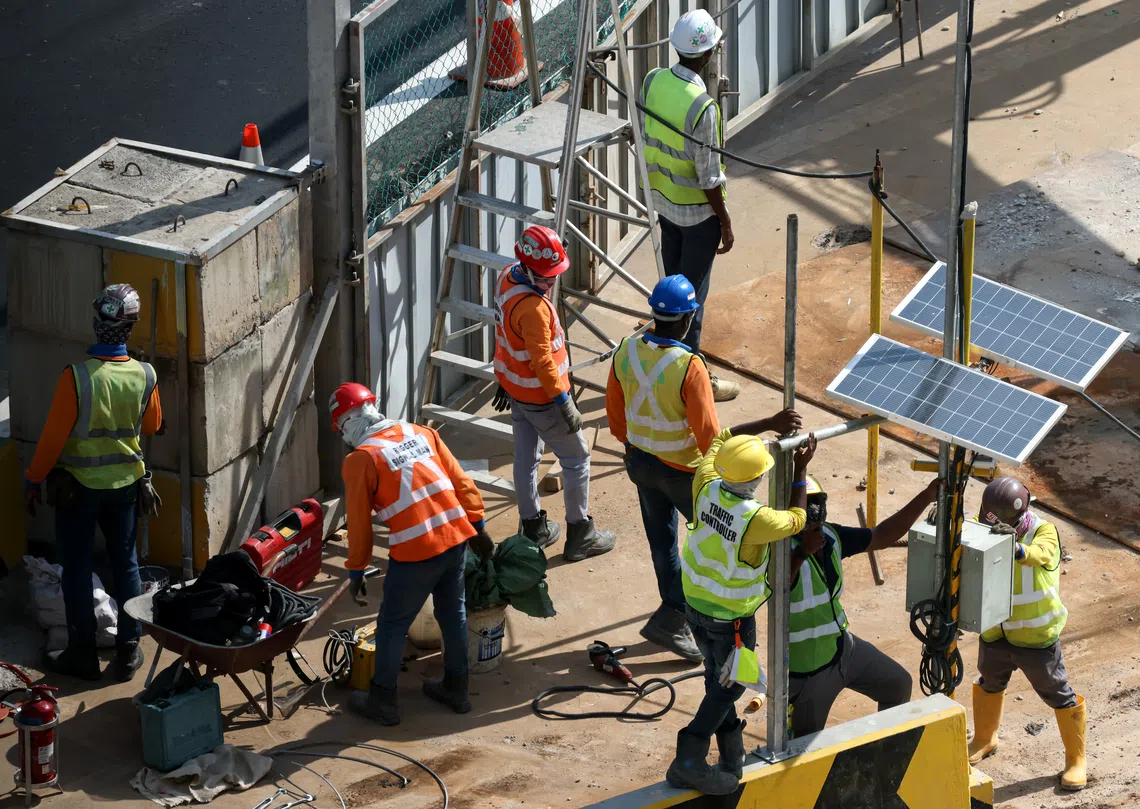
Businesses have a role in strengthening the social compact – investing in employees or engaging with the community through sustained corporate volunteering and donations. But companies struggle to prioritise such initiatives, with costs, inadequate manpower and unclear returns being barriers.
Incentive drivers and capacity-building programmes can reduce the cost burden, lower entry barriers and strengthen the business case for companies to translate intent into action.
Efforts to strengthen social cohesion should not just target our locals, but also the foreigners who live and work among us. That will help us achieve the “we‑first society” advocated by PM Wong.
Our ability to integrate foreigners while preserving the Singapore core will increase our economic potential and relevance.
Towards a brighter future
The choice for the ESR committee is clear: Leap boldly onto the next S-curve with transformative moves, or risk stagnating on the current trajectory.
The cost of inaction is steep: a drift into slow growth, hollowed‑out industries, loss of competitiveness, and a fraying social compact. Singapore’s best days lie ahead – provided we seize them with courage, imagination and unity.
The writer is chief executive officer of Singapore Business Federation