‘Golden age’ of EU-Japan ties shapes international relations
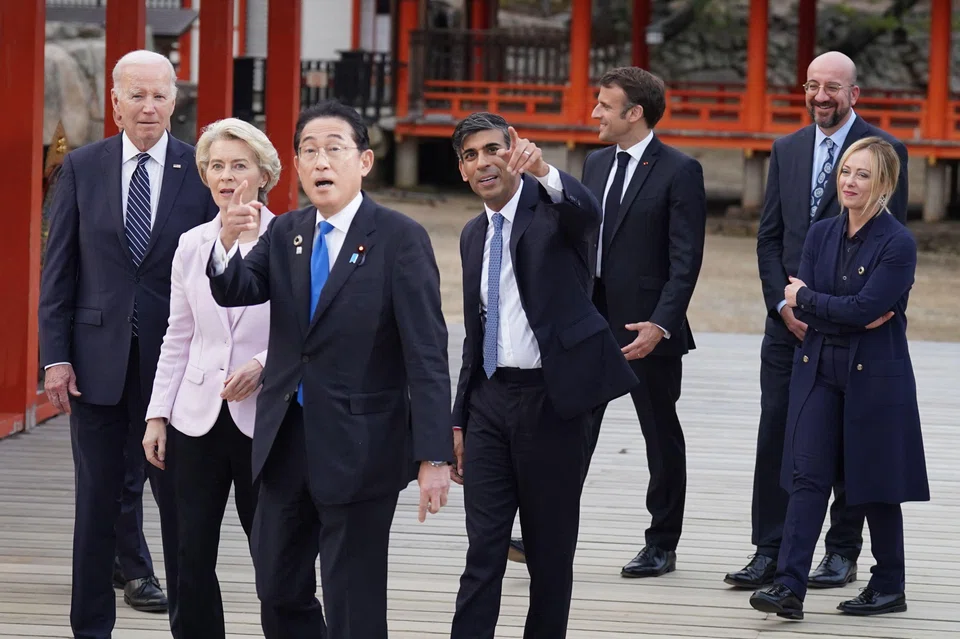
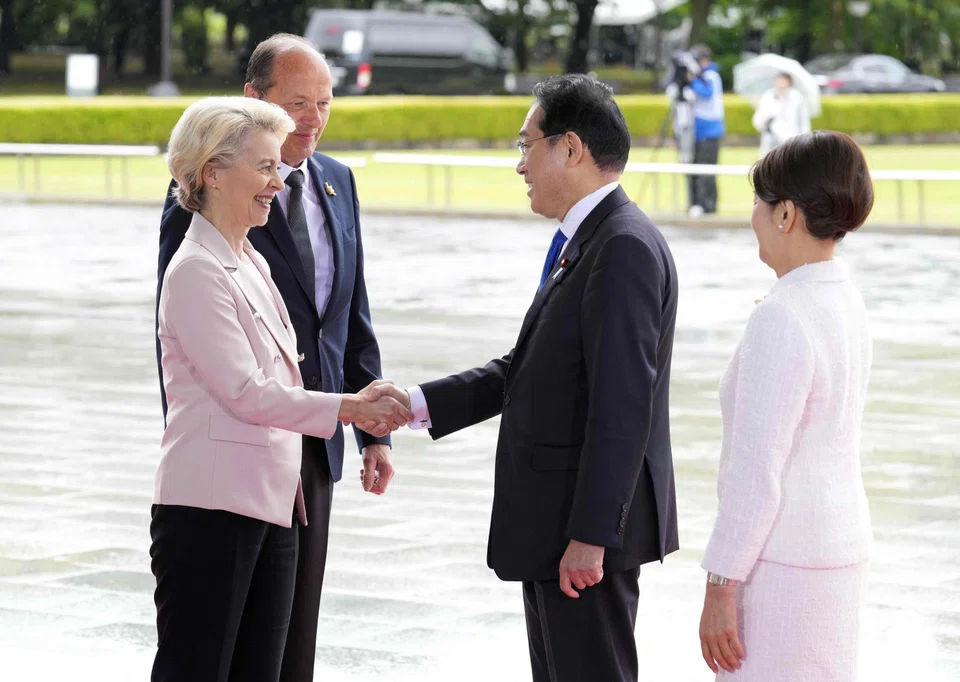
THE EU and Japan have long been post-war allies, but there are growing signals that the relationship is entering a “golden age” with key economic and geopolitical ramifications well beyond the bilateral partnership.
Grand terminology such as “golden” is, of course, subjective in nature, and can be prone to reversal. For instance, the UK and China declared a “golden era” under the prime ministership of David Cameron after 2010; however, this has since been hastily jettisoned given the range of bilateral challenges since then.
Yet, there do appear strong reasons why the “golden” adage is highly applicable to EU-Japan relations, especially since the Ukraine war began, with bilateral ties at what may be an all-time high.
While politicians in the two powers have not yet used the specific term extensively, it has been picked by a growing number of key thinkers, including the European Council on Foreign Relations research institute, and leading diplomats such as Jean De Ruyt, the former Belgian permanent representative to the EU, Nato and the United Nations.
One of the reasons for usage of the “golden” term is the wide range of important agreements between the two powers in recent years. This includes the Economic Partnership Agreement; the EU-Japan Strategic Partnership Agreement; the bilateral “Green Alliance”; and the Partnership on Sustainable Connectivity and Quality Infrastructure.
Moreover, the joint declaration signed during last year’s EU-Japan summit in May 2022 also underlined the growing bilateral common ground. This is underpinned not just by longstanding cooperation, but also strong, shared values and principles such as democracy, the rule of law, human rights, good governance, multilateralism and open market economies.
What is particularly striking about the evolution of bilateral relations in recent years is how what has traditionally been a partnership founded on economic cooperation has evolved into a deeper security relationship too. The latter has become particularly pronounced during the Ukraine war, but is not limited to the European theatre only since Russia’s invasion.
There has been a significant growth of interest and understanding within Europe of the Asia-Pacific. This was showcased when the EU published its new strategy for cooperation in the region, which clearly demonstrated that Brussels views Japan as a key partner there, with new economic cooperation in key sectors such as railways to wider security activities such as joint naval exercises.
The growing depth and breadth of bilateral relations will be showcased at the upcoming EU-Japan summit on Jul 13. That agenda will include next-steps implementation of the bilateral strategic, economic, and connectivity partnerships.
Inevitably, it will be Ukraine that is top of the agenda items, especially in the context of the upcoming Nato summit. Japan, which was invited last year for the first time to the military alliance’s leadership conference, has been steadfast in its support for Ukraine since Russia’s invasion, including clear international leadership during its chairing of the G7 in 2023. In this time, it has sought to draw a parallel between the security threat Russia poses to Ukraine and wider Europe, and that which China poses in the Asia-Pacific.
The warming of the EU-Japan defence relationship therefore comes amidst growing mutual concern about Moscow and Beijing.
Meanwhile, the Trump presidency from 2017 to 2021 showed that the US may not always be the very dependable ally it once was, especially with the possibility that Donald Trump could win again in next year’s presidential election. Whereas some politicians in Europe and Japan may have regarded the bilateral security alliance as non-essential in the past, it is therefore now increasingly viewed as indispensable.
Take the example of France – the EU’s only nuclear weapons power – and Japan, which are strengthening security ties, with Paris intending to make the Asia-Pacific a priority axis of its diplomacy. France, which is already active in Japan’s civil nuclear industry, also wants to strengthen its presence in Japan’s military industry, as Tokyo recently announced a significant increase in its armed-forces budget.
Beyond Ukraine, there is a rich forward agenda of ideas to move the bilateral partnership into ever more positive territory. This includes boosting maritime security cooperation; enhancing infrastructure development; better aligning the EU’s Global Gateway agenda; and the EU-japan Partnership on Sustainable Connectivity and Quality Infrastructure.
Building from the bilateral “Green Alliance”, there is also significant scope for enhancing the partnership in energy security, decarbonisation and green supply chains, including critical minerals. This is especially so given mutual concern about the US Inflation Reduction Act.
For instance, the recent EU-Japan Memorandum of Cooperation on Hydrogen underlines the strength of the two powers in this area, as shown in a study jointly conducted by the European Patent Office and International Energy Agency (IEA).
The study, which assessed patents filed for all technologies relating to hydrogen between 2011 and 2020, found Europe and Japan to be ahead of the pack of other world powers.
What all this illuminates is the increased opportunity for the EU and Japan to make a much bigger global impact, across wide-ranging issues, amid a fast-changing global geopolitical and economic landscape.
A model for what could be achieved is shown by the leadership both powers have shown on the international trade and rules-based economic order agenda in recent years.
This bilateral push stepped up several gears during the Trump presidency, as the US de-emphasised this agenda amid the administration’s focus on “America first”.
At much the same time, the EU-Japan trade agreement – covering around a third of global GDP and almost 650 million people – showed a different pathway forward to the world promoting commitment to multilateralism and trade liberalisation.
The deal was not only important in itself, but also helped shape the wider diplomacy of trade negotiations at key forums such as Japan’s G20 in 2019 and various G7 leadership meetings of the era.
In 2017 in Germany, for instance, there was a significant clash between Trump and then-chancellor Angela Merkel who hosted the talks. The latter, as well as European and Canadian partners, pushed for a strong G20 re-affirmation of international trade liberalisation. Meanwhile, the then-US president secured a partial victory in inserting language in the end-of-summit communique that countries can protect their markets with “legitimate trade-defence instruments”.
Taken overall, the upcoming EU-Japan summit will therefore showcase why bilateral ties are at such a historic high. The two have become global leaders around issues such as the multilateral trade system, rules-based economic order and liberal democracy itself, and this could extend in coming years to wider agendas such as energy security and green growth.
The writer is an associate at LSE IDEAS at the London School of Economics