

Golden Energy’s big deal: IFA evaluation of exit offer warrants closer examination by regulators
If the authorities do nothing, future delistings could be packaged with extraneous elements to enable IFAs to agree they are fair and reasonable

THE proposed break-up and delisting of Golden Energy and Resources (Gear) is widely seen to be unfavourable for minority investors. But one shareholder of the company thinks the deal also breaches the spirit, if not the letter, of the Singapore Exchange’s (SGX’s) rules on delistings and exit offers.
Jeremy Raper, a full-time private investor who claims to own three million Gear shares, told me last week that he has conveyed his misgivings about the deal to the Monetary Authority of Singapore, the Securities Industry Council as well as SGX. He is hoping this will trigger an official examination of the proposed transaction, and improved terms for minority shareholders of Gear.
What exactly is the problem with the deal? The appointed independent financial adviser (IFA) is being asked to opine on whether the proposed distribution in-specie of Gear’s controlling stake in Indonesia-listed Golden Energy Mines (Gems) and the subsequent exit offer for Gear at S$0.16 per share – when taken together as a single transaction – are fair and reasonable.
The distribution in-specie of Gems and the delisting of Gear are inter-conditional on each other.
Raper told me last week the two elements of the transaction should not be conflated, and the appointed IFA – W Capital Markets – should be required to provide an opinion on whether the exit offer on its own is fair and reasonable.
SGX tightened up its rules on delistings in July 2019. Under Rule 1309, companies seeking to delist from SGX must make an exit offer in cash. The company must also appoint an IFA, and “the IFA must opine that the exit offer is fair and reasonable”.
The rule, as it is written, does not provide for aspects of a wider corporate transaction to be considered alongside an exit offer. But the rule does not specifically disallow it either.
Raper wants Singapore’s market regulators to now make it clear that all exit offers must be assessed separately by IFAs, and judged to be fair and reasonable before being allowed to proceed.
When asked about the manner in which Gear’s IFA is going to opine on the company’s delisting, an SGX Group spokesperson said: “SGX RegCo is awaiting the finalisation of the IFA opinion and the board’s recommendation and will review the outcome thereafter.”
Stanmore’s visible value
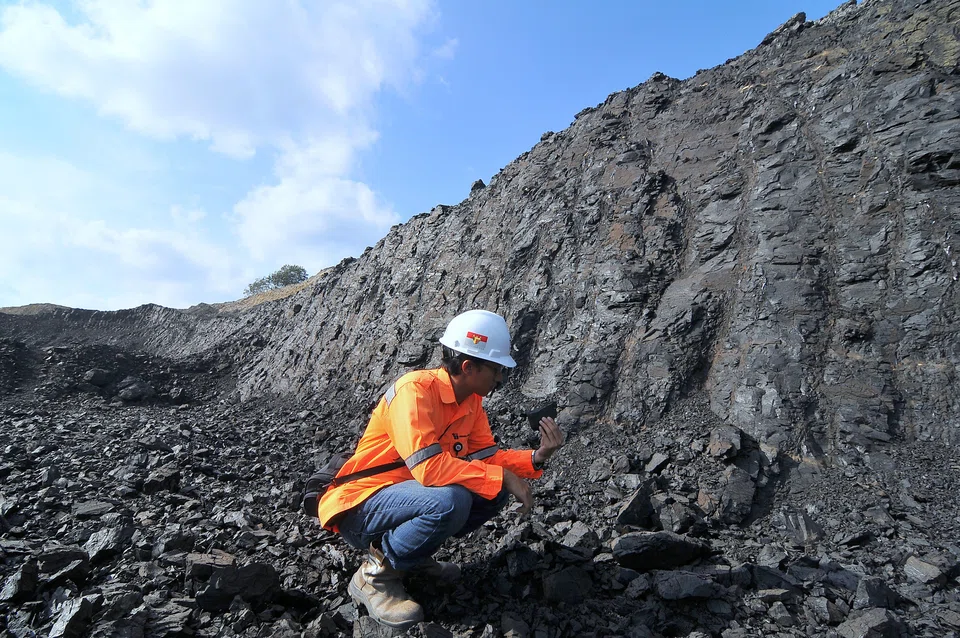
Gear said when it unveiled its proposed break-up and delisting on Nov 9 that a key rationale for the transaction is to cut its exposure to the thermal coal business conducted by Gems, which is currently facing environmental, social and governance (ESG) pressures.
Under the deal, shareholders of Gear can choose to receive 1.3936 Gems shares (which were trading at 7,100 rupiah per share at the time of the announcement) for every Gear share they hold; or a cash consideration of 7,664.8 rupiah (which prices their entitlement of 1.3936 Gems shares at 5,500 rupiah per share).
On top of this, shareholders of Gear will receive the exit offer price of S$0.16 per share.
Gear shareholders who opt to receive Gems shares will be getting a total effective consideration of S$1.045 per share, based on the market price of Gems and SGD-IDR exchange rates at the time of the announcement. Shareholders of Gear who take the cash option for their Gems shares will be getting a lower effective consideration of S$0.846 per share.
Raper told me last week that he isn’t too concerned about the relatively low price being offered to Gear shareholders who choose to receive their Gems entitlement in cash, as Indonesia is not a developed market and Gems has limited trading liquidity.
Gear owns 62.5 per cent of Gems. A further 30 per cent of Gems is held by Radhika Jananta Raya, a wholly-owned subsidiary of Indonesia-listed ABM Investama. Gems closed Friday (Feb 17) at 6,575 rupiah.
Raper’s gripe with the proposed deal is that the exit offer of S$0.16 per share for Gear undervalues its remaining assets, which include the 64 per cent stake in Australia-listed metallurgical coal producer Stanmore Resources and a 50 per cent stake in gold miner Ravenswood Gold Group.
The value of Stanmore is particularly visible to international investors, as it is listed in a developed market and has performed strongly. Indeed, Raper said it was his interest in Stanmore’s potential that led him to invest in Gear in the first place. The way he saw it, Gear offered an indirect but cheaper means of gaining exposure to Stanmore.
Raper told me last week that Gear’s minority shareholders would probably be better served if the company proposed a distribution in-specie of its stake in Stanmore rather than its stake in Gems.
Stanmore has delivered a total return of 251.9 per cent over the past year, and currently has a market capitalisation of A$3.5 billion. This puts the market value of Gear’s stake in the company at more than S$2 billion, or some S$0.77 per share – which is almost equivalent to Gear’s market price of S$0.81 per share.
Gems has delivered a total return over the past year of 16.9 per cent, while Gear has returned 118.9 per cent.
Regulatory test case
This column said on Nov 14 that the break-up and delisting of Gear will actually do nothing for the environment. Certainly, the deal will not result in Indonesia’s Sinar Mas group and its controlling Widjaja family reducing their involvement in the thermal coal sector.
Gear is 77.5 per cent-owned by Indonesia-listed Dian Swastatika Sentosa, which is in turn 59.9 per cent-owned by Sinar Mas Tunggal. So, the distribution in-specie of Gear’s 62.5 per cent stake in Gems will only result in another corporate entity linked to Sinar Mas becoming the single largest shareholder of Gems.
Gear itself will still be controlled by the Widjaja family after it is delisted. The entity that is offering to take Gear private at S$0.16 per share is a recently incorporated Singapore company called Duchess Avenue that is ultimately owned by Lanny Tranku, the spouse of Indra Widjaja.
Still, the ESG narrative Gear has wrapped around its proposed break-up and delisting could provide its appointed IFA with justification to wave through the miserly exit offer.
From a regulatory standpoint, this could well be an interesting test case. If the authorities do nothing and the proposed break-up and delisting of Gear succeeds, many future delisting proposals could be similarly packaged with extraneous elements to enable IFAs to agree they are fair and reasonable.
On the other hand, forceful regulatory intervention in the Gear case could scupper the whole deal and lead to a surge in volatility in Gear’s share price – at least in the short term.
Perhaps the best outcome for the market as a whole is if the authorities were to clarify that IFAs should evaluate exit offers solely on their own merits, leading to Gear’s board negotiating a substantially better exit offer for its minority shareholders.
But, after observing the local market for several years, I fear that might be expecting too much of all the players involved.
The writer owns shares in Golden Energy and Resources.






