Governance-based market indices are worth exploring
A Singapore Governance Leaders Index would reward transparency, responsibility and board quality while enabling meaningful distinction between firms
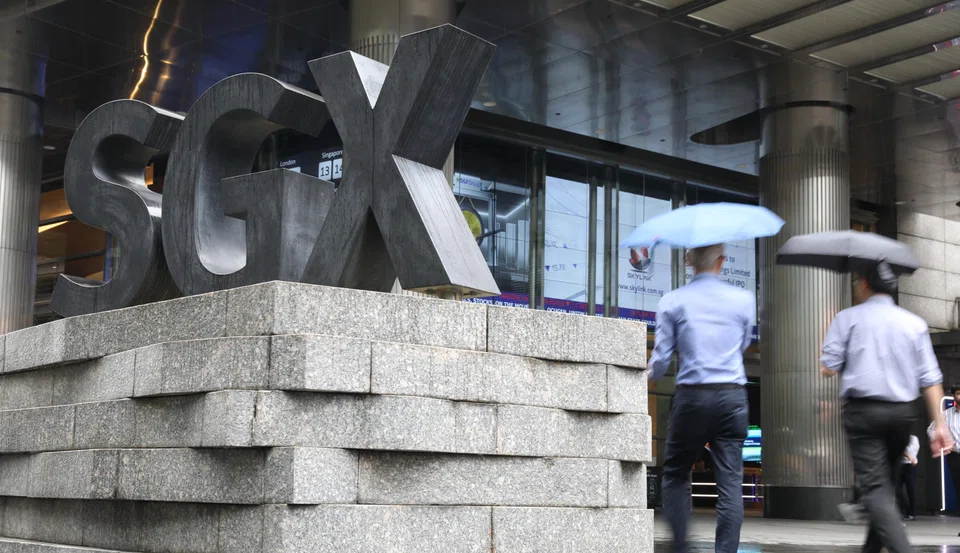
[SINGAPORE] Last month, a reader wrote to The Business Times, expressing disappointment that the two new stock market indices launched by the Singapore Exchange (SGX) used established but simple market capitalisation and liquidity criteria for inclusion, instead of employing other, more progressive considerations such as corporate governance quality or shareholder value practices.
This is an interesting and timely suggestion because several countries, including Turkey, Taiwan and South Korea, have already launched indices that track companies meeting high governance standards and/or regularly adopt practices that enhance shareholder value.
For example, in Turkey, the BIST Corporate Governance Index tracks listed companies that meet specific corporate governance standards.
It is designed to measure the price and return performance of these companies based on their compliance with corporate governance principles, such as board independence, public disclosure and shareholder rights.
In Taiwan, the CG 100 Index was launched in 2015 to showcase the market’s top performers in governance. According to its website, “the main criterion for eligibility is for companies to score in the top 20 per cent of the corporate governance evaluation system”.
Moreover, regulators use liquidity and financial health screenings “to determine index membership and ensure that the index is ideal for passive investment products or as a benchmark for pension funds”.
South Korea took a slightly different approach, focusing on companies that comply with the government’s “value-up programme”.
Its Korea Value-Up Index has 100 constituents. Interestingly, not all from the mainboard; 33 are from the junior board, but all are selected using criteria such as dividends, share buybacks, price-to-book and return on equity.
Singapore’s regulatory framework already mandates extensive disclosures that can be quantified into measurable metrics that form the Singapore Governance and Transparency Index (SGTI). These scores appear in the extreme right column of the Singapore Exchange’s (SGX) free stock screener screens.
These scores are calculated based on important considerations such as board composition and independence; gender diversity; separation of CEO and chair roles; treatment of shareholders; and the timeliness and quality of corporate announcements.
By building on existing information compiled for SGTI reporting, a Governance Leaders Index can be constructed with minimal additional reporting burden, while enabling meaningful differentiation among firms.
For companies, inclusion in such an index would be more than symbolic. It would enhance visibility with institutional investors and offer a reputational advantage.
SGX could publicly recognise index constituents and eventually partner fund managers to launch either a passive or active Governance Leaders Exchange-Traded Fund. This would create a financial incentive for companies to adopt stronger governance practices.
Beyond its role as an investment tool, a Governance Leaders Index would also serve an important educational purpose.
It would highlight the tangible benefits of strong governance for both investors and issuers, helping to raise public awareness about corporate accountability – something which is often lacking in investment recommendations.
For mid-cap and smaller firms – often laggards in governance – it would create an aspirational benchmark and a pathway to greater investor recognition.
A Singapore Governance Leaders Index would fit with the current shift towards relying on enlightened market discipline and away from regulatory prescription.
By rewarding transparency, responsibility and board quality, SGX would strengthen trust in a disclosure-driven environment while encouraging companies to see governance not as a regulatory chore, but as a strategic advantage. It’s certainly worth exploring.