

The Great Singapore Office Sale: What’s driving the surge in deal activity in the office market?
Lower interest rates are helping to fuel a resurgence in Singapore office investment sales. But will there be takers for all these chunky deal sizes?

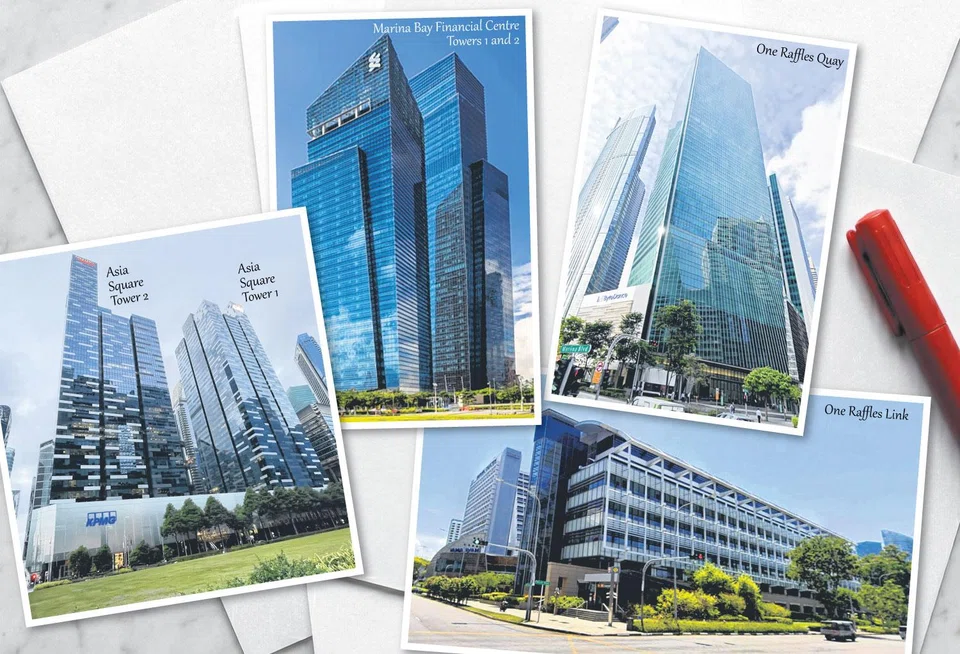
[SINGAPORE] Lower interest rates, tight office supply in the Republic’s Central Business District (CBD) and pent-up demand from investors armed with dry powder have helped to fuel a resurgence in Singapore office deals since the second half of last year.
Including the S$2.48 billion sale of Asia Square Tower 2 announced on Monday (Apr 20), the tally for office investment sales in the city-state has reached S$10.74 billion in the year to date.
This figure from JLL Research, as at Monday, is 2.7 times the S$4 billion for the whole of 2025, which was a three-year high.
The revival of transactions has taken place against the backdrop of a significant decline in interest rates last year.
Tricia Song, head of research for Singapore and South-East Asia at CBRE, estimates that borrowing cost fell from about 4 to 5 per cent as at the end of 2024 to 2.5 to 3.5 per cent as at end-2025.
“This has enabled office assets, which typically trade at 3 to 4 per cent net yield, to generate positive carry, making them more attractive to buyers.”
“Buyers definitely have choices both in terms of asset class and geography.”
JEREMY LAKE OF SAVILLS SINGAPORE
Knight Frank Singapore chief executive officer Galven Tan, too, has noticed that “the drop in financing costs is drawing buyers who were sitting on the sidelines during the elevated interest-rate environment – from the second half of 2022 to late 2024 – back to the table”.
“Overall, sellers are pricing in the reality that the bid-ask spread has narrowed meaningfully, and there could be a window of opportunity to exit,” Tan adds.
Industry observers say that the office-buying fervour is across a range of profiles.
SEE ALSO

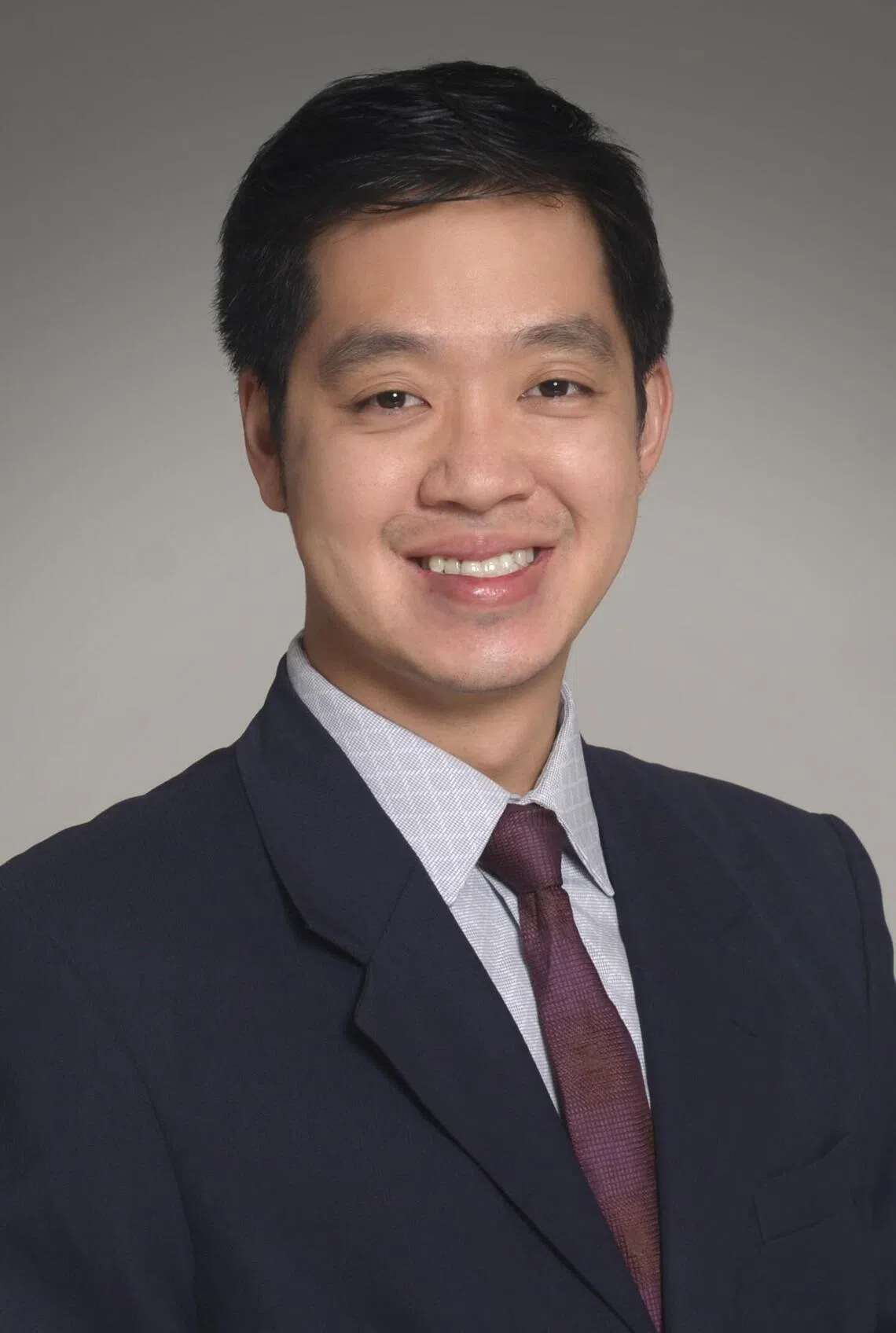
Dr Chua Yang Liang, JLL’s head of research and consultancy for South-east Asia, citing MSCI Real Capital Analytics data, notes that real estate investment trusts (Reits), other listed entities and cross-border capital were the dominant buyers of Singapore office buildings from late 2025 to early 2026.
“This year, we are also seeing an emergence of private capital, with firms like Altallo Asset Management, Kuok Group and Elevate Capital Group becoming more active,” he adds.
“Notable cross-border sources of real estate investment capital flowing into Singapore office buildings include APG Asset Management, Hongkong Land, Qatar Investment Authority (QIA), and IOI Properties Group (IOIPG),” says Dr Chua.
Game changer
Jeremy Lake, managing director of investment sales and capital markets at Savills Singapore, believes that the catalyst for the surge in office transactions is Hongkong Land setting up the Singapore Central Private Real Estate Fund (SCPREF).
The transaction, which he describes as a “game changer for the Singapore office market”, was part of the company’s pivot towards property fund management under the new direction charted by Michael Smith, who was appointed chief executive in April 2024.
Before transferring its interests in its Singapore commercial portfolio into SCPREF, Hongkong Land had to first offer its one-third interests in its jointly developed commercial projects to its joint venture (JV) partners. By the acceptance deadline of Dec 11, 2025, Keppel Reit agreed to buy Hongkong Land’s interest in Marina Bay Financial Centre (MBFC) Tower 3 for S$1.45 billion.
Hongkong Land subsequently transferred its one-third stakes in MBFC Towers 1 and 2 and Marina Bay Link Mall as well as One Raffles Quay, together with its 100 per cent interest in One Raffles Link, to SCPREF.
At the fund’s launch on Feb 3, it was revealed that QIA’s 100 per cent interest in Asia Square Tower 1 was part of the fund’s initial S$8.2 billion portfolio.
Besides Hongkong Land, the other investors named at the fund’s inception are: QIA, APG Asset Management and a South-east Asia sovereign wealth fund.
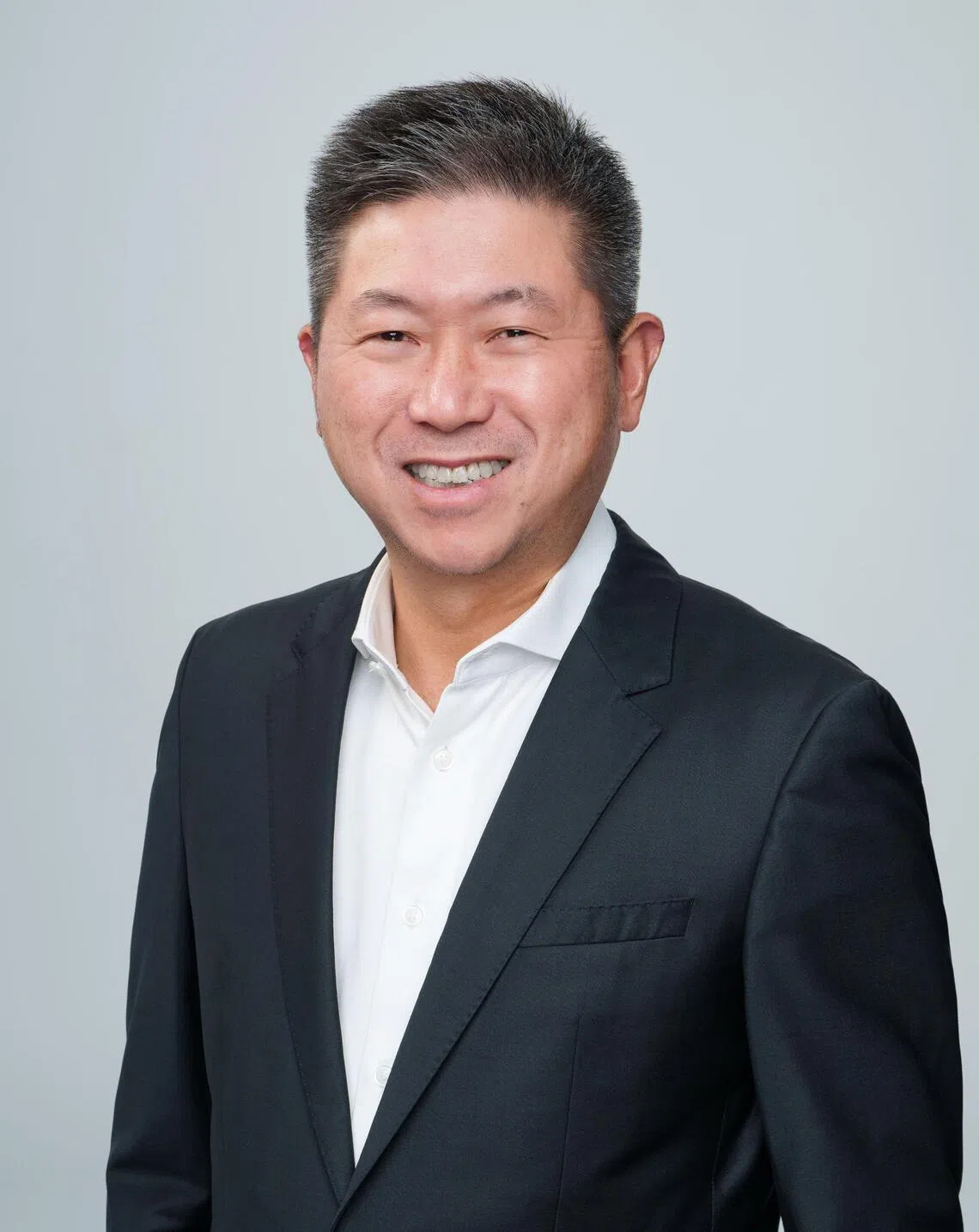
Lake of Savills Singapore highlights that another stimulus for the market has come from IOIPG.
After its acquisition last year of its JV partner’s 50.1 per cent stake in the South Beach project’s commercial components including a substantial office component, IOIPG announced earlier this week that it will buy CapitaLand Integrated Commercial Trust’s interest in Asia Square Tower 2.
More offerings, but will there be buyers?
“More office buildings are likely to come to the market. Some will sell and some will not. Pricing will be key,” adds Lake.
The Business Times reported earlier this year that a Khazanah Nasional and Temasek joint venture has appointed JLL and Eastdil Secured to advise it on a sale of Marina One’s 1.88 million square feet (sq ft) of net lettable area of office space and 140,000 sq ft of retail space. The total asking price is said to be in the S$5 billion to S$6 billion range.
The owners of One Raffles Place have appointed CBRE and JLL as joint marketing agents to find a buyer for the asset; the asking price is said to be about S$2.5 billion.
CBRE and Cushman & Wakefield (C&W) have been appointed to find a buyer for Bugis Junction Towers; the guide price is said to be S$685 million.
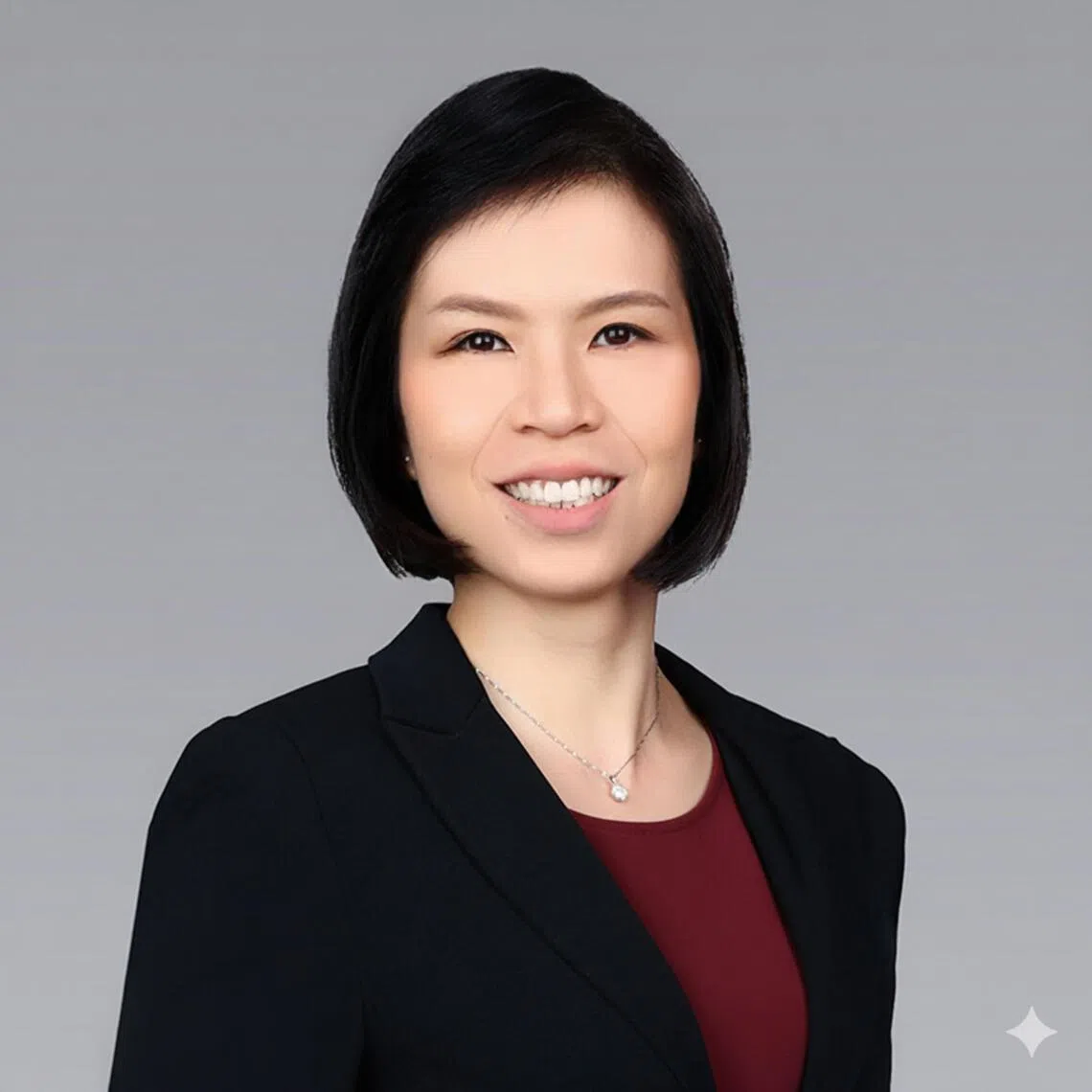
Dr Chua of JLL posits that “at the right price, the market will likely absorb the available supply of office assets for sale”.
“Based on 2025 Preqin data, private-equity firms in Asia-Pacific hold about US$90 billion in ‘dry powder’, which is unspent capital raised for deployment into real estate.
“While this figure is down from a high of US$129 billion in 2022, it indicates that there is no shortage of capital seeking investment opportunities in the region,” he adds.
An issue for some investors when it comes to office buildings is that deal sizes are typically chunky, at more than S$500 million, notes Tan of Knight Frank. “There is a finite pool of buyers and capital for such assets.”
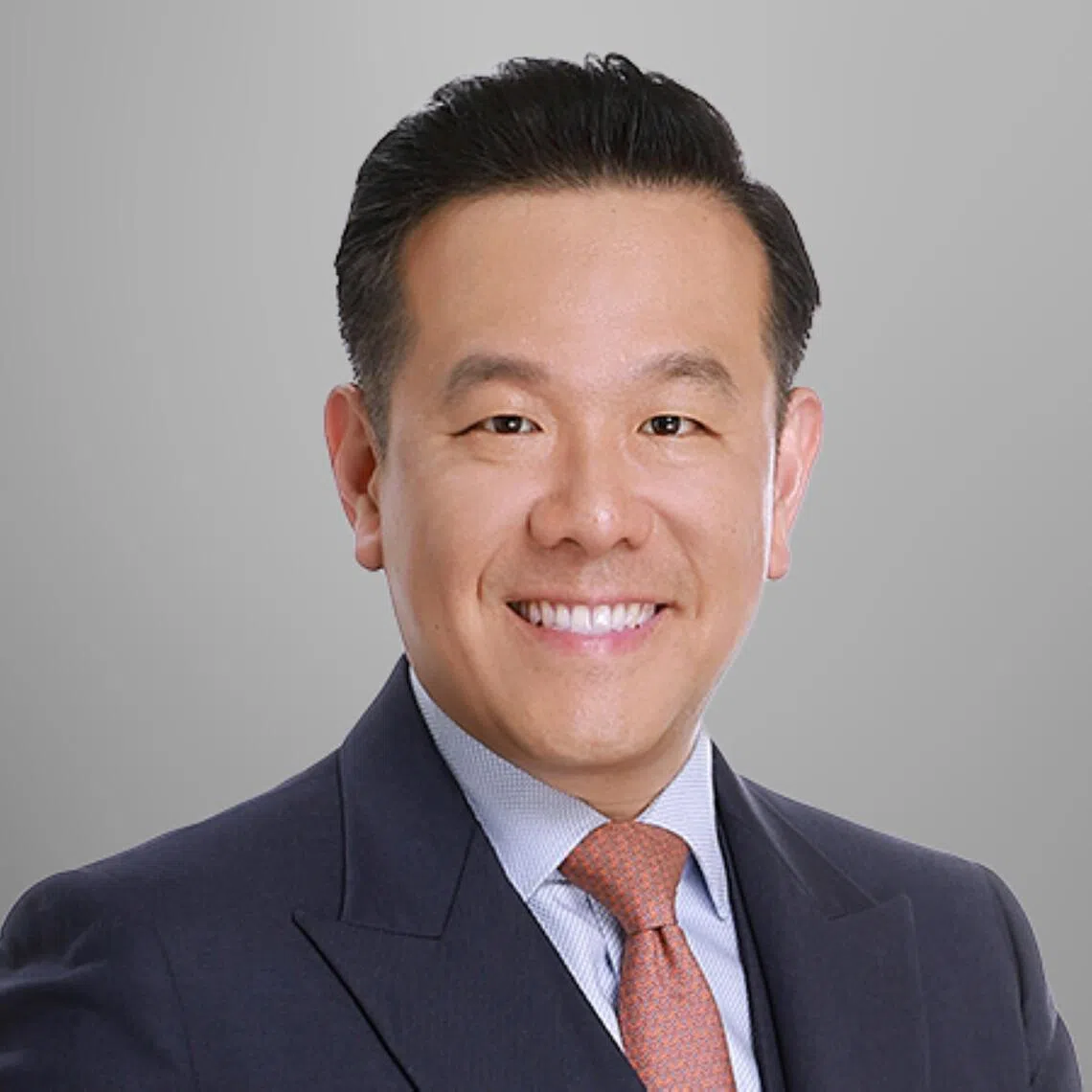
Michael Tay, deputy managing director and head of capital markets, Singapore, at CBRE says: “The quantum or ticket size may also determine the level of interest and impact buyers’ willingness to deliver on pricing. This may, in turn, impact sellers’ decision to sell should the offer price fall below their expectation.”
Motivated to buy
Wong Xian Yang, C&W head of research for Singapore and South-east Asia, notes that “despite interest-rate volatility in recent years and the rise of hybrid work, Singapore office capital values have remained firm and rents have recorded moderate growth”.
Potential buyers can also count on limited office stock in the Republic’s CBD on the back of policy tailwinds, as Catherine He, head of research for Singapore at Colliers, argues.
First, there is a gradual withdrawal of office stock due to redevelopment under the CBD Incentive Scheme. Second, the government’s decentralisation push means that no new office sites in the CBD have been released in recent years through the government land sales programme.
“In short, offices in the CBD will become increasingly limited and tightly held.”
Song of CBRE points out that constrained supply and rising rents strengthen capital values and boost investor confidence. The property consulting group forecasts a 5 per cent increase in rents for its Singapore CBD Core Grade A office basket in 2026 – outpacing the gains of 2.9 per cent in 2025 and 0.4 per cent in 2024. Vacancy for the basket is expected to dip below 3 per cent by end-2026 amid a tight supply pipeline.
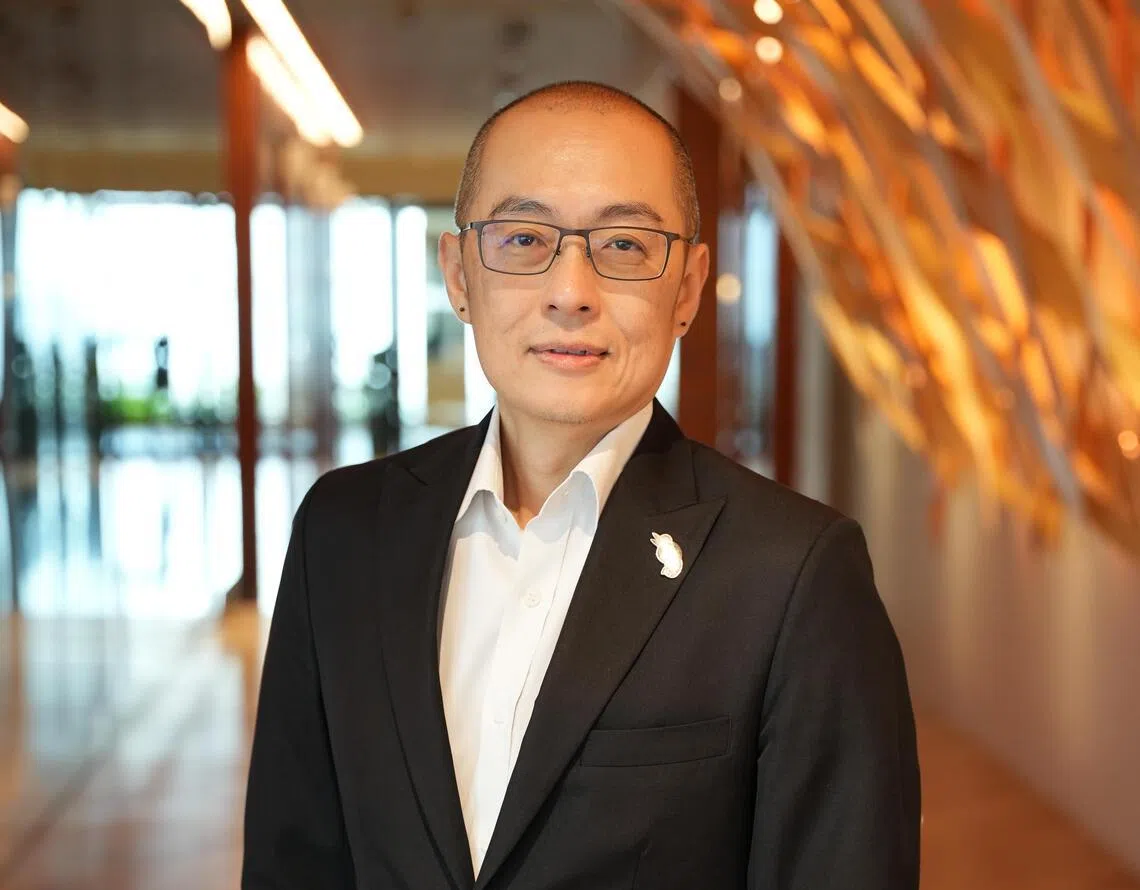
“Islandwide, we forecast the next five-year (2026 to 2030) average office supply completion of about 770,000 sq ft per annum to be around 40 per cent below the past 10-year (2016 to 2025) historical average of 1.28 million sq ft per annum,” she adds.
CBD Grade A in strong demand
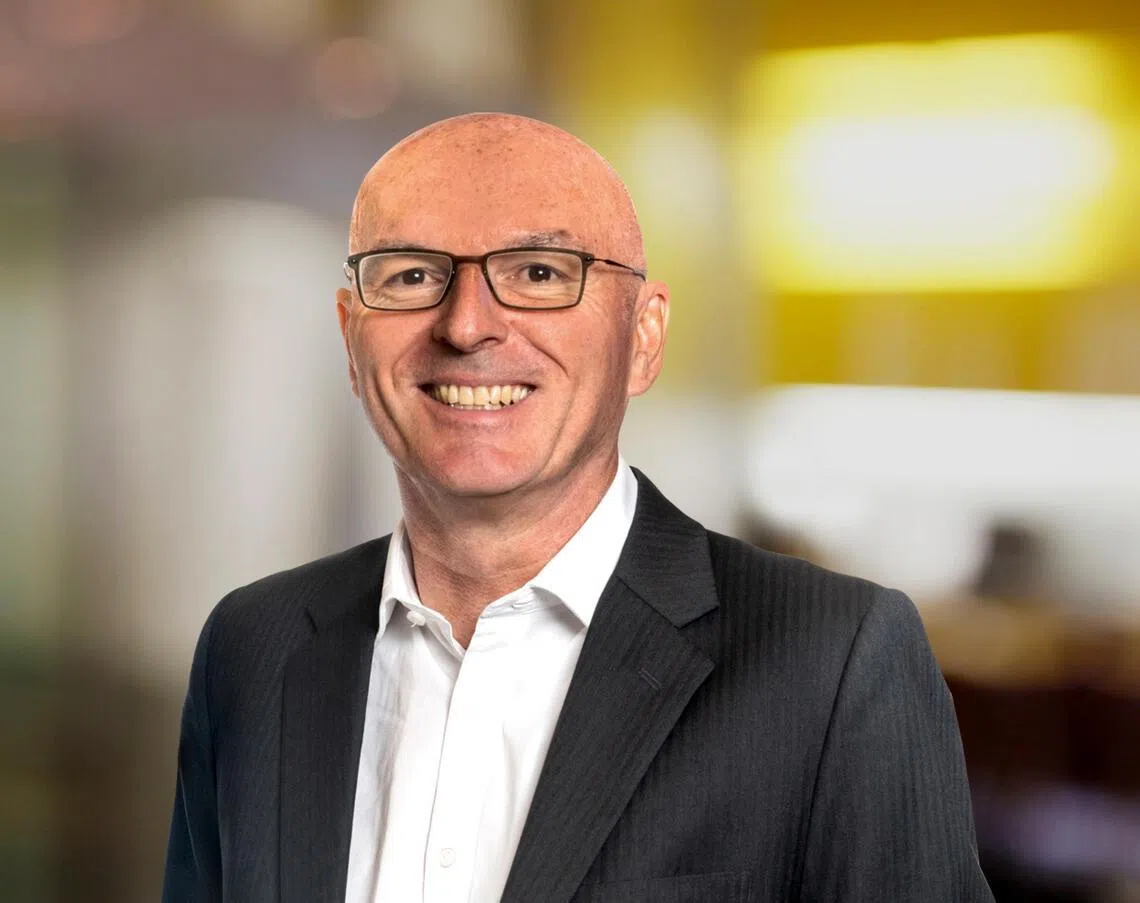
Wong of C&W observes that a lot of the buying interest for Singapore offices has been focused on the CBD, where Grade A rents are expected to grow faster than decentralised office rents.
In a similar vein, Dr Chua says: “With occupiers showing a strong preference – as part of their talent attraction and retention strategy – to be in modern, premium-quality office buildings in the CBD over those in the suburbs, office investors have also steered towards the same direction.”
Knight Frank’s Tan highlights a secondary tier of older office stock within the CBD – in the Robinson Road/Shenton Way corridor. This appeals to buyers keen on asset enhancement and/or repositioning, he adds. An example would be 158 Cecil Street, being bought by an entity linked to Altallo Asset Management, which plans to refurbish the property.
Market watchers note that Allgreen Properties and Kuok (Singapore), which acquired 78 Shenton Way earlier this year, are likely to hold the asset as a land bank for eventual redevelopment.
Competition for investment dollars from other sectors, overseas markets
Vendors of Singapore office buildings face competition to attract buyers.
“Buyers definitely have choices, both in terms of asset class and geography,” says Lake. Buyers will look at the likes of retail and industrial properties which offer higher yields.
“There is also a strong desire to invest in newer asset classes such as data centres, living sector, cold storage, life sciences and operating platforms.”
He from Colliers points out that within the office sector, other Asia-Pacific developed markets such as Japan and Australia offer higher yields and that too mainly on freehold assets, unlike Singapore where most of the office stock is on 99-year leasehold land.
“However, these markets come with more currency and political/policy risks from a global investor’s perspective. These markets are also facing a rising interest-rate environment, in contrast to Singapore, where interest rates have remained low and are projected to remain low due to high liquidity and capital inflows.”
CBRE’s Song says Singapore industrial and retail assets continue to draw interest with their steady fundamentals, but with the city-state experiencing its tightest office supply in years, “we expect office rental growth to surpass all other sectors in Singapore in the next five years”.
CBRE’s Tay adds that, in light of the latest war in the Middle East, institutional investors – though long-term positive on Singapore’s office market – may be slower in making decisions in the near term amid global uncertainties.
“For private investors, the uncertainties surrounding the Middle East may actually strengthen Singapore’s position as an investment destination, and activity could remain buoyant.
“Singapore’s safe-haven status and structural supply tightness mean any slowdown is more likely to be temporary and sentiment driven, and activity should pick back up once there is more clarity,” he notes.
Decoding Asia newsletter: your guide to navigating Asia in a new global order. Sign up here to get Decoding Asia newsletter. Delivered to your inbox. Free.
Copyright SPH Media. All rights reserved.
TRENDING NOW

DBS, OCBC, UOB rout lops billions off STI as inflation, rate concerns spook investors

Grab CEO’s wife Chloe Tong on life with Anthony Tan and finding her purpose

OCBC sheds S$8 billion in value as shares close nearly 6% down; analysts cautious on banks

Deal between tycoon friends sparks scrutiny of Philippine power sector

