Greater collaboration within Asia-Pacific the answer to forthcoming EU carbon tax?
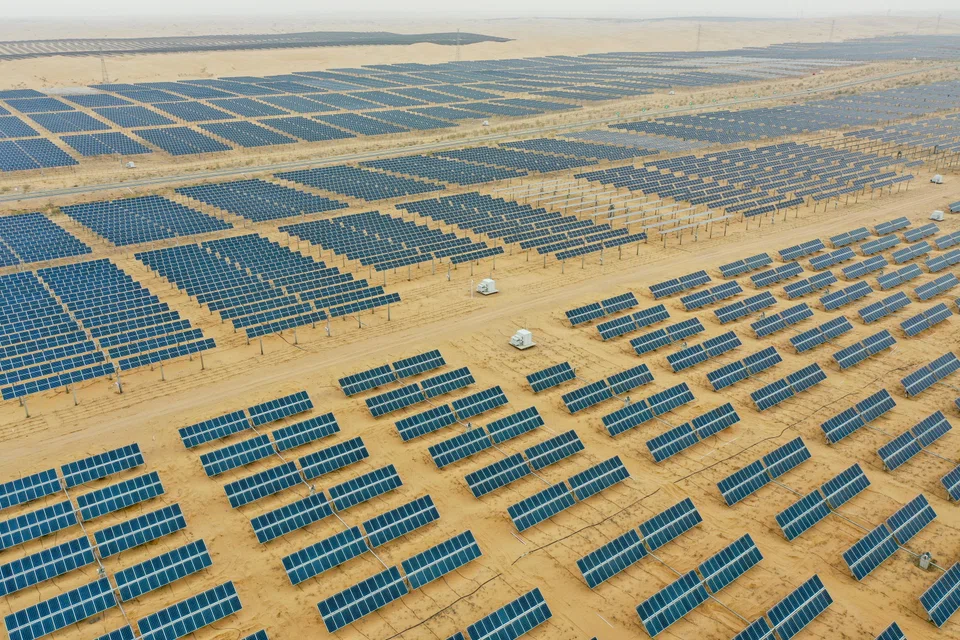
THE power of renewable energy to connect the world can sometimes mean, at its most fundamental level, a little give and take.
Come October, the European Union’s (EU) Carbon Border Adjustment Mechanism (CBAM) will be enacted in full force to tackle cross-border carbon leakage. Any country exporting into the EU will then need to show that they have paid a carbon price to cover the production of their goods. If they can’t produce proof, the importer gets taxed.
In Asia-Pacific, businesses across the region are weighing up what the EU ruling means for them. Most economies in this part of the world are ill-prepared for this regulation.
More than US$100 billion worth of trade flows between the EU and the major Apac markets of Japan, Korea and India. Yet, some of these big exporters are not quite living up to their sustainability potential yet. As such, what should be the best course of action?
Each market needs to stay the course of their renewable energy transition, and businesses must constantly be on the lookout for ways to balance their operations with initiatives such as corporate power purchase agreements. But this could also be an opportunity to step up the region’s local cross-border collaboration efforts.
The Asia-Pacific markets are at various stages of development. When it comes to the adoption of renewable energy, their needs and contributions are incredibly diverse, to say the least.
Such is the range of diversity in energy development that one market might have to scramble to balance carbon costs, while another might be perfectly poised for the task.
To bring lagging countries up to speed, a possible solution would be the free exchange of renewable energy. The future of renewable energy in Asia-Pacific might see the exchange of Malaysian solar power with Thai or Vietnamese wind power, via Laotian hydropower and storage.
This kind of collaboration and integration is already being bandied about, especially when the task of balancing carbon is streamlined, and Asia-Pacific businesses have greater competitive advantage.
Australia’s Sun Cable is working with Indonesia on plans to link the archipelago using subsea transmission corridors. This concept is, in turn, part of a US$22.6 billion vision in a project dubbed the Australia-Asia PowerLink. Meanwhile, there are also ongoing talks on the details of the Singapore government’s investment arm working with Hong Kong’s InterContinental Energy. The plan is to build a hydrogen hub in Western Australia which, if completed, would be the biggest on Earth, providing for 50 GW of wind and solar energy across 15,000 sq km.
The potential for more of such collaboration is very realistic, as Indochina-Malaysia-Singapore represents a huge opportunity for closer integration. A possible Korea-Japan-Australia green hydrogen triangle is also promising for development.
Building and focusing on already-connected countries is another way to go.
As part of the Asean Economic Community 2025 agenda, the current Asean Plan of Action for Energy Cooperation 2016-2025 gives priority to the expansion of multilateral power trade in the existing and future interconnected grid network.
Existing grid networks already connect Malaysia, Thailand and Laos, and further grid lines between Cambodia and Vietnam are in the planning stage or construction phase.
There is further untapped potential which should be explored to balance the regions’ overall carbon cost and ensure that the biggest Asian exporters to the EU can continue to trade productively.
What can we learn from the rest of the world?
It is easy to call out areas where we can follow other regions’ examples, but it is also worth looking at past mistakes to learn from – the failure of Desertec’s Africa-Europe solar pipeline is one example.
For the most part, however, we can draw on positive lessons from regions like the EU.
Spain’s status as a natural solar exporter was recognised and built into its energy relations with the rest of the bloc.
With potential and opportunity aligned, measures like the CBAM, and probably even American’s Green New Deal too, may speed up the rate at which we realise inter-country renewable energy potential.
Renewable energy developers in Asia-Pacific know more can be done for local stakeholders, and the rewards will be lasting prosperity for some of the world’s most ambitious markets.
We cannot afford to let regulatory setbacks get in the way of our renewable energy transition or let our stakeholders down.
The writer is Asia-Pacific director of BayWa re.