‘Greater Europe’ project becomes clearer, post-Ukraine
THE new European Political Community (EPC) of almost 50 nations meets for the third time on Thursday (Oct 5). The group has generated much media interest since its formation in 2022, yet the debate around its core purpose has only become energised in recent weeks.
While the mandate of the body will not be finalised by the 47 leaders meeting in Spain this week, new voltage has been put into the discussion by the General Affairs Council (GAC), a Franco-German working group, set up by German Minister of State Anna Luhrmann and French counterpart Laurence Boone. This council concluded in its September report that a multi-speed Europe is necessary to shape the destiny of the region in what is an already crowded continental institutional landscape.
What is specifically proposed is a Greater Europe of four overlapping rings – an inner core or “coalition of the willing“ of select EU states such as Germany and France prepared to go further and faster with integration; the wider EU-27 members; plus “associate members” of the EU which largely means those members of the European single market such as Norway, Switzerland, Iceland and Liechtenstein in the four-member European Free Trade Area (EFTA).
This would then leave an outer ring comprised of the new EPC which includes not just the EU-27 and EFTA, but also the United Kingdom; the Western Balkan states (Albania, Northern Macedonia, Kosovo, Serbia, Bosnia and Herzegovina and Montenegro) which have been identified by Brussels as candidates or potential candidates for EU membership; Georgia, Moldova, and Ukraine, all of which applied to join the EU following Russia’s invasion of Ukraine in February 2022; Armenia, Azerbaijan and Turkey; plus also Marino, Andorra, and Monaco.
Given the hugely disparate nature of this outer EPC ring which comprises a previous EU nation, potential future ones, and states never likely to join the EU such as Armenia, it is still uncertain whether the new “club of nations“ will be a significant moment in Europe’s decades-long integration project. Or perhaps little more than a footnote in this history.
Perhaps the key question facing the leaders is how such a vast grouping can best work together economically and politically in common cause on “soft” issues such as energy and climate. Let alone “hard” ones such as security given some members are bilateral foes such as Turkey and Greece, plus Armenia and Azerbaijan.
This also needs to be done without any central EPC secretariat or permanent staff, nor large financial resources. The body’s only explicit, official purpose is to act as a forum for political and strategic discussions, similar to the G7 or the G20.
While the new body’s mission therefore is not yet 100 per cent clear, the early expectation is that it will convene twice a year, including a summit in the first half of next year to be symbolically staged in the United Kingdom, the only nation ever to leave the EU. The goal is to address issues that preoccupy all the states, including pressing security, energy and immigration challenges.
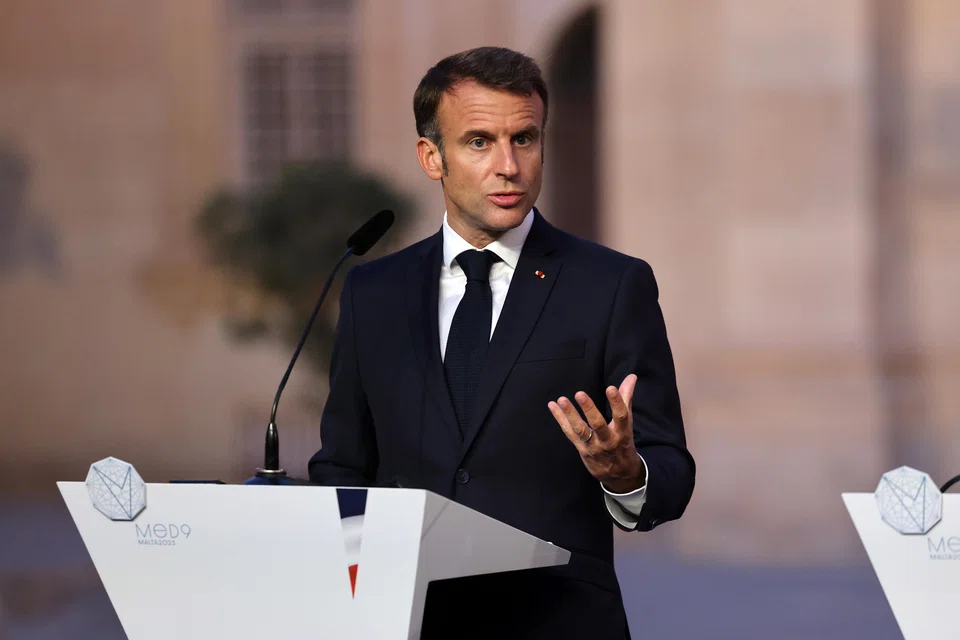
Leaders such as French President Emmanuel Macron hope that the EPC may be more effective at dealing with such shared European issues due to the exclusion of Russia, whose membership of other organisations including the Organisation for Security and Co-operation in Europe provides challenges. Similarly, the EPC’s flexible structure and emphasis on bilateral ties potentially allow for greater freedom for leaders to focus on specific concerns in comparison to other bodies with more official procedures, such as the Council of Europe.
A key aim of the EPC for many of the 27 EU states too is to more fully embrace accession countries, some of which, like Turkey, are losing patience in their very long wait for membership of the bloc. And in doing so, seek to counter attempts by Russia and China to gain influence in the continent, especially its southern and eastern fringes.
One of the other drivers of the EPC is Brexit. This is already changing the EU’s relationship with some non-EU European countries, including Norway, Switzerland, Lichtenstein and non-EU states in the Balkans.
Each of these states has developed relations with the EU that, most obviously in the case of Norway and Switzerland, were intended as a means to the end of eventual EU membership or at least closer relations with the EU. Brexit has not (yet) thrown these processes into reverse, with eventual accession to the Brussels-based club remaining an option, but it does open up new possibilities for future relationships centred around continued non-membership.
Decisionmakers in these states have used the Brexit vote as an opportunity to raise questions about the future of their relations with the EU. There has been some limited discussion as to whether Brexit might open opportunities for a radical overhaul of Europe’s institutional architecture. Such ambitious plans have faded, but they do point to opportunities for potential future change, potentially via the EPC.
For example, the EPC has given a new context for the United Kingdom to reach new, post-Brexit accords with some EU member states to increase cooperation in what Prime Minister Rishi Sunak has called “a new phase of UK-EU cooperation”. The nation has for instance pledged to join the Permanent Structured Cooperation, an EU structure for military capability cooperation.
The United Kingdom has also re-joined the Calais group, where discussions on migrant crossings across the English Channel are held with France, Belgium, Germany and the Netherlands. Moreover, London has also recommenced co-operation with the North Seas Energy Cooperation, a body comprising eight EU members plus Norway with the goal of developing offshore renewable energy.
For strong advocates of the EPC such as Macron, the body could also serve as a potential bridge to a larger EU, and a framework for more permanent continental integration. The EPC could start this process by building a consensus between participating states and the EU.
Take the example of energy, where cooperative frameworks could be developed where there is, for instance, a possibility of signing more natural gas and wider energy agreements with Norway building upon the recent bilateral “Green Alliance“ agreed with the EU, plus constructing green hydrogen infrastructure across the region. Another example is security and defence partnerships where the war in Ukraine has exposed the weakness of the EU’s existing architecture and highlighted the need for European countries to cooperate more, including in areas such as counterterrorism and cybersecurity.
Taken together, it is increasingly clear that the EPC therefore has potential to be a significant moment in Europe’s integration. However, the jury is still out if this promise will be fulfilled, potentially relegating the body to a footnote in history.
Andrew Hammond is an associate at LSE IDEAS at the London School of Economics