
Greater flexibility of regulatory framework essential for Reit market development
MAS’ proposed regulatory changes are positive, and more can be done to help Singapore’s players thrive in a global economy
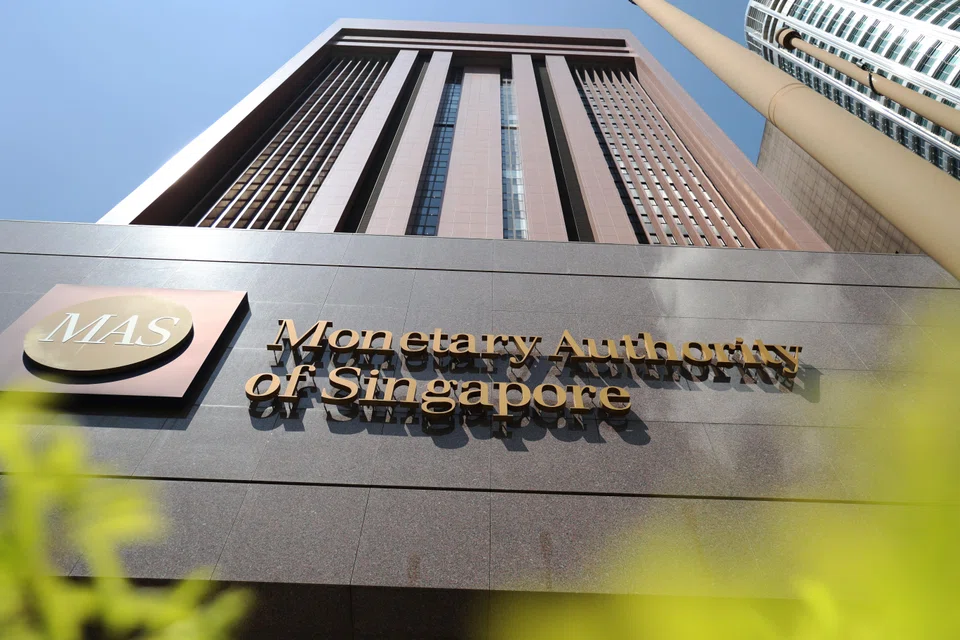
IN JULY 2024, the Monetary Authority of Singapore (MAS) issued a consultation paper on proposed amendments to the leverage requirements for real estate investment trusts (Reits). Currently, a Reit is required to have an interest coverage ratio (ICR) of at least 2.5 times if it intends to increase its aggregate leverage from 45 per cent to 50 per cent. Under the consultation, MAS proposes to simplify the leverage requirements by subjecting all Reits to a minimum ICR threshold of 1.5 times, and an aggregate leverage limit of 50 per cent.
Reit players would likely view this proposal as “sweet rain after a long drought” – a move that has long been awaited.
A reality check
The ICR measures a Reit’s ability to meet its interest payment obligations – how easily it can pay interest on its outstanding debt. A minimum ICR of 2.5 times to increase aggregate leverage to 50 per cent means that for every dollar of interest servicing obligation, a Reit needs to demonstrate it is generating at least 2.5 dollars in earnings to pay its interest expenses.
This means that for commercial properties with an annual rental yield of between 3 and 5 per cent, the interest rate cannot be more than 2.4 per cent per annum. This is clearly a far cry from the reality of today’s environment, where interest rates have remained elevated.
In comparison, the proposed minimum ICR threshold of 1.5 times will allow the interest rate limit to increase to 4 per cent per annum, which is much more realistic and reflective of current interest rates.
Simplification of leverage requirements
The latest consultation is an effort by MAS to simplify leverage requirements for Reits. It is not the first time the authority has made such a move.
In October 2014, MAS proposed adopting a single-tier leverage limit of 45 per cent without requiring Reits to obtain a credit rating. Prior to that, Reits were subject to a leverage limit of 35 per cent of their total assets, which could be increased to 60 per cent if the Reit obtained a credit rating and disclosed it to the public. At the time, MAS noted that even though two-thirds of the Reits were rated, most kept their leverage ratios within 35 per cent.
In July 2019, MAS proposed to use the current ICR threshold of 2.5 times in conjunction with a leverage limit. To balance giving Reits more flexibility to optimise their capital structure with the need for them to assess their debt-servicing ability, MAS allowed a Reit’s leverage to exceed 45 per cent, but not surpass 50 per cent, if it achieved an ICR of 2.5 times or more.
Together, the ICR and leverage limit indicate a Reit’s financial strength. The ICR threshold of 1.5 times underscores Reit managers’ responsibility in ensuring that the trust can adequately service debt obligations, including having sufficient earnings to pay interest expenses.
Greater flexibility to stay competitive
Within two decades, Singapore has risen to become the largest Reit market in Asia (excluding Japan) and is en route to becoming a global Reit hub. Hence, Singapore Reits must also compete with their global peers in their overseas expansion.
According to the Reit Association of Singapore, more than 90 per cent of Singapore Reits and property trusts (by number and market capitalisation) own properties within Singapore and across the Asia-Pacific, South Asia, Europe and the US.
Keeping Reits relatively low-risk, income-generating vehicles while giving them greater flexibility to cope with changing economic conditions – and enhancing their competitiveness vis-a-vis foreign Reits – is a balancing act.
No ICR and leverage limits are currently imposed in more mature Reit jurisdictions, such as Japan, Australia and the US. Thus, Singapore Reits not only compete with Reits in foreign jurisdictions, but also with other global real estate investors and companies, which are likewise not subject to regulatory leverage limits.
While financial institutions may be willing to lend up to 60 to 75 per cent of property value to foreign Reits and investors, Singapore Reits have to keep their aggregate leverage at 50 per cent or less at all times due to their regulatory obligation.
This impedes their ability to borrow and make the necessary investments to grow and compete effectively against their global competitors.
All of this raises the question of whether a one-size-fits-all regulatory leverage limit is optimal. Financial institutions, being in the business of lending and risk assessment, often have more sophisticated and up-to-date information about the borrower’s financial health and risk profile. They also conduct rigorous due diligence and risk assessments before extending loans.
Hence, taking a cue from financial institutions could be useful. Given their diverse risk appetites, financial institutions are well-positioned to determine appropriate loan-to-asset ratios, rather than subjecting borrowers to a hard 50 per cent limit.
In more mature Reit regimes, investors make investment decisions on Reits based on their assessment of a trust’s financial stability, including capital structure, and are not guided by regulatory limits. Such an approach allows for more dynamic and competitive market behaviour, and may be considered for Singapore Reits when the time is right.
Increase investor education
The proposed changes underscore the responsibility of investors to assess the financial stability of a Reit. To help investors understand how market conditions could affect a Reit’s financial health, MAS proposed that Reits perform and disclose sensitivity analyses on the impact of changes in earnings before interest, taxes, depreciation and amortisation, as well as interest rates, on their ICRs.
While this is helpful, more can be done to enhance investor education. Reits are often considered by retail investors as safe investment options and reliable sources of retirement income. Yet, many investors may not quite understand the changes, such as the impact of net property income and interest rates on a Reit’s ability to service its debt.
A flexible regulatory framework is essential for Singapore’s evolving Reit market, as more Reits with different asset types operating in different geographies may invest here in the future. This will be instrumental to strengthening the resilience of Singapore’s Reit sector in a global, interconnected economy.
The writers are from Ernst & Young LLP. Lee Wei Hock is deputy head of assurance and Low Yen Mei is assurance partner. They have both worked with several Reits.
The views in this piece are the writers’, and do not necessarily reflect the opinions of the global EY organisation or its member firms.



